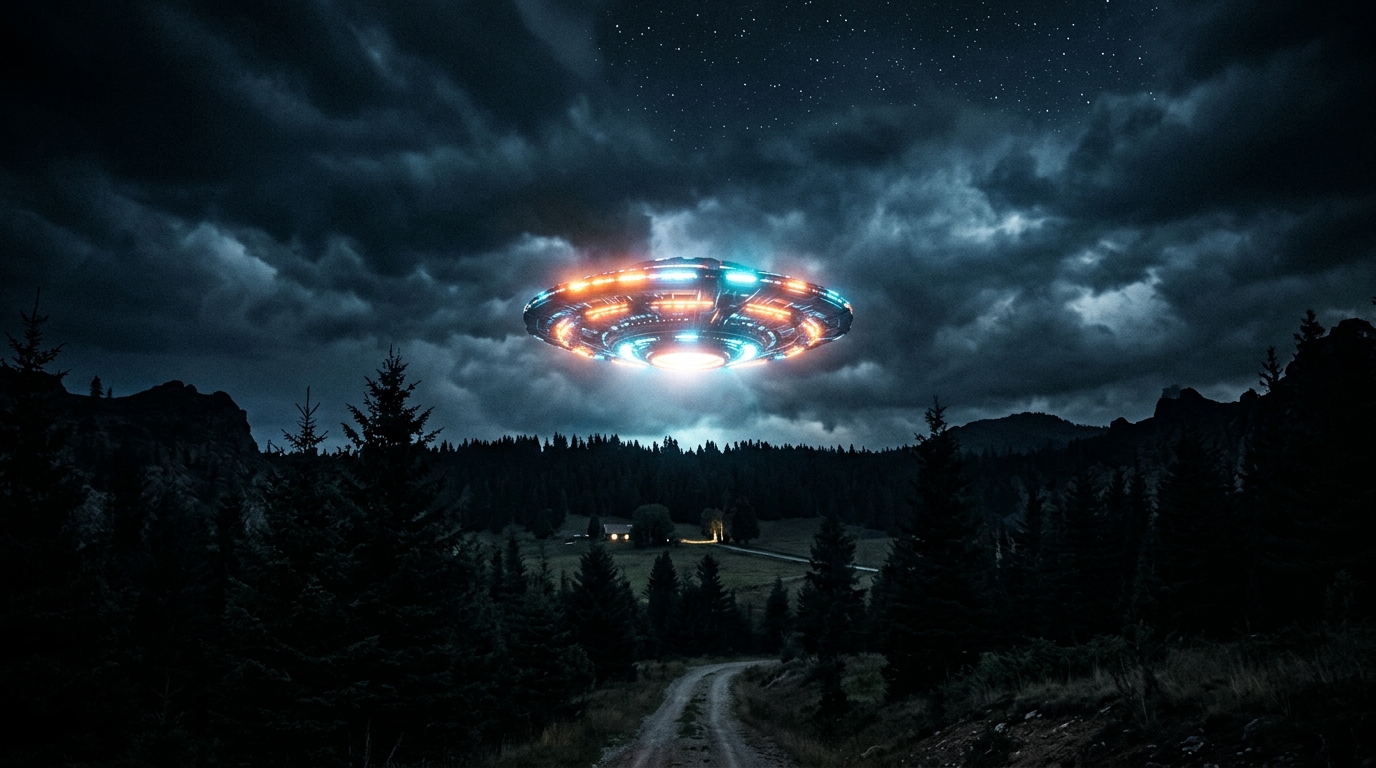
For decades, the line between extraterrestrial reality and government fiction has been blurred by shadows, secrets, and strategic silence. Now, a groundbreaking legislative push is forcing the Department of Defense to come clean about its history of muddying the waters regarding what we now call Unidentified Anomalous Phenomena (UAP). As Congress demands transparency, the paranormal community is left wondering: has the government been hiding aliens, or have they been manufacturing myths to hide something else entirely?
The Ghost of 1988: A Legacy of Deception
The roots of this modern investigation stretch back to a bizarre moment in 1988 that changed the landscape of UFO lore forever. During a live television broadcast, a recently retired agent from the U.S. Air Force Office of Special Investigations (OSI) made a claim that would define the “conspiracy theory” era. He alleged that the United States government was not only aware of extraterrestrials but was actively working alongside them at a secret facility in the Nevada desert known as Area 51.
The agent went as far as to claim that these “extraterrestrials have complete control of this base,” a statement that sent shockwaves through the public. While the producers of the program obscured the agent’s identity to protect his safety, the damage—or perhaps the intended effect—was done. This narrative helped cement the idea of a “secret space program” and alien-human collaboration in the American psyche, regardless of whether the claims were rooted in fact or psychological operations.
Historians and researchers now point to this era as a prime example of how the government may have used disinformation to protect classified military technology. By allowing, or even encouraging, the public to believe that strange lights in the sky were alien craft, the Pentagon could effectively mask the testing of advanced stealth aircraft and experimental drones during the height of the Cold War.
Congress Steps In: The Mandate for Truth
Fast forward to the present day, and the political climate has shifted dramatically. No longer content with vague denials, Congress has officially required the Pentagon to address these historical disinformation campaigns. This mandate, tucked into recent defense spending bills, tasks the All-domain Anomaly Resolution Office (AARO) with investigating whether the government has intentionally misled the public about UFOs since the end of World War II.
The implications of this are staggering. For the first time, the Pentagon is being legally obligated to audit its own propaganda. Lawmakers are specifically interested in whether “black budget” programs used UFO narratives as a smokescreen to divert attention from sensitive national security projects. This move suggests that some in Washington believe the “UFO craze” of the late 20th century was, at least in part, a calculated counterintelligence effort.
However, this investigation is a double-edged sword. While it may debunk certain urban legends, it also opens the door to a more uncomfortable truth. If the government was lying about the *nature* of these sightings, what were they actually seeing? By admitting to a history of disinformation, the military must eventually account for the genuine anomalies that remain unexplained by conventional technology.
The Pattern of Misdirection
The 1988 OSI agent story is not an isolated incident. Throughout the history of ufology, there have been numerous cases where government officials seemed to “leak” sensational information that later turned out to be questionable. One of the most famous examples involves the case of Paul Bennewitz, a physicist who believed he had uncovered an alien base in New Mexico. It was later revealed that OSI agents had fed him falsified information and manipulated his equipment to lead him further down the rabbit hole.
These tactics serve a dual purpose. First, they discredit the entire field of paranormal research by associating it with wild, unprovable claims. Second, they create a “noise” that makes it nearly impossible for genuine whistleblowers to be taken seriously. When the truth is buried under layers of manufactured fiction, the public becomes fatigued and cynical, which is exactly what a secretive organization desires.
The current disclosure movement aims to strip away these layers. By forcing the Pentagon to document its past deceptions, Congress is attempting to clear the air so that a real scientific inquiry into UAPs can begin. If we can identify which stories were “planted” by the government, we can finally focus on the sightings and data points that cannot be explained away as military theater.
A New Era of Transparency?
As the AARO continues its historical review, the paranormal community remains cautiously optimistic. We are entering an era where the Freedom of Information Act (FOIA) and congressional oversight are being used as tools to dismantle decades of institutional secrecy. The goal is no longer just to find “the truth,” but to understand how the truth was hidden for so long.
Whether the Pentagon’s report will provide a definitive answer or simply another layer of obfuscation remains to be seen. However, the fact that the conversation has moved from late-night television specials to the halls of Congress is a victory in itself. The shadows are retreating, and the light of inquiry is finally shining on the darkest corners of our government’s history with the unknown.
Do you believe the government created UFO myths to hide secret technology, or is the “disinformation” narrative just another way to cover up the existence of real extraterrestrials?
Recommended Resources
- 🤖 Viktor AI — The autonomous AI platform we use to run our marketing operations. Hire Viktor to handle blogging, lead research, audits, and more.
- 💳 Greenlight — The money app and debit card for kids and teens. Teach your kids to earn, save, and invest. Earn $30 when you sign up.
- ⛏️ GoMining — Earn Bitcoin through cloud mining without the hardware hassle. A passive way to get into crypto.
- 🏦 Mercury — The business banking account built for startups and small businesses. No fees, powerful tools, and easy to set up.
Leave a Reply