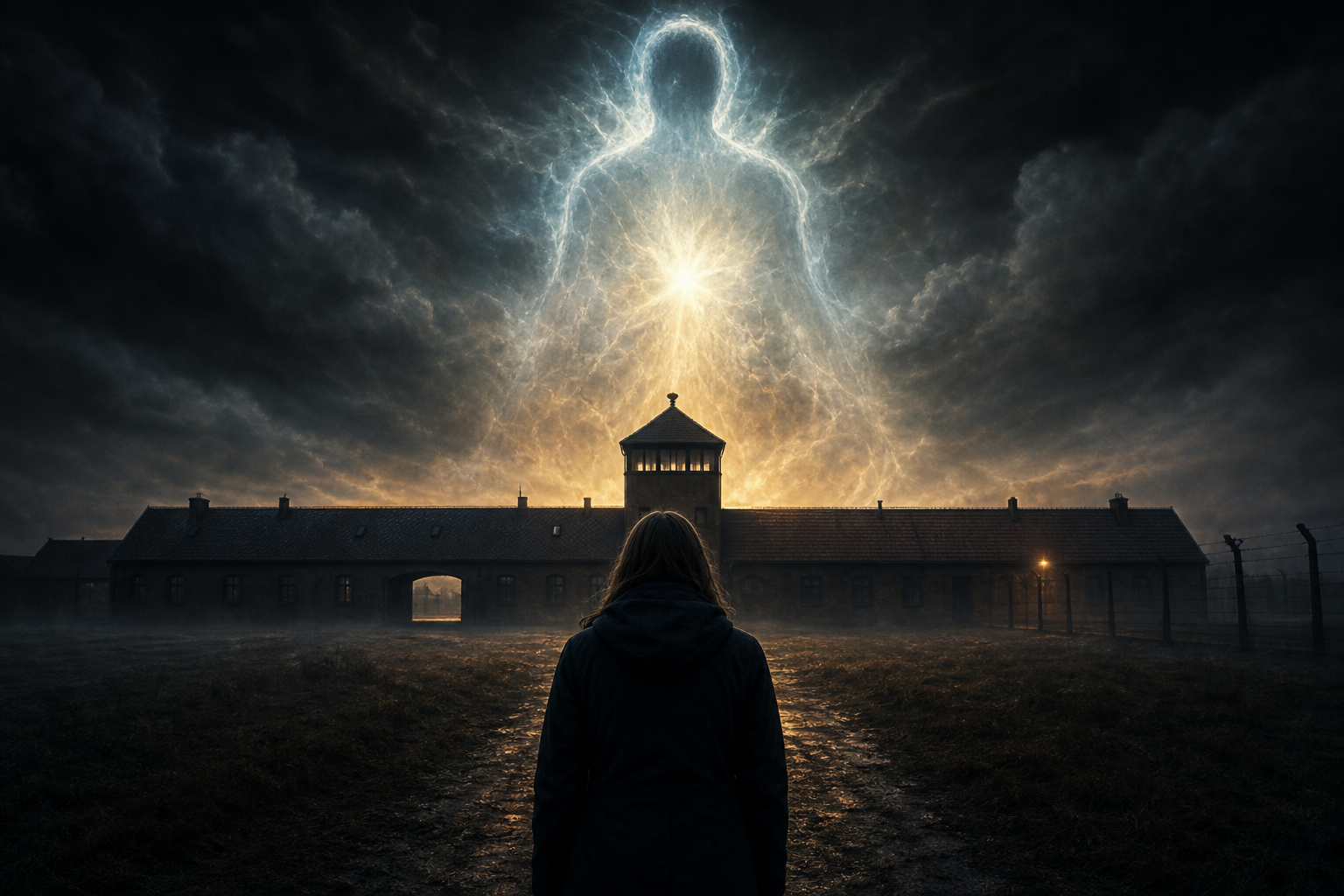
For many visitors, a trip to the Auschwitz-Birkenau memorial is a somber educational experience, a confrontation with the darkest chapters of human history. While many report a heavy atmosphere or a strange silence where birds refuse to sing, others find the site surprisingly still—until they cross a threshold into a space where the past refuses to remain buried. For one recent visitor, a routine tour of the grounds transformed into a terrifying brush with what can only be described as residual energy or a lingering spiritual stain.
The Silent Bricks of Auschwitz I
The experience began with a sense of detachment. Despite the horrific history of the site, the visitor—a 35-year-old man traveling with his father—noted that the initial walk through the camp felt strangely mundane. The sun was shining, birds were chirping, and the infamous barracks appeared as little more than “bricks and mortar.” Even when faced with the harrowing displays of victims’ hair, shoes, and personal belongings, he felt a sense of historical distance. The tragedy was intellectual, but not yet visceral.
This phenomenon is not uncommon among visitors to sites of mass trauma. Psychologists often attribute this to a defense mechanism where the brain protects itself from overwhelming grief. However, in the world of the paranormal, this “quiet” period is often seen as the calm before a storm, a state of being where one’s guard is down before encountering a psychic imprint so powerful it cannot be ignored.
Block 11: The Threshold of Terror
Everything changed when the tour reached Block 11. Known historically as “The Prison within the Prison,” Block 11 served as the camp’s internal jail, a place where the Gestapo carried out brutal interrogations and punishments. Before the guide could even explain the building’s dark purpose, the visitor reported an immediate and violent physical reaction. The hair on his neck stood up, and his body was flooded with a massive adrenaline dump, triggering an intense fight-or-flight response.
As he descended into the basement, the sensation peaked. This area housed the “standing cells” and the first experimental gas chambers. The visitor described a feeling of absolute hopelessness, a crushing weight that suggested something “truly evil” still resided within those walls. This wasn’t just sadness; it was a biological imperative to flee a perceived predator. His legs shook, and his mind screamed that he was in immediate, mortal danger, despite being surrounded by a modern tour group.
Residual Hauntings and the Death Wall
The basement of Block 11 is notorious among paranormal researchers for its stone tape theory potential. This theory suggests that minerals in the walls of buildings can “record” high-energy emotional events, replaying them like a loop for those sensitive enough to perceive them. Given the sheer scale of agony experienced in the Block 11 basement, it is often cited as one of the most “active” locations for residual hauntings in the world.
Upon exiting the basement, the visitor entered the courtyard containing the Death Wall, where thousands of prisoners were executed by firing squad. The feeling of dread remained until he left the immediate vicinity of the block, at which point the “detached” feeling returned. It was as if the horror was localized, trapped within the specific geometry of Block 11. He later remarked that he felt as though he “left a part of himself” in that basement, a common sentiment among those who experience soul loss or spiritual shock in haunted locations.
A Global Pattern of Dark Tourism
This account mirrors thousands of others from “dark tourism” sites across the globe. From the Tuol Sleng Genocide Museum in Cambodia to the Eastern State Penitentiary in the United States, sensitive individuals often report localized “pockets” of terror that defy logical explanation. These are not mere echoes of history; they are physical sensations of cold, nausea, and impending doom that suggest the energy of the victims—and their oppressors—remains tethered to the site.
The visitor’s experience raises a haunting question about the nature of evil. If a location can retain the “memory” of such profound suffering, does that energy ever truly dissipate, or does it feed on the emotions of those who visit? For this witness, the “bricks and mortar” of Auschwitz were no longer just building materials; they were a vessel for a darkness that continues to vibrate through time.
Have you ever visited a historical site and felt an overwhelming physical reaction that you couldn’t explain? Do you believe certain buildings can “trap” the energy of the events that occurred within them?
Recommended Resources
- 🤖 Viktor AI — The autonomous AI platform we use to run our marketing operations. Hire Viktor to handle blogging, lead research, audits, and more.
- 💳 Greenlight — The money app and debit card for kids and teens. Teach your kids to earn, save, and invest. Earn $30 when you sign up.
- ⛏️ GoMining — Earn Bitcoin through cloud mining without the hardware hassle. A passive way to get into crypto.
- 🏦 Mercury — The business banking account built for startups and small businesses. No fees, powerful tools, and easy to set up.
Leave a Reply