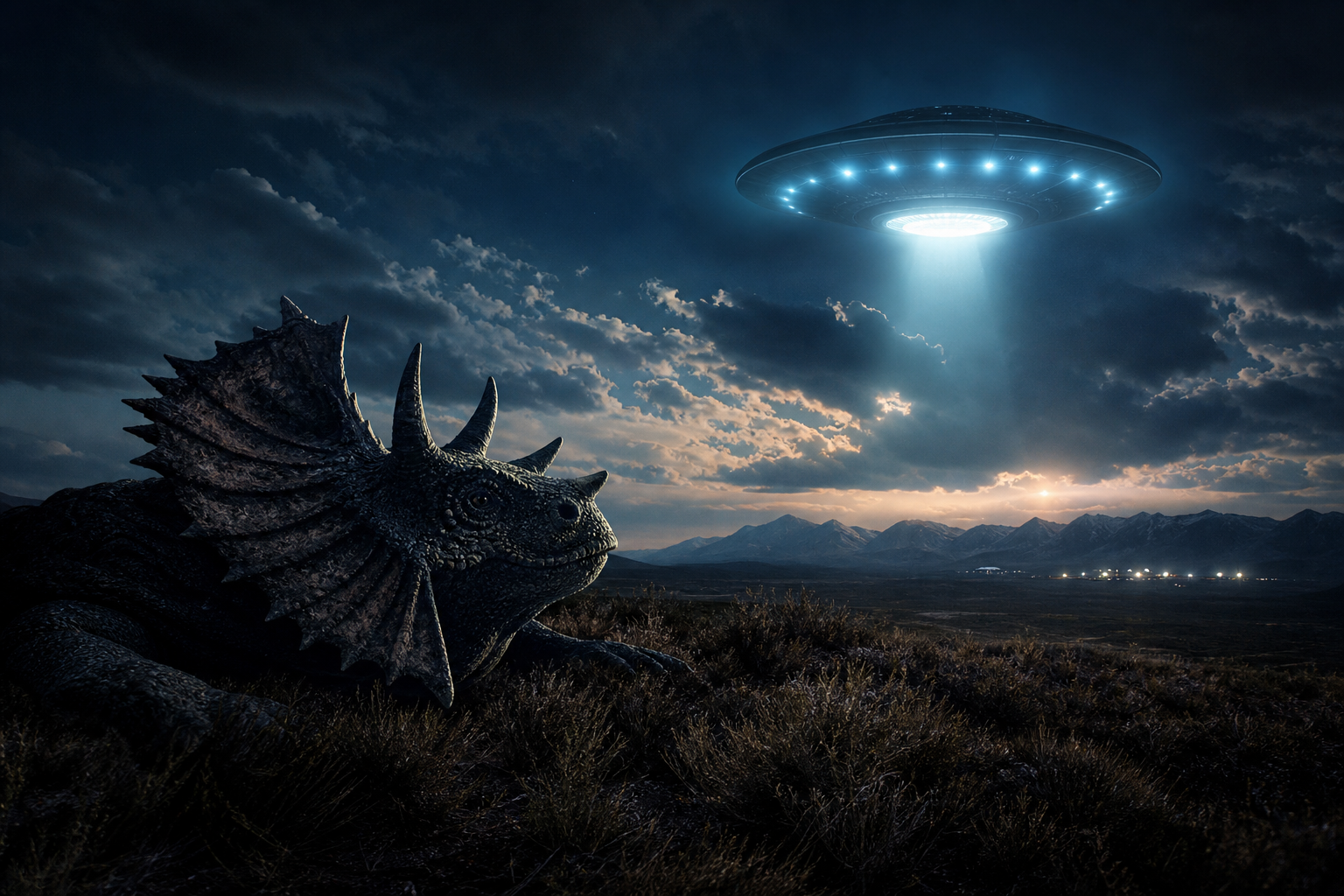
The Mystery of the Frilled Reptilian Cryptids
For decades, the dark corners of our world have harbored stories of creatures that defy modern biology, blending the features of ancient dinosaurs with the stealth of modern predators. Among the most unsettling reports in the field of cryptozoology are those describing bipedal, lizard-like entities adorned with elaborate neck frills, jagged head crests, or even sharp horns. These sightings suggest that something prehistoric—or perhaps something entirely alien—is stalking the fringes of civilization.
While many dismiss these accounts as mere folklore or misidentified wildlife, the consistency of the descriptions across different geographic regions is difficult to ignore. Witnesses often describe a creature that stands between five and seven feet tall, possessing shimmering green or gray scales and a terrifying physical presence. The most striking feature, however, is the neck frill, a membrane of skin that can flare out when the creature is threatened, much like the prehistoric Dilophosaurus popularized in cinema.
These reports have sparked a renewed interest in the possibility of “living fossils” or undiscovered reptilian branches of the evolutionary tree. Whether they are hiding in the deep swamps of the American South or the arid canyons of the West, these frilled and horned monsters continue to haunt the collective imagination of those who look too closely into the shadows.
The Lizard Man and the Legacy of the Scape Ore Swamp
Perhaps the most famous instance of a frilled reptilian encounter occurred in Bishopville, South Carolina. In the summer of 1988, the Lizard Man of Scape Ore Swamp became a national sensation after a young man reported a seven-foot-tall creature with red glowing eyes and three-toed feet attacking his car. While the initial reports focused on its sheer strength, subsequent sightings and local lore often attributed crest-like features or a rugged, armored appearance to the beast.
The Scape Ore Swamp case is a cornerstone of reptilian cryptid research because it moved the conversation away from simple “monsters” and toward a specific biological profile. Witnesses described a creature that was remarkably agile, capable of leaping great distances and possessing a prehensile grip. Some researchers suggest that the “frills” reported in similar cases might be a defensive mechanism, used to make the creature appear larger to potential threats.
Similar sightings have cropped up in the wetlands of Louisiana and Florida, where the Honey Island Swamp Monster is occasionally described with reptilian traits rather than the traditional primate-like features of Bigfoot. These “swamp saurians” represent a persistent sub-genre of sightings that suggest a hidden population of apex predators thriving in environments humans rarely tread.
Ancient Origins: Horned Serpents and Crested Humanoids
The fascination with horned and crested reptilians isn’t just a modern phenomenon; it is deeply rooted in indigenous mythology and ancient history. Many Native American tribes tell stories of the Horned Serpent, a powerful underwater deity often depicted with scales and prominent horns. These legends suggest that humans have been encountering these specific reptilian forms for centuries, long before the term “cryptid” was ever coined.
In the realm of modern conspiracy and high strangeness, these physical descriptions often overlap with reports of Reptoids or Draconians. These entities are frequently described as having a “warrior” caste, distinguished by bony ridges or crests on their skulls and, in some cases, short, vestigial horns. While this pushes the boundaries into ufology, the physical descriptions provided by “abductees” often mirror the sightings reported by hunters and hikers in the wilderness.
The presence of a head crest in biological terms often signifies a social or sexual display, much like the crests found on many species of hadrosaurs or modern-day chameleons. If these cryptids are indeed biological entities, these features suggest a complex social structure or a specific evolutionary path that favored visual signaling over pure camouflage.
Could Prehistoric Survivors Still Walk Among Us?
One of the most compelling theories regarding these sightings is the “living fossil” hypothesis. This theory suggests that certain lineages of dinosaurs or early archosaurs survived the K-Pg extinction event and continued to evolve in isolation. A bipedal reptile with a neck frill sounds remarkably like a specialized descendant of the theropod family, adapted for a modern environment where stealth is paramount.
Skeptics often point to convergent evolution, the process where unrelated species evolve similar traits, as a possible explanation. They argue that witnesses might be seeing large, escaped exotic pets—such as frilled lizards or iguanas—and that the human mind “scales them up” in the heat of a terrifying moment. However, this fails to explain the consistent reports of massive, bipedal creatures that exhibit high levels of intelligence and physical power.
Whether these beings are undiscovered animals, remnants of a lost world, or something even more mysterious, the reports of frilled and horned reptilians continue to pour in. They remind us that despite our technological advancements, the world remains a place of deep mystery, where the line between myth and reality is often blurred by a flash of scales in the moonlight.
Have you ever encountered a creature that looked like it belonged in the Jurassic period rather than the modern world? Tell us about your sightings in the comments below!
Recommended Resources
- 🤖 Viktor AI — The autonomous AI platform we use to run our marketing operations. Hire Viktor to handle blogging, lead research, audits, and more.
- 💳 Greenlight — The money app and debit card for kids and teens. Teach your kids to earn, save, and invest. Earn $30 when you sign up.
- ⛏️ GoMining — Earn Bitcoin through cloud mining without the hardware hassle. A passive way to get into crypto.
- 🏦 Mercury — The business banking account built for startups and small businesses. No fees, powerful tools, and easy to set up.
Leave a Reply