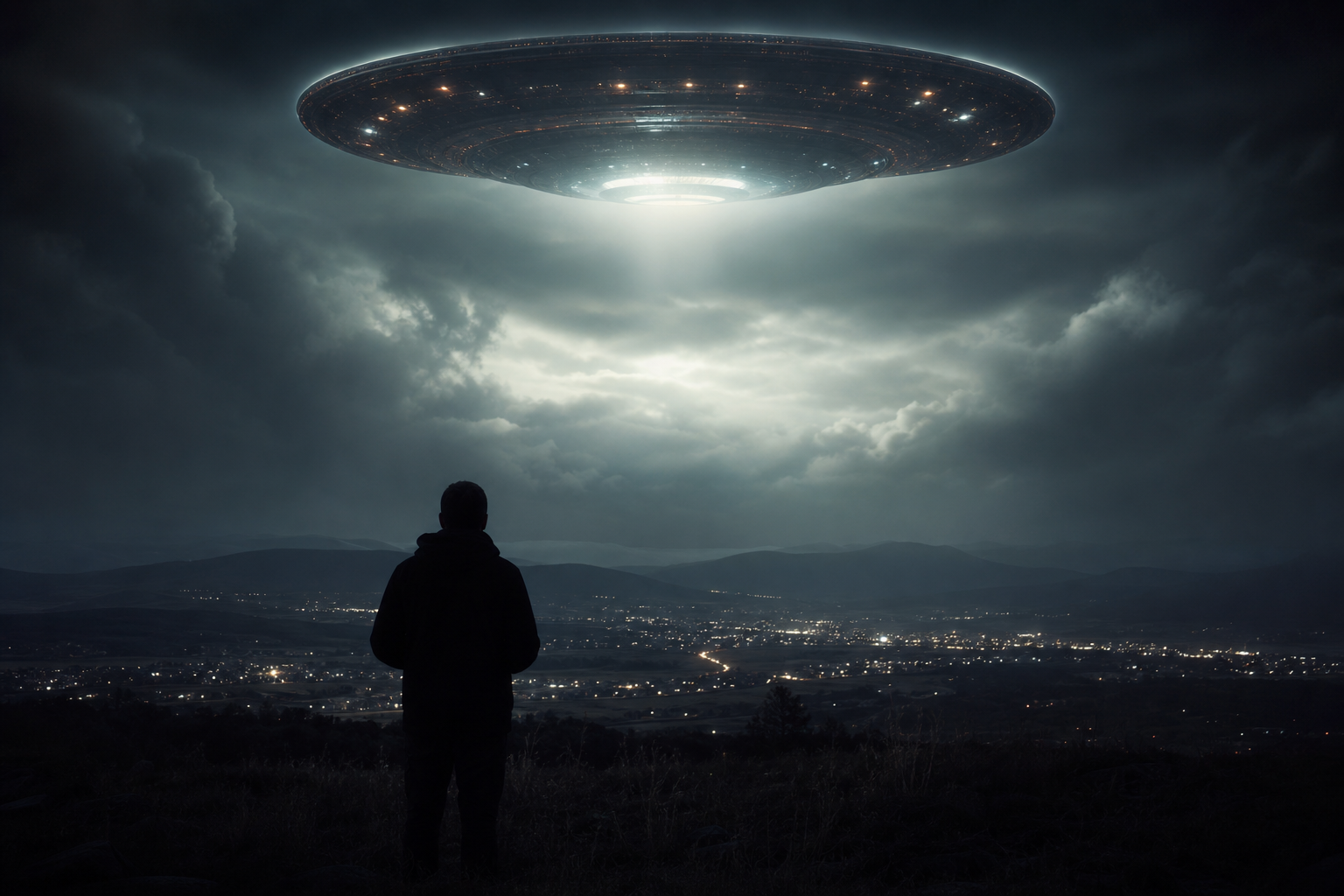
For decades, the world of UFOlogy was a landscape of whispered secrets, grainy photographs, and the constant threat of a knock on the door from the Men in Black. It was a subculture defined by its outsider status, fueled by the thrill of the chase and the tantalizing possibility that the “truth” was just one whistle-blower away. However, as the veil of secrecy begins to lift, a strange phenomenon is taking hold within the community: boredom.
The Disclosure Paradox: When Reality Meets Myth
A recent viral discussion on social media has highlighted a growing sentiment among long-term enthusiasts who find themselves drifting away from the topic just as it reaches the mainstream. The user, reflecting on their journey from a “100 percent believer” to someone who “doesn’t care as much,” noted that the magic seems to have evaporated now that the government is officially involved. This “Disclosure Paradox” suggests that for many, the appeal of the paranormal wasn’t just the existence of extraterrestrial life, but the mystery surrounding it.
In the past, being a UFO hunter meant scouring late-night radio shows like Coast to Coast AM with Art Bell or trading VHS tapes of alleged sightings. It was a world of high stakes and urban legends. Today, that gritty atmosphere has been replaced by Congressional hearings, bureaucratic reports, and sanitized terminology. When a “flying saucer” becomes an Unidentified Aerial Phenomenon (UAP), it loses its folkloric teeth and becomes a matter of national security policy rather than a cosmic wonder.
From Men in Black to Government Mandates
The historical context of this shift cannot be overstated. During the height of the Cold War, the Robertson Panel and Project Blue Book sought to debunk sightings to prevent mass hysteria. This created a “David vs. Goliath” dynamic where researchers felt they were fighting a noble battle against a cover-up. The Roswell incident of 1947 became the foundational myth of this movement, providing a narrative of crashed crafts and hidden bodies that sustained the community for seventy years.
Fast forward to the 2017 New York Times revelation regarding the Advanced Aerospace Threat Identification Program (AATIP), and the dynamic changed forever. Suddenly, the Pentagon was admitting that these objects were real. While this was the “Disclosure” everyone claimed to want, it stripped away the counter-culture identity of the movement. The shadowy figures in trench coats have been replaced by officials in suits giving PowerPoint presentations, and for some, the transition is simply too clinical.
The Psychology of the Hunt
Psychologists often note that the human brain is wired to find patterns and solve puzzles. The “thrill of the hunt” provides a dopamine hit that a finalized answer cannot replicate. In the world of the paranormal, the lack of concrete evidence allowed for infinite speculation. Was it interdimensional travelers? Time travelers from the future? Or perhaps ancient spirits? When the government frames the conversation around “adversarial drones” or “sensor artifacts,” the canvas for imagination shrinks significantly.
This shift mirrors other areas of the paranormal. When ghost hunting moved from dark, quiet libraries to high-tech reality TV shows with thermal cameras and “spirit boxes,” some felt the genuine chill of the unknown was replaced by entertainment tropes. The Reddit user’s admission that they were “more into it for the stories” resonates with a generation that grew up on The X-Files. For them, the narrative of the search was more compelling than the data points of the discovery.
Is the Magic Truly Gone?
Despite this growing apathy among the “old guard,” the field of UAP studies is more active than ever. New organizations like the All-domain Anomaly Resolution Office (AARO) are tasked with scientific rigor, aiming to bring the study of these phenomena into the light of academia. While this may be “boring” to those who miss the days of Area 51 conspiracies, it represents a maturation of the subject. We are moving from the era of mythology into the era of science.
However, the paranormal has a way of reinventing itself. Even as we identify some UAPs as balloons or drones, there remains a “core” of sightings that defy conventional physics. These outliers continue to baffle even the most skeptical scientists, suggesting that while the government may have co-opted the conversation, the true mystery is far from solved. The stories haven’t ended; they have simply changed their tone.
Do you find that the official government involvement in UFO sightings has made the subject less exciting, or are you more engaged now that the “truth” is finally being taken seriously?
Recommended Resources
- 🤖 Viktor AI — The autonomous AI platform we use to run our marketing operations. Hire Viktor to handle blogging, lead research, audits, and more.
- 💳 Greenlight — The money app and debit card for kids and teens. Teach your kids to earn, save, and invest. Earn $30 when you sign up.
- ⛏️ GoMining — Earn Bitcoin through cloud mining without the hardware hassle. A passive way to get into crypto.
- 🏦 Mercury — The business banking account built for startups and small businesses. No fees, powerful tools, and easy to set up.
Leave a Reply