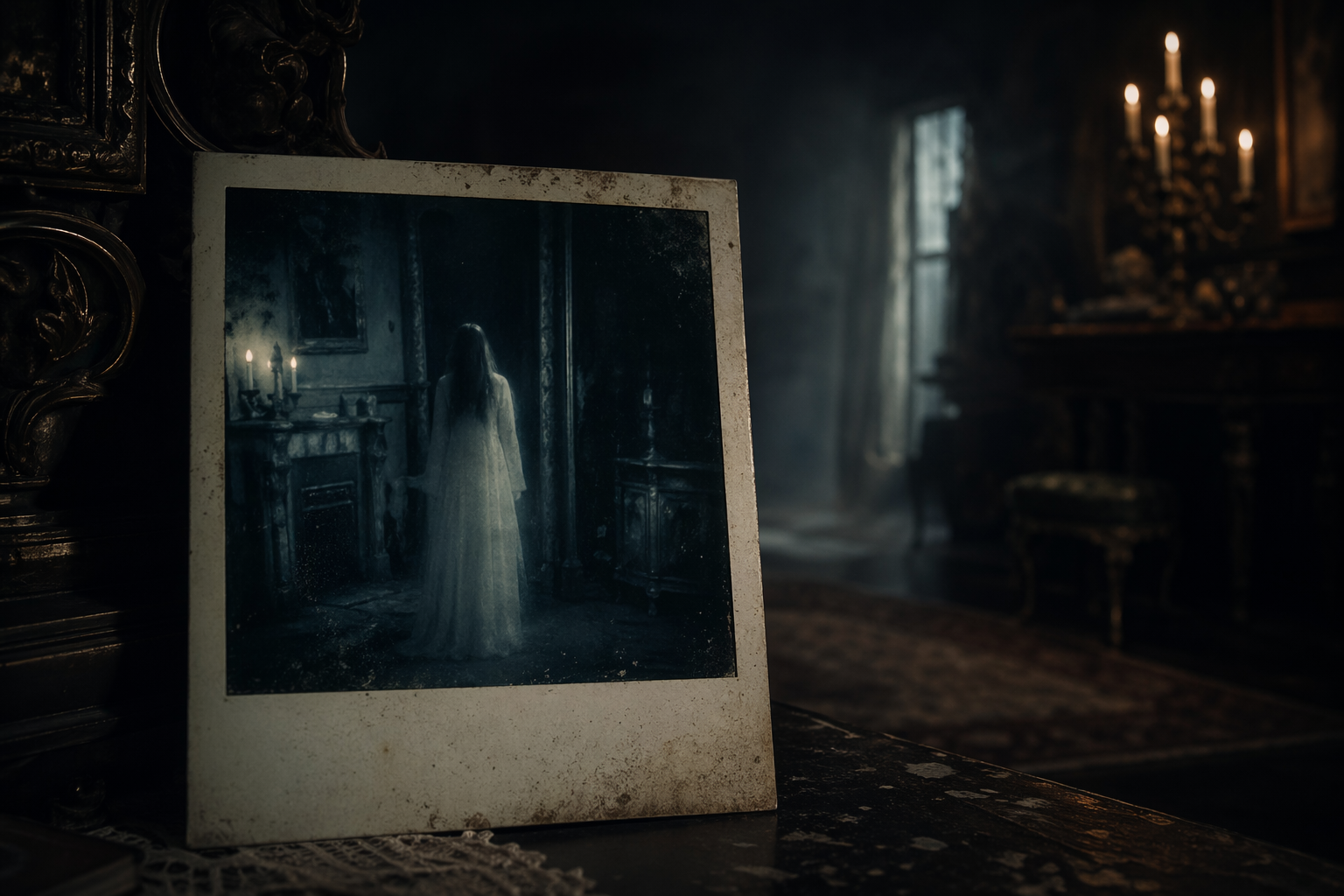
In the late 1990s, long before the era of high-definition smartphones and instant filters, capturing a paranormal phenomenon required a stroke of pure luck and a physical roll of film. For one teenager in 1999, a simple experiment with a brand-new camera resulted in a chilling image that has remained hidden from the public eye for over two decades. The photograph, recently shared by a witness known as TheKnowingDirge, captures a haunting figure that defies easy explanation, reigniting the debate over spirit photography in the analog age.
The Mystery of the 1999 Polaroid i-Zone Selfie
The year was 1999, and the witness, then 17 years old, was relaxing alone in the living room of their childhood home. Armed with a Polaroid i-Zone—a popular instant camera of the era known for producing tiny, sticker-backed photos—they decided to take a “selfie” before the term had even entered the common lexicon. It was nighttime, the house was quiet, and the camera was loaded with a brand-new roll of film. This was the very first frame captured on that roll, a detail that becomes crucial when analyzing the potential for technical error.
When the tiny photo developed, the result was not the simple self-portrait the teenager expected. Instead, the image revealed a secondary, translucent figure that appeared to be standing in close proximity. The witness describes the sensation of seeing the “person” in the photo as deeply unsettling, especially since they were physically alone in the room at the time. Despite the passage of twenty-five years, the unexplained figure remains as clear and disturbing as the day it was first printed.
Debunking the Double Exposure Theory
Whenever a ghostly figure appears in a photograph, skeptics immediately point toward double exposure. This occurs when two images are layered onto a single frame of film, often due to a camera malfunction or a failure to advance the film properly. However, the circumstances surrounding this specific 1999 photo make the double exposure theory difficult to maintain. Because this was the first picture on a fresh roll of film, there was no previous image to “ghost” onto the frame.
Furthermore, the witness notes that the figure in the photograph does not resemble them in any way. In typical double exposure accidents involving a single photographer, the secondary image is usually a blurred or offset version of the subject themselves. In this instance, the entity appears to be a distinct individual with different features. The analog nature of the Polaroid i-Zone also makes digital manipulation impossible, as the photo was produced instantly from the hardware without any intermediary software or editing tools.
A Quiet Haunting in a 1920s Home
The setting of the photograph adds another layer of intrigue to the story. The house was built in 1925, a vintage that often carries a heavy residual energy or a history of previous inhabitants. Interestingly, the witness claims they never felt the house was haunted during the twenty years they lived there. There were no footsteps in the night, no cold spots, and no records of any deaths occurring on the property. This suggests a non-intelligent haunting or perhaps a “stone tape” recording that only became visible through the lens of a camera.
This phenomenon is not uncommon in the world of paranormal research. Many famous ghost photos, such as the “Brown Lady of Raynham Hall,” were captured in locations where the witnesses felt no immediate threat or presence. It raises the possibility that spirits or interdimensional entities may be around us constantly, invisible to the human eye but detectable by the specific chemical reactions found in traditional film photography. The witness, who admits they don’t necessarily believe in ghosts, remains “creeped out” by the physical evidence they can’t explain away.
The Legacy of Analog Ghost Photos
In our modern world of AI-generated imagery and Photoshop, the authenticity of paranormal evidence is harder to prove than ever. This is why vintage photos from the pre-digital era hold such significant weight among investigators. A Polaroid is a physical artifact; it is a chemical reaction frozen in time. When a brand-new camera and a fresh roll of film produce an image of a person who wasn’t there, it forces us to confront the limitations of our understanding of space and time.
The 1999 i-Zone photo serves as a haunting reminder that the past may not be as far away as we think. Whether it was a residual haunting from the 1920s or a fleeting glimpse into another realm, the image remains a chilling piece of evidence from a time when “seeing was believing.” As more people dig through their old shoeboxes of developed photos, one wonders how many other spirits are waiting to be discovered in the grain of old film.
Do you believe that analog film has a unique ability to capture the supernatural that digital sensors lack? Share your own unexplained photos and stories in the comments below!
Recommended Resources
- 🤖 Viktor AI — The autonomous AI platform we use to run our marketing operations. Hire Viktor to handle blogging, lead research, audits, and more.
- 💳 Greenlight — The money app and debit card for kids and teens. Teach your kids to earn, save, and invest. Earn $30 when you sign up.
- ⛏️ GoMining — Earn Bitcoin through cloud mining without the hardware hassle. A passive way to get into crypto.
- 🏦 Mercury — The business banking account built for startups and small businesses. No fees, powerful tools, and easy to set up.
Leave a Reply