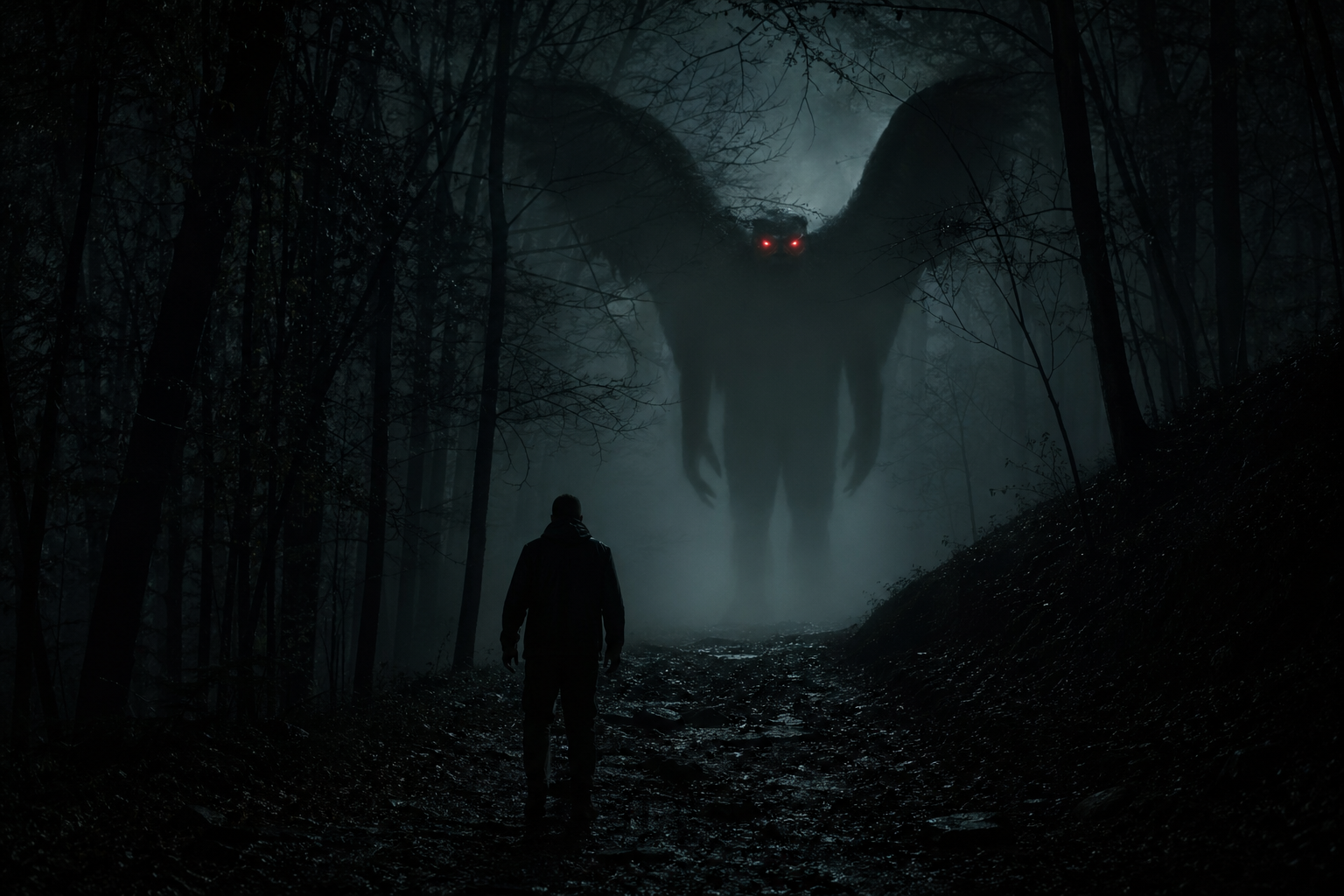
In the quiet, fog-drenched corners of West Virginia, a legend was born that would forever change the landscape of American folklore. The Mothman, a creature described as a winged humanoid with glowing red eyes, first emerged from the shadows of Point Pleasant in the mid-1960s, leaving a trail of terror and unanswered questions in its wake. Decades later, the fascination with this winged harbinger shows no signs of fading, as a new generation of artists and investigators continues to breathe life into the mystery.
The Silver Bridge Disaster and the Birth of a Legend
The story of the Mothman is inextricably linked to one of the most tragic events in West Virginia history. Between November 1966 and December 1967, residents of Point Pleasant reported dozens of sightings of a “large flying man with ten-foot wings.” These encounters often took place near the TNT Area, a sprawling, abandoned World War II explosives manufacturing facility characterized by overgrown bunkers and dense forest.
The sightings reached a fever pitch until December 15, 1967, when the Silver Bridge, which connected Point Pleasant to Kanauga, Ohio, collapsed during rush hour traffic. The disaster claimed 46 lives. In the aftermath, many locals and paranormal researchers began to wonder if the creature was a supernatural omen, a warning of the impending catastrophe that went unheeded.
This connection between the cryptid and the disaster transformed the Mothman from a mere “monster of the week” into a profound cultural phenomenon. It wasn’t just a creature; it was a harbinger of doom. This dark, prophetic quality is what separates the Mothman from other famous cryptids like Bigfoot or the Loch Ness Monster, lending it an air of melancholy and high strangeness that persists to this day.
Red Eyes in the Dark: Defining the Mothman’s Appearance
What does the Mothman actually look like? According to original eyewitnesses like Roger and Linda Scarberry, the creature stood nearly seven feet tall and possessed a massive wingspan. However, the most chilling detail—and the one that has become the hallmark of the legend—is the glowing red eyes. Witnesses described them as being set deep in the chest or shoulders, reflecting light with an intensity that felt hypnotic and predatory.
Unlike many other monsters that are described as hairy or reptilian, the Mothman is often depicted as having a sleek, almost insectoid or avian quality. This ambiguity has made it a favorite subject for artists in the paranormal community. Recently, on the popular r/Cryptids subreddit, user /u/philyd94 shared a striking original drawing of the creature, sparking a fresh wave of discussion about how we visualize the unknown.
Artistic interpretations like these serve a vital role in the world of the paranormal. Because there are no clear photographs of the creature—only grainy sketches and eyewitness testimonies—art becomes the primary way we interface with the legend. Every new drawing, whether it emphasizes the creature’s terrifying stature or its more ethereal, moth-like qualities, adds a new layer to the collective mythos we have built around the Point Pleasant sightings.
From Folklore to Digital Canvas: The Cryptid’s Modern Revival
In the digital age, the Mothman has undergone a surprising transformation. Once a figure of pure terror, it has become a beloved icon of internet culture. From viral memes to indie video games like Fallout 76, the creature has found a home in the hearts of those who find comfort in the weird and the unexplained. The community on platforms like Reddit allows enthusiasts to share their own theories, sightings, and creative works, keeping the legend alive in a way that 1960s witnesses could never have imagined.
This modern revival is also fueled by the concept of High Strangeness, a term coined by researcher J. Allen Hynek. The Mothman sightings weren’t just about a big bird; they were accompanied by reports of UFOs, Men in Black, and poltergeist activity. This “paranormal cocktail” suggests that the Mothman might not be a biological animal at all, but rather an interdimensional entity or a manifestation of human consciousness during times of stress.
Similar cases have been reported worldwide, such as the Black Bird of Chernobyl, which was allegedly seen soaring over the nuclear power plant before the 1986 disaster. These parallels suggest that the “Mothman” archetype may be a global phenomenon, appearing whenever humanity stands on the precipice of a great change or a great tragedy.
Why We Can’t Stop Looking for the Mothman
Why does a fifty-year-old legend continue to inspire artists and researchers today? Perhaps it is because the Mothman represents the ultimate mystery: the feeling that there is something watching us from the periphery of our vision. In a world that feels increasingly mapped and explained by science, the Mothman offers a glimpse into the unseen world that still exists in the dark corners of our forests and our minds.
Whether you view the creature as a biological anomaly, a psychological projection, or a supernatural messenger, its impact on our culture is undeniable. Every time an artist picks up a pen to draw those glowing red eyes, they are participating in a tradition of storytelling that stretches back to the very first campfire. We are drawn to the Mothman because we are drawn to the unknown, forever searching for meaning in the shadows.
Do you believe the Mothman was a physical creature, or was it a supernatural warning of the Silver Bridge disaster?
Recommended Resources
- 🤖 Viktor AI — The autonomous AI platform we use to run our marketing operations. Hire Viktor to handle blogging, lead research, audits, and more.
- 💳 Greenlight — The money app and debit card for kids and teens. Teach your kids to earn, save, and invest. Earn $30 when you sign up.
- ⛏️ GoMining — Earn Bitcoin through cloud mining without the hardware hassle. A passive way to get into crypto.
- 🏦 Mercury — The business banking account built for startups and small businesses. No fees, powerful tools, and easy to set up.
Leave a Reply