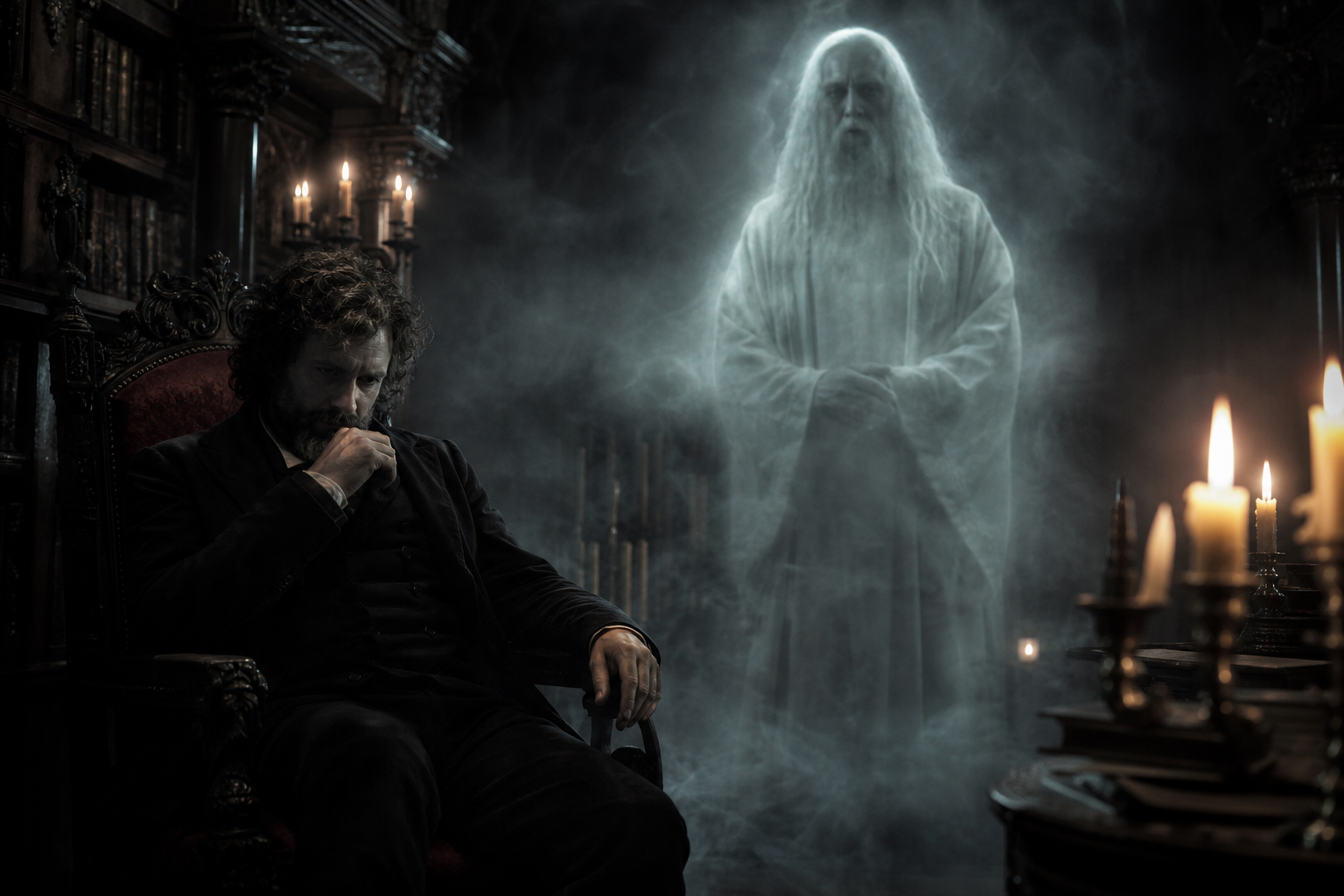
For fifteen seasons, the hit television series Supernatural redefined the boundaries of modern mythology, blending urban legends with high-stakes cosmic drama. Yet, years after the series finale, fans are still dissecting one of the most controversial and complex character arcs in television history: the true nature of Chuck Shurley.
When we first meet Chuck in the Season 4 episode “The Monster at the End of This Book,” he is presented as a neurotic, scotch-drinking author who has inadvertently chronicled the lives of Sam and Dean Winchester. At the time, he was introduced as a Prophet of the Lord, a humble vessel for divine visions that manifested as pulp fiction novels. However, the later revelation that Chuck was actually God—the ultimate antagonist of the series—has left a trail of narrative breadcrumbs that some fans find difficult to swallow.
The Prophet’s Performance: Method Acting or Divine Possession?
The central mystery that continues to spark debate in the paranormal fandom involves Chuck’s behavior when he was alone. In his earliest appearances, Chuck is seen suffering from agonizing headaches and experiencing “flashes” of the future while hunched over his typewriter. If Chuck was the Creator of the universe from the very beginning, why would he put on such a visceral performance when there was no one around to witness it?
Some theorists suggest that Chuck wasn’t just lying; he was “method acting” on a cosmic scale. To truly understand his creation, God may have suppressed his own omniscience, allowing himself to feel the fear, physical pain, and uncertainty of a mortal prophet. This “immersion” would explain why he appeared genuinely startled by his own visions. He wasn’t just writing the story; he was living it alongside The Winchesters to ensure the narrative felt authentic.
However, a more haunting theory has gained traction among the Paranormal News Media community: the “Vessel Theory.” This hypothesis suggests that the man known as Chuck Shurley was originally a real human being, a legitimate prophet who was eventually hollowed out or possessed by the divine essence of God. If this is true, the Chuck we saw in Season 4 was a victim of the very “cosmic script” he would eventually come to control.
The Angelic Blind Spot: Why Didn’t Castiel See the Truth?
Another point of contention involves the powerful celestial beings who surrounded Chuck. Throughout the series, high-ranking angels like Castiel and even the Archangel Raphael interacted with Chuck without sensing his true identity. In the lore of the show, angels are typically able to recognize the “grace” of other celestial beings, yet they saw nothing but a flickering, mortal soul in the writer.
The most likely explanation is that God is the ultimate master of disguise. If he created the rules of Enochian magic and the very fabric of angelic perception, he could easily mask his presence. By dampening his power to the level of a standard prophet, he became invisible to his own children. This raises a chilling question about the nature of the supernatural: if the ultimate power can hide in plain sight, how many other “ordinary” people in our world might be masking something ancient and formidable?
The Meta-Narrative: God as the Ultimate Showrunner
To understand Chuck, one must understand the vision of series creator Eric Kripke. Chuck was often used as a meta-commentary on the act of writing itself. By making God a writer, the show explored the idea that the universe is a series of drafts, revisions, and “fan fiction.” Chuck’s early struggles with his “visions” might have been a literal representation of the creative process—the pain of bringing a story to life.
This perspective reframes the entire series as a struggle between the characters and their author. When Sam and Dean eventually rebel against Chuck, they aren’t just fighting a monster; they are fighting the very concept of Destiny. The inconsistencies in Chuck’s early behavior might not be “plot holes” at all, but rather evidence of a writer who was still figuring out his ending as he went along.
Whether he was a possessed man, a method-acting deity, or a cosmic architect playing a long game, Chuck Shurley remains one of the most fascinating figures in paranormal fiction. His transition from a bumbling prophet to a cold, calculating antagonist serves as a warning that sometimes the things we perceive as divine guidance are merely the whims of a bored creator.
Do you believe Chuck was God from his very first breath on screen, or did the Creator “hop into” the body of a mortal writer somewhere along the way? Join the discussion in the comments below!
Recommended Resources
- 🤖 Viktor AI — The autonomous AI platform we use to run our marketing operations. Hire Viktor to handle blogging, lead research, audits, and more.
- 💳 Greenlight — The money app and debit card for kids and teens. Teach your kids to earn, save, and invest. Earn $30 when you sign up.
- ⛏️ GoMining — Earn Bitcoin through cloud mining without the hardware hassle. A passive way to get into crypto.
- 🏦 Mercury — The business banking account built for startups and small businesses. No fees, powerful tools, and easy to set up.
Leave a Reply