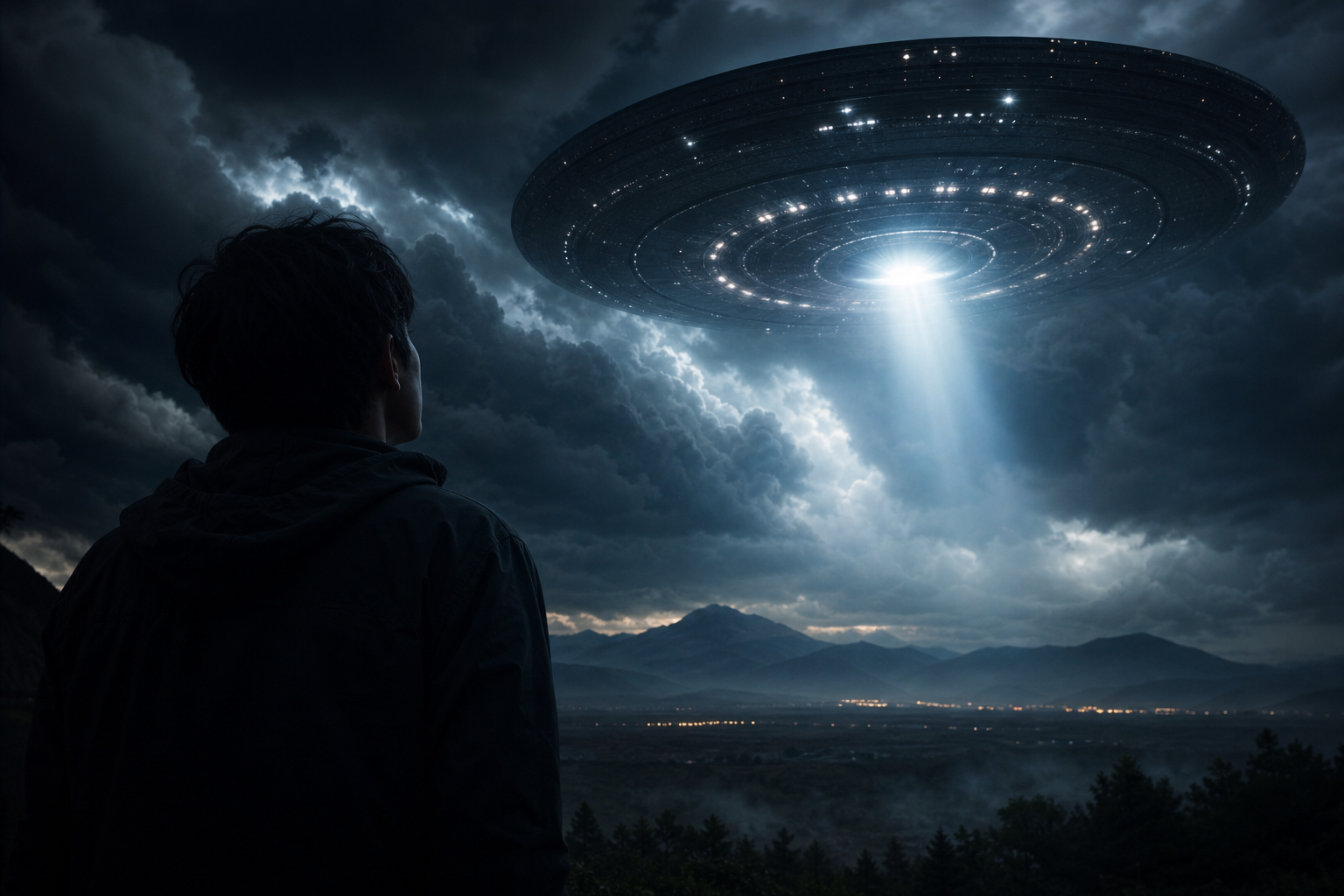
For decades, the silver screen has served as our collective window into the unknown, bridging the gap between scientific curiosity and the chilling possibilities of the cosmos. This week, Regal Cinemas is inviting audiences to revisit that boundary with a special screening event featuring some of the most influential extraterrestrial films ever made. While many view these screenings as mere entertainment, for the paranormal community, they represent a cultural touchstone that mirrors our evolving understanding of Unidentified Aerial Phenomena (UAP).
The Legacy of Close Encounters and Real-World Research
The marathon kicks off with the quintessential masterpiece of the genre, Close Encounters of the Third Kind. Directed by Steven Spielberg, this film did more than just thrill audiences; it popularized the classification system developed by Dr. J. Allen Hynek. Hynek, a celebrated astronomer and former consultant to the U.S. Air Force’s Project Blue Book, served as a technical advisor on the film to ensure a level of grounded realism rarely seen in science fiction.
The “Third Kind” refers to an encounter where an observer sees an actual animate being, a concept that remains the holy grail of ufology. By bringing these concepts to the mainstream, the film shifted the public perception of “flying saucers” from B-movie tropes to a serious, albeit mysterious, subject of study. Today, as the Pentagon releases declassified footage of “Tic-Tac” shaped crafts, the imagery of Spielberg’s 1977 classic feels more like a precursor to modern headlines than a work of pure fantasy.
Arrival and the Complexity of First Contact
Moving from the visual spectacle of the 70s to the intellectual depth of the modern era, Regal is also screening Arrival. This film tackles one of the most daunting questions in the search for extraterrestrial intelligence: how would we actually communicate? Unlike the telepathic or English-speaking aliens of older cinema, the “Heptapods” in Arrival present a linguistic puzzle that challenges our very perception of time and reality.
In the paranormal field, researchers often discuss the Fermi Paradox—the contradiction between the high probability of alien life and the lack of evidence for it. Arrival suggests that the evidence might be right in front of us, but our human senses and linear language are simply unequipped to interpret it. This resonates deeply with modern theories suggesting that UAPs may not be physical nuts-and-bolts craft, but rather interdimensional entities operating on a frequency we have yet to tune into.
Annihilation and the Biological Unknown
Perhaps the most unsettling inclusion in the lineup is Annihilation. This film explores the “Shimmer,” a mysterious zone where the laws of biology and physics are rewritten by an alien presence. It moves away from the “visitor” narrative and toward the idea of alien contamination or environmental restructuring. This reflects a darker corner of paranormal research involving “high strangeness” cases where witnesses report physical ailments or bizarre environmental shifts following a sighting.
The film’s depiction of a non-sentient, yet transformative alien force aligns with the Vallee Hypothesis, proposed by Jacques Vallee. Vallee suggested that the phenomenon acts as a “control system” for human consciousness, altering our reality in ways we cannot fully comprehend. By screening Annihilation, Regal highlights the more abstract and terrifying possibilities of what “contact” might actually look like for the human race.
Why Cinema Matters in the Age of Disclosure
The timing of this cinematic retrospective is particularly poignant. We are currently living through what many call the “Era of Disclosure.” With whistleblowers like David Grusch testifying before Congress about recovered “non-human biologics,” the line between the movies and the evening news is blurring. These films serve as a psychological primer, preparing the public for the reality that we may not be alone in the universe.
Cinematic experiences allow us to explore our fears and hopes regarding the Great Unknown in a controlled environment. Whether it is the awe-inspiring lights of a mothership or the terrifying silence of a biological anomaly, these stories help us process the implications of a post-contact world. As we sit in the dark of the theater, we aren’t just watching fiction; we are participating in a decades-long conversation about our place among the stars.
Which of these films do you believe most accurately depicts what a real-life alien encounter would look like? Join the conversation in the comments below and share your own theories on the nature of the visitors.
Recommended Resources
- 🤖 Viktor AI — The autonomous AI platform we use to run our marketing operations. Hire Viktor to handle blogging, lead research, audits, and more.
- 💳 Greenlight — The money app and debit card for kids and teens. Teach your kids to earn, save, and invest. Earn $30 when you sign up.
- ⛏️ GoMining — Earn Bitcoin through cloud mining without the hardware hassle. A passive way to get into crypto.
- 🏦 Mercury — The business banking account built for startups and small businesses. No fees, powerful tools, and easy to set up.
Leave a Reply