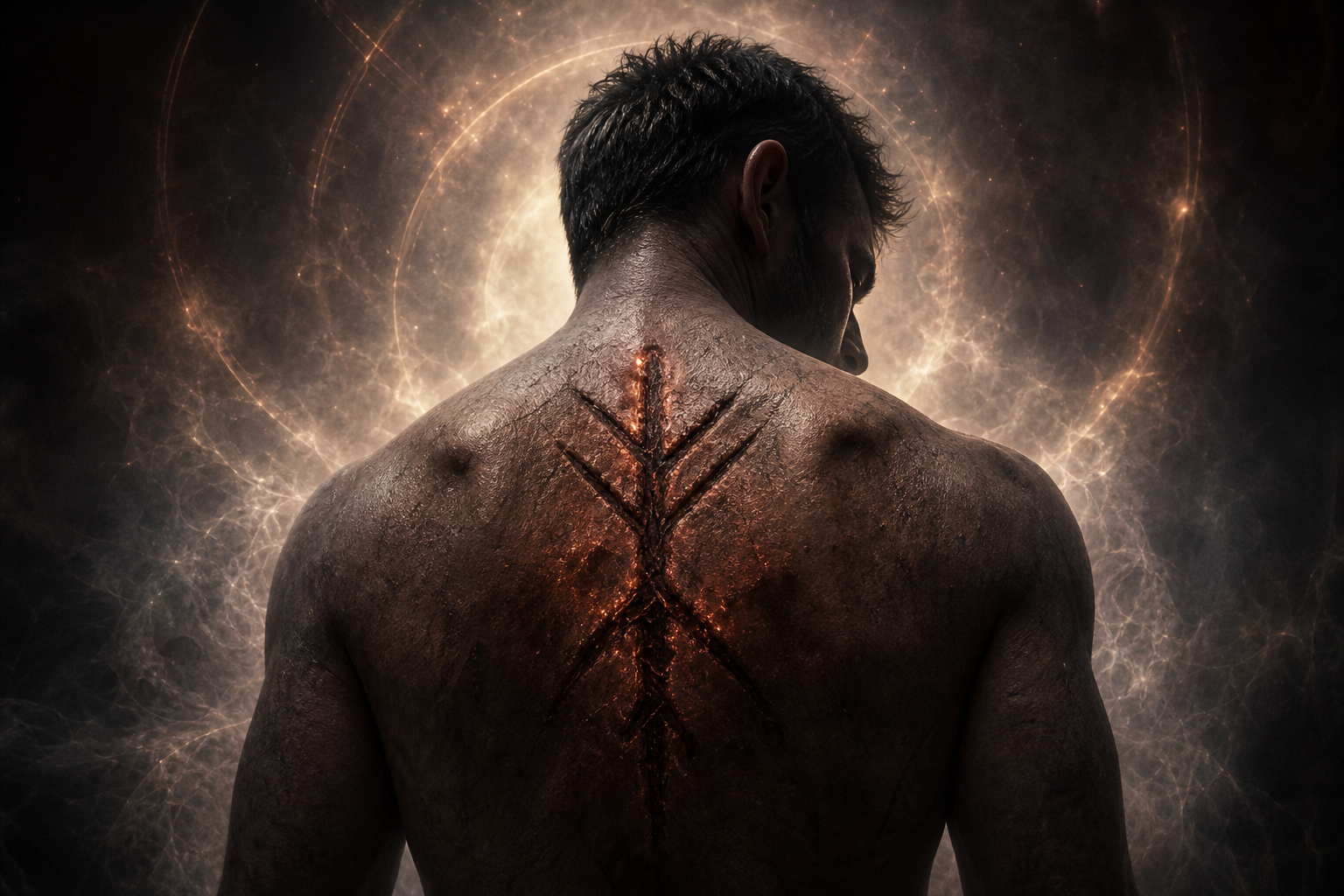
For fans of the long-running series Supernatural, few symbols carry as much weight, dread, and raw power as the Mark of Cain. Originally introduced as a burden passed from the biblical first murderer to the show’s protagonist, Dean Winchester, the mark has transcended the screen to become a popular choice for fans seeking a permanent piece of occult-inspired ink. However, a recent debate within the paranormal and fan communities has surfaced regarding the visual consistency of this ancient brand, leading many to wonder if the mark’s shifting appearance is a mere production oversight or something more mystical.
The Biblical Origins and Paranormal Lore
To understand the weight of the Mark of Cain, one must look beyond the television screen and into the depths of theological history. According to the Book of Genesis, after Cain slew his brother Abel, God placed a mark upon him to ensure that no one would kill him, effectively condemning him to a life of wandering and isolation. While the Bible never specifies what the mark actually looked like, paranormal researchers and scholars have speculated for centuries, suggesting everything from a physical brand to a literal horn or even a change in skin pigmentation.
In the realm of the supernatural, symbols are rarely just aesthetic choices; they are conduits for energy and intent. The Mark of Cain represents the ultimate primordial curse, a seal that binds the bearer to the darkness of the Abyss. When we see fans discussing the nuances of its design, they aren’t just talking about art—they are interacting with a symbol that, in lore, has the power to corrupt the very soul of the person wearing it. This transition from ancient scripture to modern pop culture has turned the mark into a sigil of resilience and dark destiny.
Visual Discrepancies: A Shifting Sigil?
The recent discussion sparked on social media platforms like Reddit highlights a curious observation: the Mark of Cain doesn’t always look the same. Some observers have noted that when the mark appears on Dean Winchester’s arm, the geometry seems to fluctuate. Specifically, the longer, vertical line often appears more curved in certain scenes, while in promotional stills or close-ups of the First Blade, the lines appear sharper and more rigid. This has led to a flurry of questions from those looking to get the design tattooed on their own bodies.
Is it possible that the mark is meant to be “alive”? In the context of the show’s mythology, the mark is a living, breathing curse that reacts to the bearer’s emotions and bloodlust. From a practical production standpoint, these variations are likely the result of different prosthetic applications and the natural contouring of the actor’s arm. However, for the paranormal enthusiast, the idea of a shifting sigil adds a layer of metaphysical depth to the design. It suggests that the mark adapts to the flesh it inhabits, making every iteration unique to the individual.
The Symbolism of the “Cane” and the First Blade
One of the more lighthearted observations made by the community is the visual pun embedded in the design: the Mark of Cain looks remarkably like a walking cane. While this might seem like a coincidence, students of symbology often find that such visual puns are intentional ways to embed meaning into a sigil. The “cane” shape could represent the long, weary journey of the wanderer, a nod to Cain’s biblical punishment of being a “fugitive and a vagabond” upon the earth.
Furthermore, the mark serves as the “lock” to the First Blade’s “key.” Without the mark, the blade—carved from the jawbone of an ass—is nothing more than an ancient bone. Together, they form a supernatural weapon of unparalleled destruction. When a person chooses to tattoo this symbol, they are often tapping into that theme of hidden power and the dangerous responsibility that comes with it. The design’s sharp points and hooked edges evoke a sense of predatory grace, making it a striking choice for those drawn to the darker side of the paranormal.
Tattooing the Occult: Risks and Rewards
Getting a tattoo of an occult symbol is a tradition that dates back thousands of years, from ancient warriors seeking protection to modern seekers of identity. However, when dealing with a symbol as heavy as the Mark of Cain, some practitioners of chaos magic and modern mysticism suggest caution. They argue that symbols carry “egregores”—collective thought-forms that can influence the wearer’s psyche. While most see it as a tribute to a favorite show, others view it as inviting the energy of the “lonely wanderer” into one’s life.
For those committed to the ink, the variation in design actually offers a creative advantage. Rather than striving for a “perfect” screen-accurate replica, many are choosing to embrace the organic fluctuations of the mark. Whether the lines are curved to follow the muscle or straight to mimic the harshness of the First Blade, the essence of the symbol remains. It is a mark of survival, a mark of the outcast, and a mark of the supernatural warrior.
As we continue to explore the intersection of television lore and ancient mythology, the Mark of Cain stands as a testament to the enduring power of symbols. It reminds us that some stories are so potent they cannot be contained by the screen—they must be etched into the skin. But as the design continues to evolve and shift in the eyes of the beholder, we have to wonder about the true nature of the brand.
If you were to wear a symbol of such immense power, would you prefer it to be a rigid, ancient design, or one that shifts and changes with your own journey?
“,excerpt:
Recommended Resources
- 🤖 Viktor AI — The autonomous AI platform we use to run our marketing operations. Hire Viktor to handle blogging, lead research, audits, and more.
- 💳 Greenlight — The money app and debit card for kids and teens. Teach your kids to earn, save, and invest. Earn $30 when you sign up.
- ⛏️ GoMining — Earn Bitcoin through cloud mining without the hardware hassle. A passive way to get into crypto.
- 🏦 Mercury — The business banking account built for startups and small businesses. No fees, powerful tools, and easy to set up.
Leave a Reply