The Bell Witch: Tennessee's Most Famous Haunting, and How Much of It Is True
Around 1817, a spirit is said to have tormented the Bell family of Robertson County, Tennessee. What the record supports, and where the legend may be later fiction.
History & folklore: legends and reported experiences, not verified fact
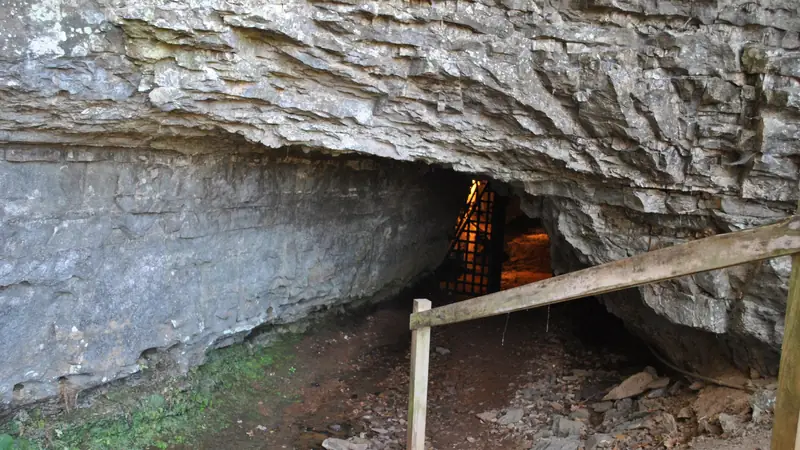
This is a legend. The events below come from accounts written decades after they were said to have happened. We've marked what historians and investigators say can and can't be supported.
Along U.S. Highway 41 in Adams, Tennessee, a state historical marker points to the site of what the Tennessee Encyclopedia (opens in a new tab) calls "perhaps Tennessee's most famous ghost tale": the Bell Witch.
The story
According to the encyclopedia, John and Lucy Williams Bell moved from North Carolina to a farm on the Red River in Middle Tennessee in 1804. Around 1816, the story goes, strange things began to happen. Apparitions appeared and noises grew so violent that the house reportedly shook. Family members were slapped and pinched, bedcovers were pulled off sleepers, and the spirit, nicknamed "Kate," was said to have kept young Betsy Bell from marrying her sweetheart.
Eventually, the legend says, the spirit began to speak. It recited prayers, imitated the voices of local people and argued Scripture. John Bell suffered painful symptoms and died on December 20, 1820. In the story, the spirit claimed it had poisoned him. It is said to have left the following spring, promising to return in seven years.
The encyclopedia also repeats a famous part of the tale: that visitors, including Andrew Jackson, came to the farm to see the mystery for themselves.
What the record supports
The Bell family was real, and so was John Bell's death in 1820. The haunting itself is harder to pin down. In a detailed investigation for Skeptical Inquirer (opens in a new tab), researcher Joe Nickell traces how the story reached print.
The main narrative, "Our Family Trouble," is said to have been written by John Bell's son Richard Williams Bell in 1846. It appeared in an 1894 book by Clarksville newspaperman M.V. Ingram. Nickell points out that the Bell manuscript has no proven existence before about 1891 and isn't available to examine. He finds anachronisms in it, such as references to professional "detectives," a word that, he writes, didn't come into use until around 1840 and was first used as a noun in America around 1853. He also finds that the "Bell" text and Ingram's own writing share distinctive phrases and habits, and concludes that Ingram likely wrote it.
Nickell writes that the Andrew Jackson visit "lacks support from any known historical source."
Not entirely invented
Nickell doesn't dismiss the whole thing. He notes that the basic story predates Ingram's book: an 1886 county history already described the "Bell Witch," saying people came "from hundreds of miles around" to witness it. Several people in the 1890s also said they had heard the stories from relatives. His conclusion is that there may have been some poltergeist-like incidents at the Bell farm starting around 1817, but it's difficult to know what actually occurred.
Visiting
The Bell family cemeteries and the area around the old farm are still in Robertson County, and the encyclopedia notes that a log building said to be from the Bell property was moved to the grounds of the old public school in Adams. If you go, respect private property and posted rules.
Sources
- Bell Witch (opens in a new tab), Tennessee Encyclopedia (Tennessee Historical Society), published 2017-10-08. Accessed 2026-11-13.
- The 'Bell Witch' Poltergeist (opens in a new tab), Skeptical Inquirer (Joe Nickell), published 2014-01. Accessed 2026-11-13.
This article is an original summary written from the sources above. Quotes are short and attributed. Paranormal claims are reported as claims and have not been independently verified. Spotted an error? See our contact page.
Keep reading

Congress Demands Answers: What Three UAP Hearings Revealed, and What They Didn't
Since 2023, House hearings have aired sworn claims of hidden UFO programs. Here's what witnesses alleged, what the Pentagon says, and the disinformation twist.
7 sources · 4 min read
Mothman: The Point Pleasant Legend, the Bridge Collapse, and What the Record Shows
In 1966, two couples reported a red-eyed winged creature near Point Pleasant, West Virginia. How a year of sightings became a legend tied to a real tragedy.
4 sources · 3 min read

The Phoenix Lights, Explained: What Thousands Saw Over Arizona in 1997
On March 13, 1997, lights over Arizona became one of the most-witnessed UFO events in U.S. history. Here's the military explanation, and why many witnesses reject it.
4 sources · 3 min read