Canadian MPs Vote 11-0 to Study Ottawa's Own UFO Report
A House of Commons committee will hold four meetings on the Sky Canada Project, the 2025 report that urged Canada to set up a service for UAP sighting reports.
News report: claims as reported by the cited sources
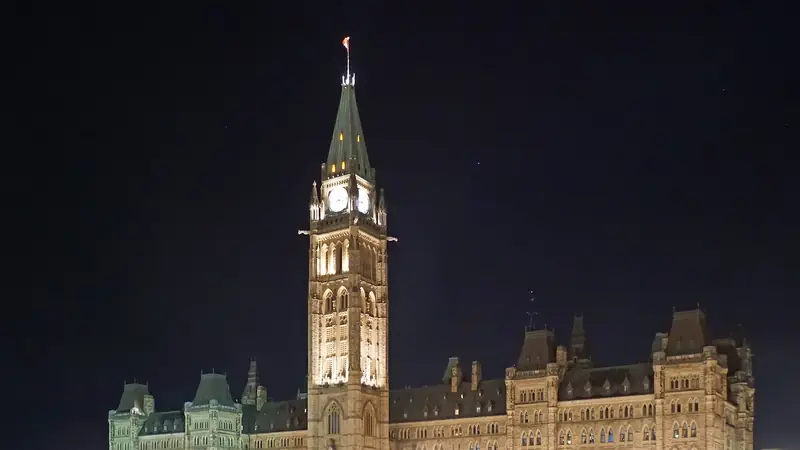
Canada's federal government already has a report on what to do about UFO sightings. Now a group of members of Parliament wants to know what happened to it.
On Thursday, Nov. 26, the House of Commons Standing Committee on Science and Research voted 11 to 0 to study the Sky Canada Project, according to the committee's official minutes (opens in a new tab). The project's final report, dated June 2025 and written by the Office of the Chief Science Advisor of Canada, recommended a dedicated federal service to collect and investigate reports of unidentified aerial phenomena, or UAPs.
What the committee agreed to
The motion came from Conservative MP Vincent Neil Ho, who moved it on Nov. 3, the minutes (opens in a new tab) show. The meeting was suspended and resumed twice, on Nov. 17 and Nov. 26, before the final vote.
As adopted, the study will examine the report's findings and recommendations, "including the collection, management, analysis and public reporting of unidentified aerial phenomena data," along with aviation safety, scientific research and public transparency. It is set at four meetings:
- one with the Chief Science Advisor of Canada and officials from that office;
- one with officials from the Department of National Defence, Transport Canada, the RCMP and NAV CANADA;
- two more with scientific, aviation, national security, defence, public safety and other expert witnesses.
The motion also invites "members of the public to submit written briefs" to the committee. It orders the science advisor's office to hand over briefing materials, consultation records, correspondence and implementation plans at least 48 hours before the advisor appears. The committee will then report its findings to the House and ask the government to table "a comprehensive response to the report."
Not every idea made it in. Bloc Québécois MP Maxime Blanchette-Joncas proposed amendments to invite the ministers of Industry, Public Safety, National Defence and Transport. Each one he put to a vote failed by 1 vote to 10, according to the minutes (opens in a new tab). He then joined the unanimous vote for the motion itself. The minutes do not list dates for the hearings; the committee adjourned "to the call of the Chair."
What the Sky Canada report found
The project, run by the Office of the Chief Science Advisor, started in 2022 (opens in a new tab) and released a preliminary report in January 2025, CTV News reported. Its final report (opens in a new tab) says "some public sources estimate" that Canadians report between 600 and 1,000 UAP sightings a year.
A 2024 online survey that the office commissioned from Earnscliffe Strategies found that one in four respondents say they have personally seen a UAP. Only 10% reported their sighting, and 40% would not know whom to contact, the report (opens in a new tab) says.
The report describes a scattered system. Many federal departments and agencies occasionally receive sighting reports, but few investigate them unless they touch on national security, transportation safety or public safety. Most departments do not compile the reports they receive. During the project itself, the office received about 250 inquiries from Canadians, including questions about where to report sightings.
Its main recommendations:
- Name a lead. A federal department or agency should manage public UAP data. The report gives the Canadian Space Agency as one example.
- Set up a dedicated service that would "collect testimonies, investigate cases and post its analyses publicly," with France's GEIPAN cited as a model.
- Help pilots report. Transport Canada should encourage pilots, cabin crews and air traffic controllers to report sightings "without fear of stigmatization," and analyze them with NAV CANADA.
- Open the data to the public, run periodic surveys, support citizen science and partner with bodies such as AARO and NASA in the U.S. and SEFAA in Chile.
Mostly ordinary explanations
The report is not about proving that aliens exist. The project's own page (opens in a new tab) says it "is not meant to prove or disprove the existence of extraterrestrial life or extraterrestrial visitors."
The report (opens in a new tab) itself says most sightings "can be explained through careful investigation and analysis, given sufficient reliable data." It lists conventional aircraft, weather, planets and meteors, balloons, drones and satellites, lens flares and human error as common causes. It cites GEIPAN figures: of 3,188 French cases collected by 2025, only 3.2% stayed unidentified after investigation, and 31.4% could not be explained because there wasn't enough data.
Waiting on Ottawa's answer
When the report came out, Chief Science Advisor Mona Nemer told CTV News (opens in a new tab) that its recommendations "provide a realistic framework" and that she was "confident that our leaders will take these recommendations seriously." CTV also reported that a defence spokesperson said that while the military supported the project's premise, "we are not involved with or working on the Sky Canada Project."
MPs have pressed the question in other ways, too. In a written question (opens in a new tab) asked on Oct. 6, MP Branden Leslie (Portage—Lisgar) asked the government, for each Sky Canada recommendation, what action it had taken and whether it had accepted, rejected or not yet decided on it. The House of Commons site lists the question as answered on Nov. 23, with responses from four federal institutions.
Under the committee's motion, the science advisor's office must also give MPs its "implementation plans and updates concerning the report's recommendations" before the advisor testifies. That should put on the record what, if anything, has changed since the report came out.
Sources
- Minutes of Proceedings, Standing Committee on Science and Research (SRSR), Meeting 51, 45th Parliament, 1st Session (opens in a new tab), House of Commons of Canada, published 2026-11-26. Accessed 2026-11-28.
- Management of Public Reporting of Unidentified Aerial Phenomena in Canada: Report of the Sky Canada Project (opens in a new tab), Office of the Chief Science Advisor of Canada, published 2025-06. Accessed 2026-11-28.
- Sky Canada Project (opens in a new tab), Office of the Chief Science Advisor of Canada. Accessed 2026-11-28.
- Canada's top scientist releases new UFO report, here's what you need to know (Daniel Otis) (opens in a new tab), CTV News, published 2025-07-14. Accessed 2026-11-28.
- Q-1526 (45-1), Written Questions (opens in a new tab), House of Commons of Canada, published 2026-11-23. Accessed 2026-11-28.
This article is an original summary written from the sources above. Quotes are short and attributed. Paranormal claims are reported as claims and have not been independently verified. Spotted an error? See our contact page.
Keep reading
'Jellyfish UFO' Wave Traces to a June Alaska Video, and Likely a Kite
Viral 'jellyfish UFO' clips began with a June video from Anchorage. Fact-checkers point to kites, balloons and AI fakes, not aliens.
4 sources · 5 min read

Pentagon UFO Files Reveal a Contractor's Plan for an 'Exotic Material' Vault
The Pentagon's eighth UAP file batch includes a 2009 vault plan, a fast 2023 radar track and a 1953 sighting by the SR-71's designer the Air Force called a cloud.
6 sources · 5 min read

New Federal Trail Leads Hikers to the Alleged Roswell UFO 'Skip Site'
The BLM is building a hiking trail near Corona, New Mexico, to a spot some believe a UFO struck in 1947. The Air Force has long said the debris was a balloon.
4 sources · 5 min read