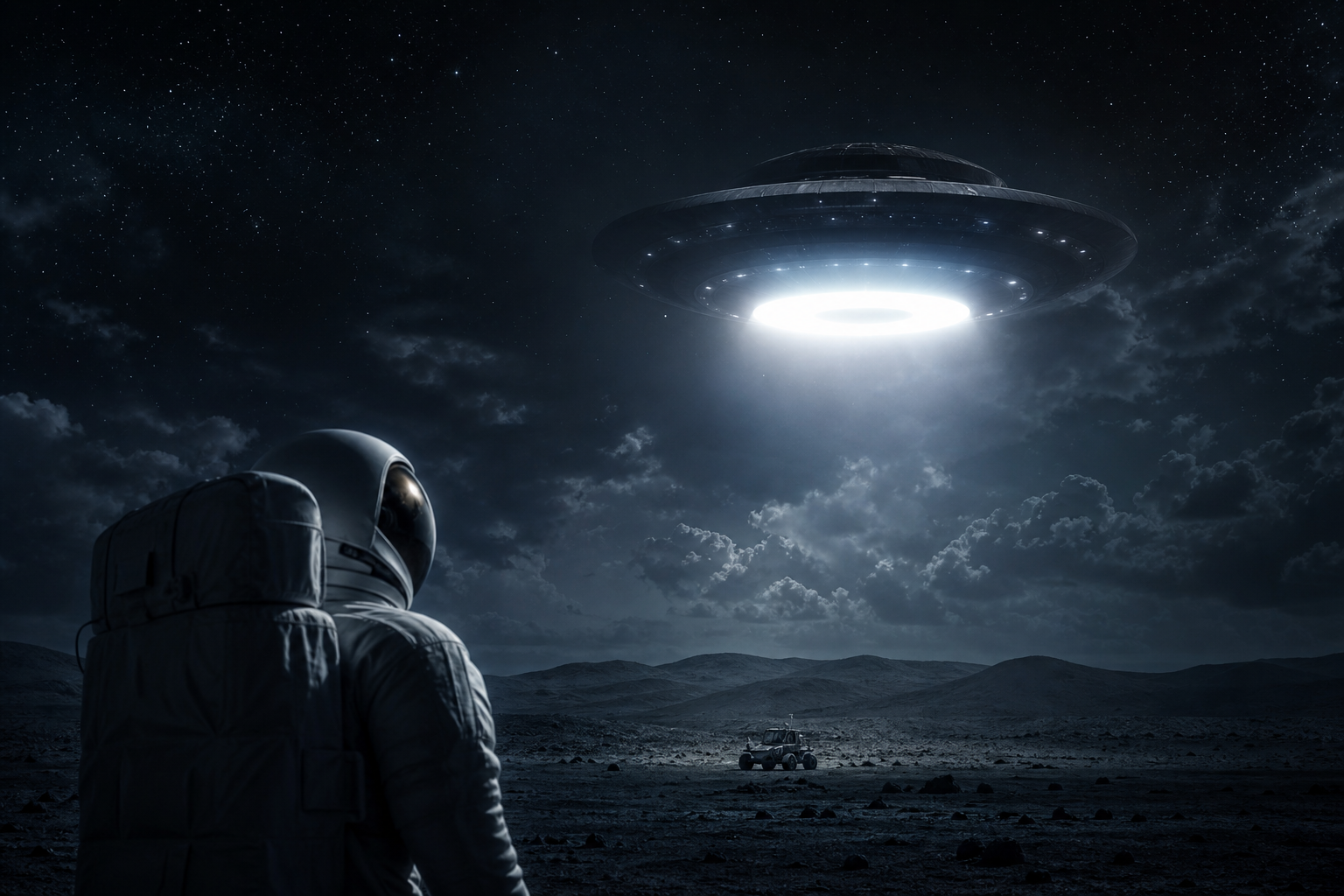
When we look back at the golden age of space exploration, we often focus on the “giant leap for mankind” and the technical triumphs of the Apollo program. However, hidden within the vast archives of NASA mission photography and once-classified documents lies a more unsettling narrative that suggests our astronauts may not have been alone in the lunar void. While the term UFO often invites skepticism, the evidence found in declassified crew debriefings and official mission film is becoming increasingly difficult for even the most hardened critics to ignore.
The Apollo 12 Anomalies: Flashing Lights in the Dark
In November 1969, the Apollo 12 mission saw Pete Conrad and Alan Bean become the third and fourth humans to walk on the lunar surface. While the mission was a resounding success, the journey was marked by several unexplained visual phenomena that were captured on film and discussed in hushed tones during post-mission briefings. These images, some of which were originally stamped with a Confidential classification, show luminous objects that appear to track the Command Module through the vacuum of space.
During the flight, the crew reported seeing “flashing lights” that did not correspond with any known stars or planetary bodies. In the declassified crew debriefing documents, the astronauts described these sightings with a mix of professional detachment and genuine curiosity. Unlike the grainy, low-resolution videos often associated with modern Unidentified Aerial Phenomena (UAP), these archival photographs provide a crisp, albeit mysterious, look at objects that seem to defy conventional explanation.
Critics often point to “ice crystals” or “space junk” as the primary culprits for these sightings, but the behavior of the objects in the Apollo 12 footage suggests a level of autonomy. The objects appeared to maintain a consistent distance from the spacecraft, leading some researchers to suggest they were being monitored by an extraterrestrial intelligence. The fact that these discussions were kept behind closed doors for decades only adds to the intrigue surrounding the mission.
Apollo 17 and the Final Lunar Mystery
As the final mission of the Apollo program, Apollo 17 was intended to be the pinnacle of lunar science. Yet, it also produced some of the most compelling photographic evidence of anomalous objects in the vicinity of the Moon. Commander Eugene Cernan and Lunar Module Pilot Harrison Schmitt captured several frames showing metallic, spherical objects that appeared to be hovering or moving at high velocities against the stark blackness of space.
One particular set of images from the Apollo 17 archives shows a bright, saucer-shaped craft reflecting the harsh sunlight of the lunar environment. These photos were not the result of a camera malfunction or a “lens flare,” as the geometry of the light reflections suggests a solid, three-dimensional structure. When these images are cross-referenced with the onboard voice transcripts, it becomes clear that the crew was aware of things they couldn’t quite identify, often using coded language or expressing brief moments of awe before returning to their technical checklists.
The historical context of these sightings is vital. During the Cold War, the space race was as much about military dominance as it was about scientific discovery. If NASA astronauts were encountering non-human craft, the implications for national security would have been staggering. This likely explains why so much of this material was sequestered in the National Archives, only to be pieced together by persistent researchers years later.
From “Confidential” to Public Discourse
The transition of these documents from classified intelligence to public record has changed the way we view the history of space exploration. We are no longer looking at “blobs” on a screen; we are looking at high-quality film stock processed by the world’s premier space agency. The Freedom of Information Act (FOIA) has been instrumental in bringing these debriefings to light, revealing that the conversation about UFOs has been happening at the highest levels of government since the 1960s.
Modern organizations like the All-domain Anomaly Resolution Office (AARO) are now tasked with investigating these types of sightings, but the Apollo-era data remains a foundational pillar for the disclosure movement. These missions represent a time when humans were furthest from home, and the evidence suggests that in that isolation, we encountered something truly profound. The consistency of the reports across different missions—from Apollo 11 to Apollo 17—points toward a persistent presence in the lunar environment.
As we prepare to return to the Moon with the Artemis program, the lessons of the past are more relevant than ever. Will the next generation of astronauts encounter the same “flashing lights” and metallic spheres that haunted their predecessors? The declassified record suggests that the Moon is far from a dead, lonely rock, and the secrets held in those 1960s film canisters may just be the tip of the iceberg.
Do you believe these Apollo-era photographs are definitive proof of extraterrestrial monitoring, or are they simply the result of natural phenomena that we have yet to fully understand?
Recommended Resources
- 🤖 Viktor AI — The autonomous AI platform we use to run our marketing operations. Hire Viktor to handle blogging, lead research, audits, and more.
- 💳 Greenlight — The money app and debit card for kids and teens. Teach your kids to earn, save, and invest. Earn $30 when you sign up.
- ⛏️ GoMining — Earn Bitcoin through cloud mining without the hardware hassle. A passive way to get into crypto.
- 🏦 Mercury — The business banking account built for startups and small businesses. No fees, powerful tools, and easy to set up.
Leave a Reply