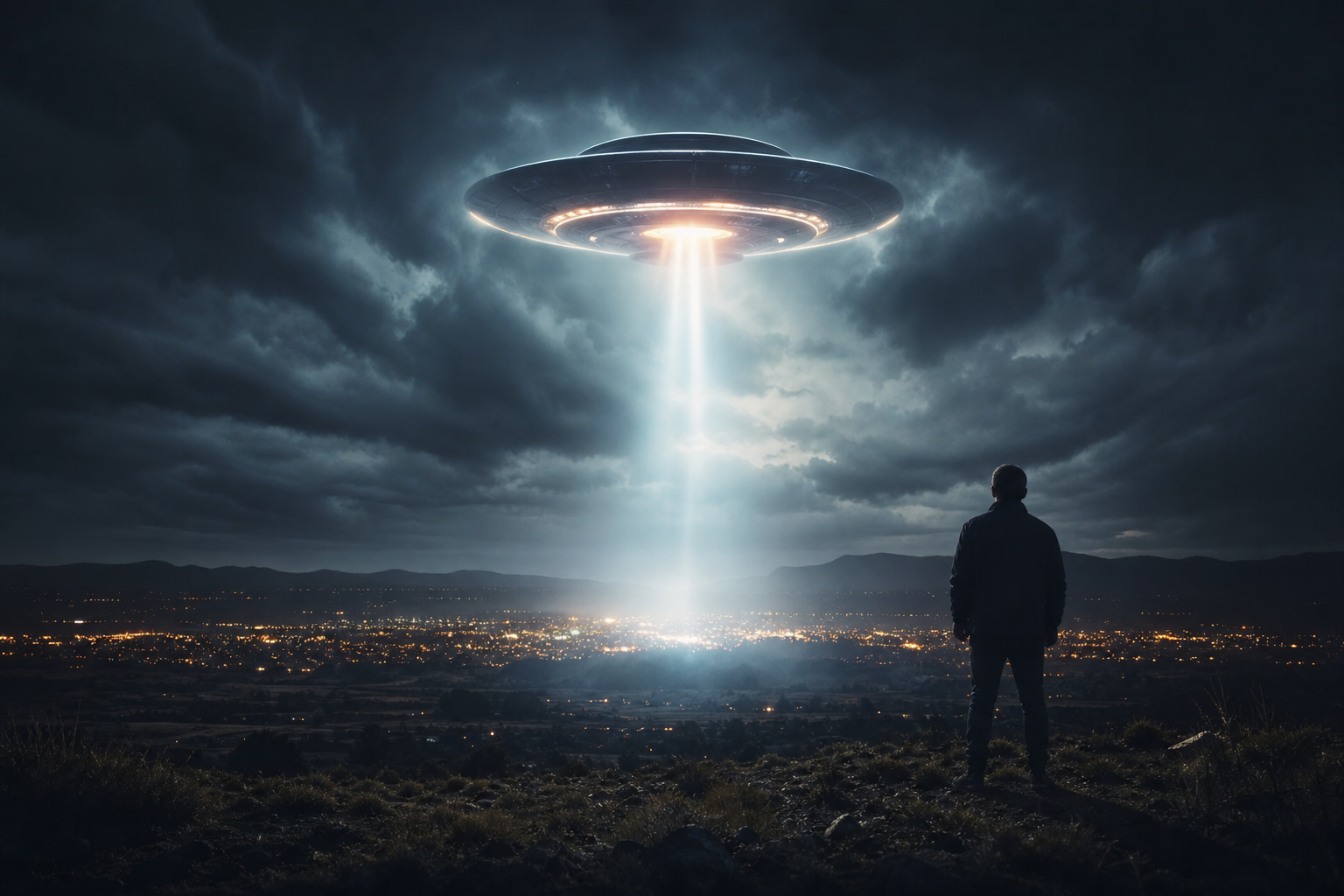
The quest for the ultimate truth regarding Unidentified Anomalous Phenomena (UAP) has reached a fever pitch, but a prominent voice in the field is tempering expectations. Investigative journalist Ross Coulthart has recently signaled that the most explosive secrets—specifically those involving non-human technology—may remain buried far beneath the surface of upcoming government disclosures. While the public clamors for “the smoking gun,” the reality of deep-state secrecy suggests that the most significant files are likely to stay off the record.
The Gatekeepers of Non-Human Intelligence
For decades, the mystery of what the government knows about Non-Human Intelligence (NHI) has been the subject of intense speculation and whistleblowing. Ross Coulthart, known for his deep connections within the intelligence community, suggests that the legislative efforts to force disclosure are facing a formidable opponent: the “legacy programs.” These are alleged clandestine operations that operate with little to no congressional oversight, hidden within the labyrinthine layers of private aerospace contractors and special access programs.
According to Coulthart, the upcoming tranches of declassified UFO files are likely to contain fascinating accounts of sightings and radar data, but they will stop short of confirming crash retrieval programs. The logic is simple yet frustrating for researchers: if a program is truly “off the books,” it doesn’t technically exist in the archives that the National Archives and Records Administration (NARA) is currently searching. This creates a “transparency trap” where the government can claim to be open while still protecting its most sensitive assets.
The distinction between a “UFO sighting” and “non-human technology” is critical in this context. While the Pentagon may be willing to admit that their pilots are seeing objects they cannot identify, admitting to the possession of exotic materials or biological remains is a bridge too far. Coulthart’s assessment aligns with the fears of many in the disclosure movement who believe that the most vital information is being moved to private entities to avoid the reach of the Freedom of Information Act (FOIA).
Historical Precedents and the Culture of Secrecy
To understand why Coulthart is skeptical, one must look at the history of Project Blue Book and the Condon Committee. In the mid-20th century, these initiatives were presented as objective scientific studies into the UFO phenomenon. However, later declassifications revealed they were often used as public relations tools to debunk sightings and discourage public interest. The “playbook” for managing the UFO narrative has remained remarkably consistent over the last seventy years.
The current atmosphere mirrors the 1950s, but with higher stakes. With the emergence of whistleblowers like David Grusch, who testified under oath about the existence of “intact and partially intact” craft of non-human origin, the pressure on the Department of Defense has never been higher. Yet, Coulthart points out that the UAP Disclosure Act, while a step forward, has been stripped of some of its most potent “eminent domain” clauses. These clauses would have allowed the government to seize NHI technology from private corporations.
Without the legal teeth to raid the hangars of private defense giants, the public is left relying on the voluntary honesty of agencies that have spent a lifetime perfecting the art of the “no comment.” This historical pattern of compartmentalization ensures that even those working on the propulsion systems of these craft may not know the full scope of the project they are part of, making a “full reveal” nearly impossible through standard bureaucratic channels.
The Role of Private Aerospace in the Cover-Up
A central theme in Coulthart’s recent commentary is the role of the private sector. By transferring recovered technology to private aerospace firms, the government effectively places that technology outside the jurisdiction of public inquiry. These companies are not subject to the same transparency requirements as federal agencies, creating a “black hole” where non-human tech can be studied in total isolation.
This “outsourcing of secrecy” is what makes the upcoming file releases so precarious. If the All-domain Anomaly Resolution Office (AARO) only searches military databases, they will find plenty of sensor data but zero evidence of hardware. Coulthart argues that the real “UFO files” aren’t files at all—they are physical assets held in secure facilities that no paper trail can easily reach. This creates a narrative where the government can truthfully say they have no “records” of such programs while still possessing the physical evidence.
Furthermore, the national security argument remains the ultimate trump card. Any information that could give an adversarial nation an advantage in “reverse-engineering” exotic technology is automatically classified at the highest levels. Coulthart suggests that as long as the geopolitical arms race continues, the chance of the public seeing a “non-human craft” is virtually zero, regardless of how many pages of redacted text are released to the National Archives.
What Remains in the Shadows?
Despite the pessimistic outlook on the immediate release of “tech files,” the disclosure movement continues to gain momentum. The very fact that journalists like Ross Coulthart are discussing these clandestine programs in the mainstream media is a seismic shift from the ridicule of previous decades. We may be entering an era of “slow-drip disclosure,” where the truth comes out not through a single document, but through the cumulative weight of witness testimony and circumstantial evidence.
The question remains: if the government isn’t going to tell us the whole truth, who will? As more whistleblowers come forward and civilian tracking technology improves, the window of secrecy is closing. Even if the official files are scrubbed of their most world-changing secrets, the reality of a non-human presence on Earth may eventually become impossible to hide, regardless of what is—or isn’t—in the archives.
Do you believe the government will ever truly reveal the physical evidence of non-human technology, or will the most important secrets always remain hidden in the private sector?
Recommended Resources
- 🤖 Viktor AI — The autonomous AI platform we use to run our marketing operations. Hire Viktor to handle blogging, lead research, audits, and more.
- 💳 Greenlight — The money app and debit card for kids and teens. Teach your kids to earn, save, and invest. Earn $30 when you sign up.
- ⛏️ GoMining — Earn Bitcoin through cloud mining without the hardware hassle. A passive way to get into crypto.
- 🏦 Mercury — The business banking account built for startups and small businesses. No fees, powerful tools, and easy to set up.
Leave a Reply