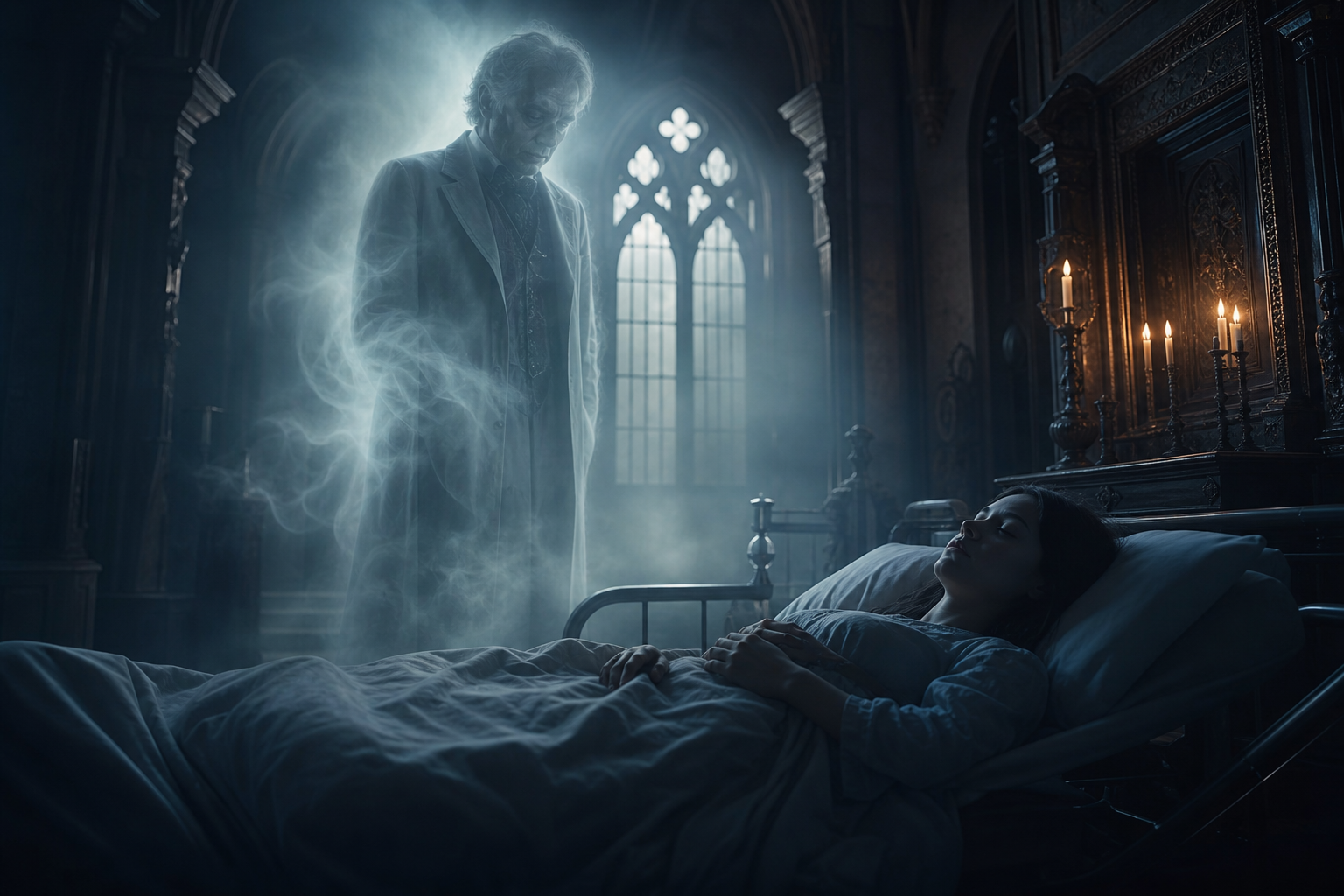
In the high-stakes environment of a Level 1 Trauma Center, death is often viewed through a clinical lens, yet some departures leave a lingering resonance that defies medical logic. For one veteran ICU nurse, a routine shift in the early 2000s transformed into a lifelong mystery when a deceased patient seemingly crossed the veil to deliver a final message. This extraordinary encounter challenges our understanding of the bond between caregiver and patient, suggesting that the afterlife may be closer than we dare to imagine.
The Unexplained Decline of a Young Patient
Working in one of the top Intensive Care Units in the United States, the witness was no stranger to critical illness and the harsh realities of septic shock and organ failure. However, the case of a young man admitted for a seemingly manageable stomach bleed after a weekend of celebration defied all expectations. Initially, the medical team expected a full recovery; the patient was intubated merely as a precaution to protect his airway. But in a turn of events that baffled even the most seasoned staff, his body began to shut down with terrifying speed.
As his liver failed—a condition often deemed incompatible with life without a transplant—the young man’s prognosis turned grim. With no local family present, his friends stood vigil until out-of-state relatives eventually made the agonizing decision to discontinue life support. The nurse, who prided herself on her ability to compartmentalize the trauma of the ICU, found herself unusually unsettled by the rapid deterioration and the perceived isolation of the young man in his final hours.
The patient passed away at the exact minute the nurse’s shift ended, leaving her with a nagging sense of “what if.” She ruminated on the potential for medical anomalies and the heartbreaking possibility of family estrangement. Despite a hectic schedule involving frequent air travel and multiple professional projects, the memory of the young man refused to fade into the background of her busy life.
A Visitation from Beyond the Veil
A few weeks after the patient’s passing, the nurse experienced what researchers of the paranormal often categorize as a Crisis Apparition or a “visitation dream.” Unlike her typical dreams, which were often nonsensical and lacked familiar faces, this experience was hyper-realistic and remarkably vivid. She recalls the distinct physical sensation of sitting up in her bed, fully conscious of her surroundings, yet existing in a space where the physical and spiritual worlds collided.
In this dream state, the young man appeared to her, no longer ravaged by the multiple organ failure that had claimed his life. He stood before her with a sense of peace that had been absent during his final, frantic hours in the hospital. Such accounts are common in the annals of nursing folklore, where caregivers frequently report sensing the presence of former patients, yet the clarity of this specific interaction suggested something more profound than mere grief-induced hallucination.
The patient’s presence seemed intended to provide closure, not just for himself, but for the nurse who had carried the weight of his “unexpected” death. In the realm of parapsychology, these visitations are often viewed as a way for the deceased to signal that they have successfully transitioned and that the earthly circumstances of their death—no matter how tragic—are no longer a source of suffering.
The Science and Mystery of Deathbed Coincidences
The timing of the patient’s death, occurring at the precise moment the nurse’s shift concluded, mirrors thousands of documented cases of deathbed coincidences. These phenomena often involve patients “holding on” until a specific person arrives or departs, or passing at significant chronological markers. For the nurse, this synchronicity served as a catalyst for her lingering questions: Why did he decline so fast? Was there a spiritual component to his physical collapse?
While skeptics might point to caregiver burnout or the subconscious mind processing trauma, the “vividness” reported in these encounters is a hallmark of genuine paranormal experiences. These aren’t hazy, fleeting images; they are sensory-rich events that feel “more real than real.” The nurse’s experience aligns with the Near-Death Experience (NDE) research conducted by figures like Dr. Raymond Moody, which suggests that the consciousness remains active and communicative even after the heart stops beating.
Decades later, the memory remains as sharp as the night it happened. It serves as a reminder that in the sterile, fluorescent-lit hallways of our modern hospitals, there are still mysteries that modern medicine cannot explain. The bond between a nurse and a patient is a sacred one, and sometimes, that bond is strong enough to bridge the gap between this world and the next.
Have you ever experienced a dream so vivid it felt like a genuine visitation from someone who has passed away? Share your stories of the unexplained in the comments below.
Recommended Resources
- 🤖 Viktor AI — The autonomous AI platform we use to run our marketing operations. Hire Viktor to handle blogging, lead research, audits, and more.
- 💳 Greenlight — The money app and debit card for kids and teens. Teach your kids to earn, save, and invest. Earn $30 when you sign up.
- ⛏️ GoMining — Earn Bitcoin through cloud mining without the hardware hassle. A passive way to get into crypto.
- 🏦 Mercury — The business banking account built for startups and small businesses. No fees, powerful tools, and easy to set up.
Leave a Reply