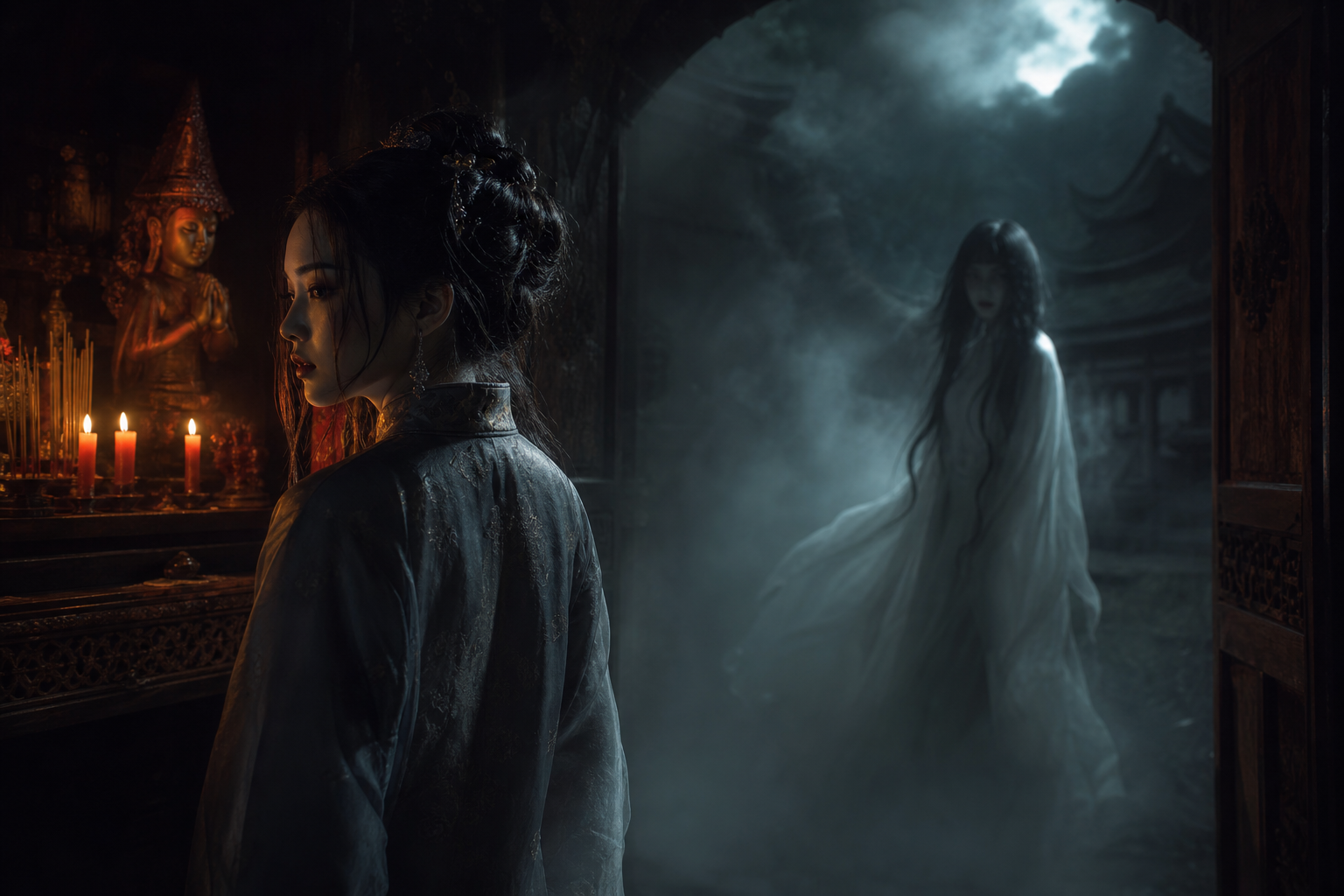
In the neon-lit streets of Shanghai and the bustling alleys of Hanoi, a profound paradox exists beneath the surface of modern progress. While these nations are often defined by their commitment to State Atheism and scientific materialism, the whispers of the ancestors and the shadows of the restless dead remain an inseparable part of daily life. For many in China and Vietnam, the paranormal is not a matter of “belief” in the Western sense, but a lived reality that transcends political ideology.
The Persistence of the Unseen in a Material World
To understand the paranormal landscape of East and Southeast Asia, one must first navigate the tension between official doctrine and ancient tradition. For decades, the prevailing governance in China and Vietnam has promoted Materialism—the philosophical view that nothing exists beyond the physical world. However, thousands of years of cultural history are not easily erased by a few generations of secular policy. The result is a fascinating hybrid culture where high-tech living coexists with age-old spiritual safeguards.
In these regions, the paranormal is often viewed through the lens of Folk Religion, a blend of local myths, Taoism, and Buddhism. While a citizen might identify as non-religious on a government census, they may still consult a fortune teller before a major business deal or avoid certain “unlucky” locations known for spiritual activity. This duality suggests that the human need to connect with the supernatural is far more resilient than any political framework.
Ancestor Worship and the Hungry Ghost Festival
One of the most visible manifestations of the paranormal in China and Vietnam is Ancestor Worship. This practice is rooted in the belief that the deceased continue to exist in a parallel realm and require the care of their living descendants. To neglect these spirits is to invite misfortune, leading many families to maintain elaborate altars and offer food, incense, and Joss Paper—often called “spirit money”—to ensure their ancestors are comfortable in the afterlife.
This belief reaches its peak during the Hungry Ghost Festival, a month-long observance where the gates of the underworld are said to open. During this time, the “hungry ghosts”—spirits who have no living relatives to care for them—roam the earth. In both Vietnam and China, this is a period of high paranormal awareness. People avoid swimming, moving houses, or staying out late at night, fearing encounters with these wandering entities. The atmosphere is thick with the scent of burning incense, a physical reminder that the veil between worlds is considered dangerously thin.
Reincarnation: The Cycle That Won’t Break
The concept of Reincarnation remains a cornerstone of the spiritual psyche in these regions, despite official stances that might suggest otherwise. In rural provinces of China and the central highlands of Vietnam, stories of “regenerated people” or children who remember their past lives are surprisingly common. These accounts often involve toddlers identifying previous family members or describing locations they have never visited, mirroring the famous Past Life Research conducted by Western scientists like Dr. Ian Stevenson.
In Vietnam, the influence of Mahayana Buddhism reinforces the idea that the soul undergoes a series of births and deaths governed by Karma. This worldview provides a sense of cosmic justice that materialism cannot offer. Even among the youth, who are increasingly globalized and tech-savvy, the idea that one’s current life is merely a chapter in a much longer story remains a comforting and widely accepted possibility. It is a cultural safety net that catches those who find the finality of death too cold to contemplate.
A Cultural Synthesis of the Paranormal
Modern citizens in these countries often adopt a “just in case” attitude toward the supernatural. This pragmatic approach to the paranormal allows them to navigate a modern world while respecting the Yin and Yang balance of the universe. If a house is rumored to be haunted, a Vietnamese family might invite a monk to perform a cleansing ritual, not necessarily because they are “religious,” but because they recognize that some energies are beyond human control.
Ultimately, the paranormal in China and Vietnam is less about proving the existence of ghosts and more about maintaining harmony with the invisible forces that surround us. Whether it is the fear of a Jiangshi (a hopping vampire-like creature) or the reverence for a departed grandmother, these beliefs serve as a bridge between the past and the present. They remind us that even in the most materialistic societies, the human spirit continues to look toward the shadows, searching for answers that science has yet to provide.
Do you believe that ancient spiritual traditions can truly coexist with modern scientific materialism, or will one eventually replace the other?
Recommended Resources
- 🤖 Viktor AI — The autonomous AI platform we use to run our marketing operations. Hire Viktor to handle blogging, lead research, audits, and more.
- 💳 Greenlight — The money app and debit card for kids and teens. Teach your kids to earn, save, and invest. Earn $30 when you sign up.
- ⛏️ GoMining — Earn Bitcoin through cloud mining without the hardware hassle. A passive way to get into crypto.
- 🏦 Mercury — The business banking account built for startups and small businesses. No fees, powerful tools, and easy to set up.
Leave a Reply