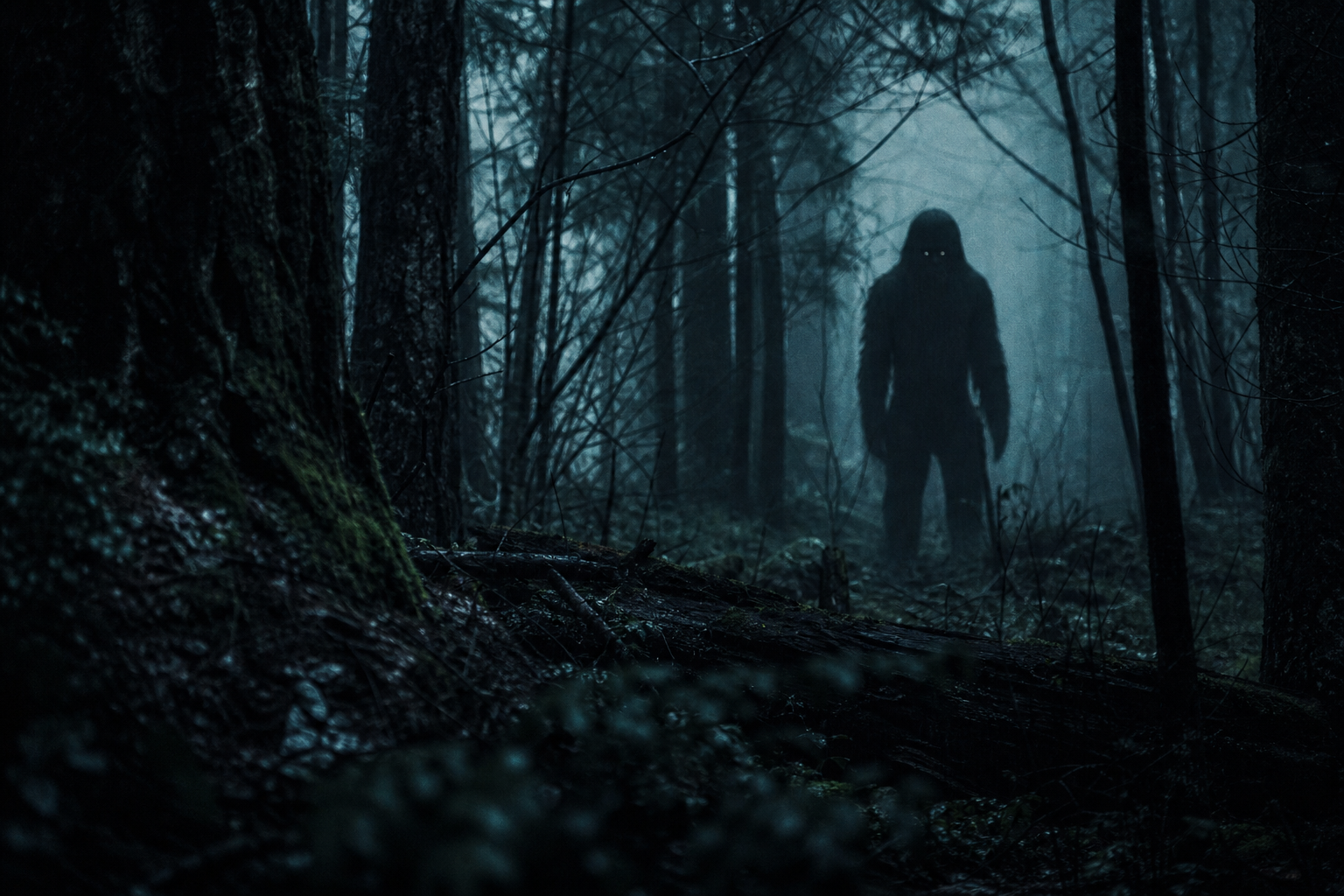
For decades, the vast wilderness of the North American continent has served as a canvas for stories that defy conventional biology. While mainstream science often dismisses these accounts as folklore or misidentification, dedicated researchers like the late Mark A. Hall spent their lives attempting to bring order to the chaos of the unexplained. Hall, a prominent figure in the field of cryptozoology, created a legendary map that serves as a geographical blueprint for the continent’s most elusive residents, ranging from prehistoric survivors to winged anomalies.
Hall’s work was more than just a collection of campfire stories; it was a serious attempt to categorize sightings based on regional patterns and biological possibilities. By plotting these encounters on a map, he sought to prove that these creatures were not random hallucinations but part of a hidden ecosystem. From the icy reaches of the north to the humid swamps of the Caribbean, Hall’s map provides a fascinating glimpse into a world where the line between myth and reality is perpetually blurred.
The Avian Anomalies and the Mothman Mystery
One of the most striking aspects of Mark A. Hall’s research was his unique perspective on the Mothman of West Virginia. While many enthusiasts link the creature to extraterrestrial origins or supernatural curses, Hall proposed a more grounded, albeit still startling, theory. He believed that the red-eyed entity was actually a species of giant owl, standing several feet tall and possessing a massive wingspan. This biological approach was a hallmark of Hall’s work, as he often looked for naturalistic explanations for seemingly impossible sightings.
Further west, Hall’s map highlights the persistent legends of the Thunderbird and the Arizona pterosaur. These accounts describe massive birds or reptilian flyers that resemble creatures long thought to be extinct. In the arid deserts of the Southwest, sightings of “living fossils” have persisted for over a century, suggesting that the remote canyons may still harbor remnants of a prehistoric age. Hall’s inclusion of these aerial cryptids suggests a belief that the skies of North America are far from fully explored.
Monsters of the Deep: From the Oklahoma Octopus to the Lusca
The waterways of North America are equally crowded with mystery, according to Hall’s cartography. Perhaps one of the most controversial entries is the Oklahoma Octopus. While an octopus living in a landlocked, freshwater lake seems impossible, Hall theorized that these creatures might actually be surviving eurypterids—ancient sea scorpions that could reach massive sizes. This theory attempts to bridge the gap between modern sightings and the fossil record, providing a potential identity for the multi-armed terrors reported by frightened swimmers.
Moving toward the coast, the map identifies Caddy (short for Cadborosaurus), the famous sea serpent of the Pacific Northwest, and the Lusca of the Caribbean. The Lusca is often described as a terrifying hybrid of a shark and an octopus, lurking in the deep “blue holes” of the Bahamas. Hall also documented reports of giant crocodiles in regions where they shouldn’t exist and the mysterious Pinky, also known as the St. John’s Monster, which has been sighted in the waters of Florida. These aquatic cryptids suggest that our lakes and oceans remain the ultimate frontier for hidden biology.
Terrestrial Terrors and Ancient Survivors
On land, Hall’s map tracks creatures that challenge our understanding of the mammalian and reptilian hierarchies. He included MacFarlane’s Bear, a strange, yellowish ursine specimen killed in the 19th century that some believe was a hybrid or a relic population of an extinct species. In the subterranean depths of New Mexico, the Carlsbad Creature represents a more obscure entry, described as a bizarre, perhaps reptilian entity dwelling within the famous cavern systems.
The map also features the Milton Lizard and other reports of giant lizards roaming the American South. These sightings often describe bipedal or unusually large reptiles that resemble dinosaurs more than modern iguanas. Additionally, the Kajanok, a lesser-known cryptid from the northern regions, adds another layer of mystery to the map. By documenting these terrestrial anomalies, Hall highlighted the fact that even in the age of satellite imagery, there are still pockets of the wilderness where a large predator could remain undetected by modern science.
The Lasting Legacy of Mark A. Hall’s Research
Mark A. Hall’s contribution to the study of the unknown was his insistence on looking at cryptids through a lens of natural history. He wasn’t content with just recording stories; he wanted to understand the “why” and “how” of these creatures’ existence. His map remains a vital resource for modern researchers, serving as a reminder that the geography of North America is steeped in mystery. It challenges us to look closer at the shadows in the woods and the ripples in the water.
While many of the creatures on Hall’s map remain uncaptured and unproven, the consistency of the reports across generations suggests that there is more to the story than mere imagination. Whether these beings are undiscovered species, prehistoric survivors, or something else entirely, they continue to capture the human imagination. Hall’s map is not just a guide to monsters; it is a testament to the enduring mystery of the natural world and our desire to uncover its secrets.
Which of the cryptids on Mark A. Hall’s map do you believe has the strongest chance of being a real, undiscovered biological species?
“,excerpt:
Recommended Resources
- 🤖 Viktor AI — The autonomous AI platform we use to run our marketing operations. Hire Viktor to handle blogging, lead research, audits, and more.
- 💳 Greenlight — The money app and debit card for kids and teens. Teach your kids to earn, save, and invest. Earn $30 when you sign up.
- ⛏️ GoMining — Earn Bitcoin through cloud mining without the hardware hassle. A passive way to get into crypto.
- 🏦 Mercury — The business banking account built for startups and small businesses. No fees, powerful tools, and easy to set up.
Leave a Reply