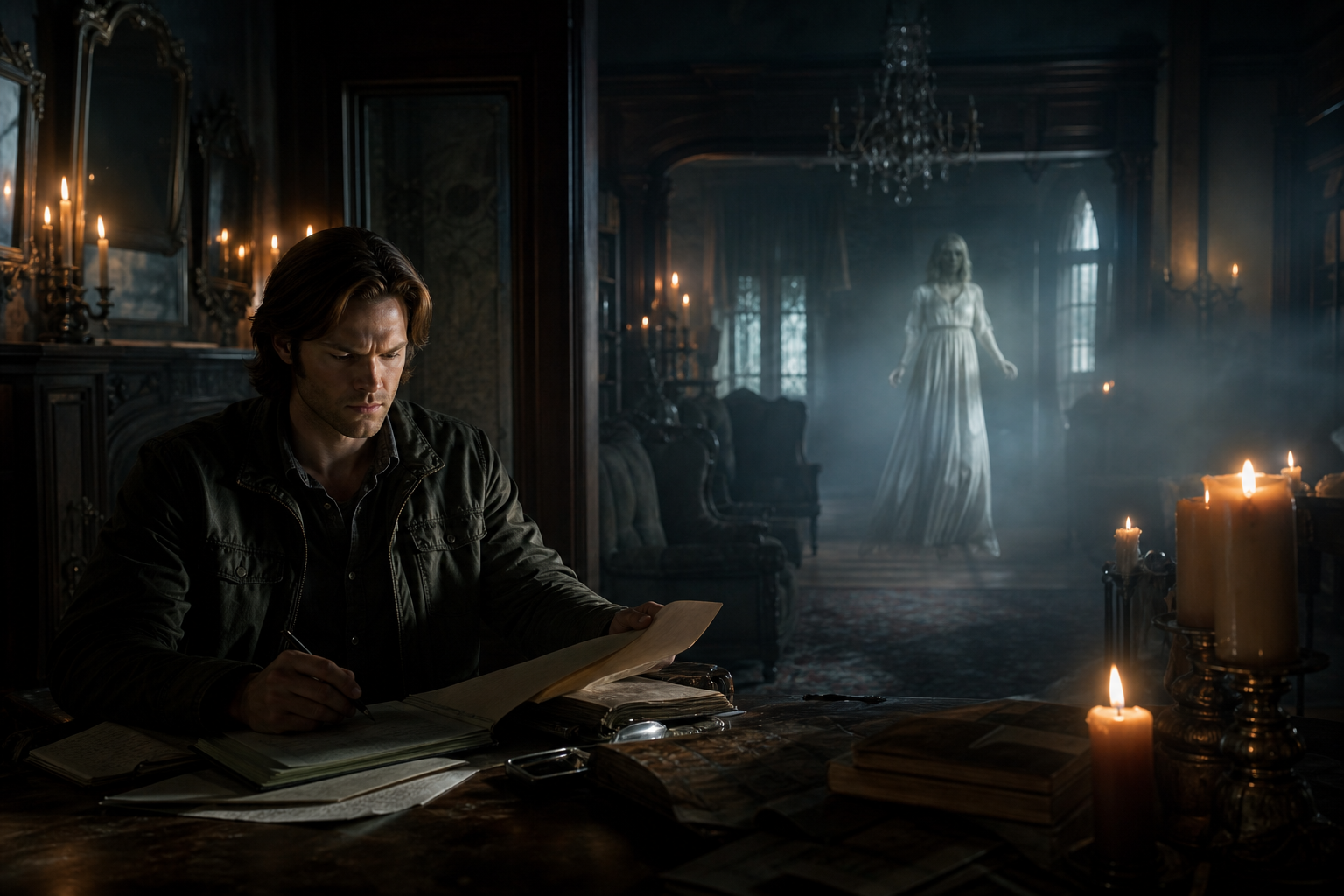
In the early years of the hit series Supernatural, the hunt for the paranormal wasn’t just about silver bullets and rock salt; it was a masterclass in forensic deduction. While the later seasons leaned heavily into cosmic stakes and angelic warfare, the first two seasons presented a gritty, grounded look at what it truly means to be a paranormal investigator. At the heart of this operation was Sam Winchester, a character whose analytical mind turned every haunted motel and abandoned asylum into a high-stakes crime scene.
The Art of the Paranormal Procedural
Long before the viral success of games like Phasmophobia, Sam Winchester was demonstrating the exact same loop of evidence gathering and spirit identification. In the show’s infancy, the brothers didn’t always know what they were fighting. This required Sam to utilize his Stanford-level research skills to bridge the gap between local folklore and tangible threats. He didn’t just hunt monsters; he deconstructed them through historical records, death certificates, and library archives.
Fans often point to the first two seasons as the “golden era” of the show’s detective work. During this period, Sam’s deduction skills were frequently compared to those of a modern-day Sherlock Holmes, albeit one who specialized in the afterlife. He looked for patterns in the “cold spots,” analyzed the specific behavior of poltergeists, and connected the dots between decades-old tragedies and current hauntings with surgical precision.
This methodical approach grounded the show in a sense of realism that is often missing from the genre. By treating a ghost sighting as a puzzle to be solved rather than just a jump-scare, the series invited the audience to play along. We weren’t just watching a fight; we were watching a mystery unfold, guided by Sam’s relentless pursuit of the “why” behind the “what.”
Real-World Parallels in Ghost Hunting
What makes Sam’s early work so compelling is how closely it mirrors the techniques used by actual paranormal researchers. In the field, investigators often spend more time in archives than they do in dark basements. Sam’s reliance on EMF meters and thermal readings in those early episodes reflected the burgeoning “tech-heavy” era of ghost hunting that dominated the mid-2000s.
Consider the case of the Woman in White or the Hook Man. In these instances, Sam didn’t just charge in with a shotgun. He looked for the “anchor”—the physical object or unresolved trauma tying the spirit to our world. This concept of residual haunting versus intelligent haunting is a cornerstone of real-world paranormal theory. Sam’s ability to distinguish between the two based on environmental cues was a testament to his character’s intellectual depth.
Furthermore, his use of urban legends as a roadmap for investigation is a tactic used by folklorists and cryptozoologists alike. By acknowledging that every myth has a kernel of truth, Sam was able to navigate the murky waters of the supernatural with a level of skepticism that actually made him a better believer. He questioned everything until the evidence left him with only one terrifying conclusion.
The Evolution of the Winchester Method
As the series progressed, the “monster of the week” format gave way to serialized epics involving Lucifer and the Apocalypse. While the stakes grew, some fans argue that the intricate detective work of the early seasons was a casualty of that scale. In the beginning, Sam’s greatest weapon wasn’t his psychic abilities or an ancient blade; it was his laptop and his ability to think three steps ahead of a vengeful spirit.
The “Winchester Method” in seasons one and two was about survival through knowledge. When they faced a Vandigo or a Shapeshifter, the tension came from the uncertainty. Sam’s role was to remove that uncertainty. He was the one who realized that the “ghost” was actually a tulpa created by concentrated thought, or that a series of drownings was linked to a specific historical injustice. This level of detail made the world of Supernatural feel lived-in and dangerous.
Looking back, it is genuinely impressive how the writers managed to balance the horror elements with a compelling procedural drama. Sam Winchester wasn’t just a hero; he was a scholar of the shadows. His dedication to the craft of investigation set a standard for how paranormal investigators are portrayed in media today, emphasizing that the brain is often more powerful than the brawn when dealing with the unknown.
The legacy of Sam’s early detective work continues to resonate with fans who miss the days of salt circles and library microfiche. It reminds us that the most terrifying things aren’t just the monsters under the bed, but the secrets we leave behind in the dark. Sam Winchester proved that if you look closely enough at the evidence, even the most chaotic haunting has a logic waiting to be uncovered.
Do you think the later seasons of Supernatural lost something special when they moved away from Sam’s grounded detective work, or was the shift to cosmic stakes a necessary evolution for the show?
Recommended Resources
- 🤖 Viktor AI — The autonomous AI platform we use to run our marketing operations. Hire Viktor to handle blogging, lead research, audits, and more.
- 💳 Greenlight — The money app and debit card for kids and teens. Teach your kids to earn, save, and invest. Earn $30 when you sign up.
- ⛏️ GoMining — Earn Bitcoin through cloud mining without the hardware hassle. A passive way to get into crypto.
- 🏦 Mercury — The business banking account built for startups and small businesses. No fees, powerful tools, and easy to set up.
Leave a Reply