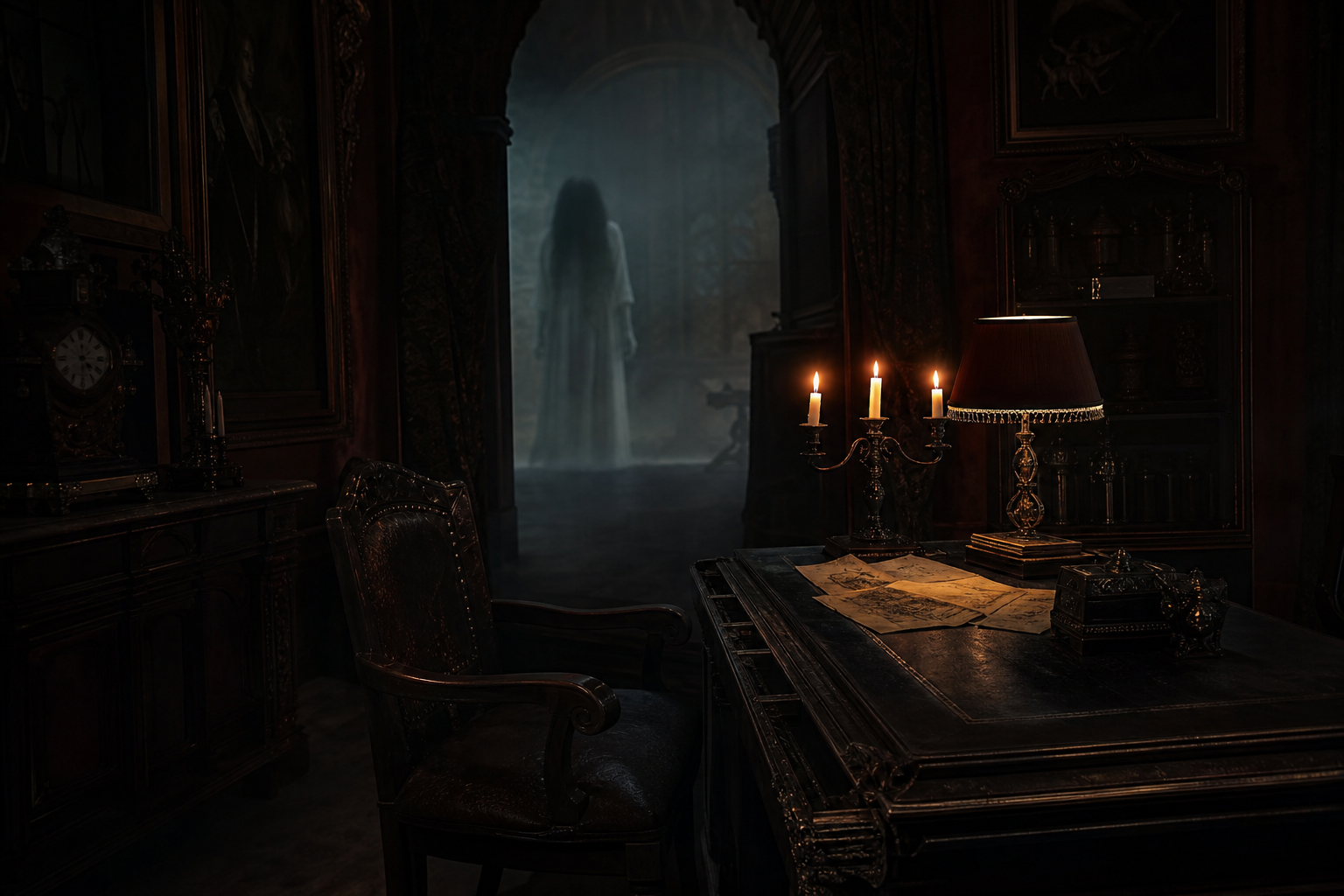
Late-night shifts and solitary work hours often breed a sense of unease, but for one social media user, that “creepy feeling” manifested into something far more tangible. A recent post on the popular r/Ghosts subreddit has sent ripples through the paranormal community, showcasing what appears to be a spectral intruder caught in the background of a mundane workspace photo. The image, shared by user Wild_Row8682, serves as a chilling reminder that we may never truly be as alone as we think.
The Discovery: A Shadow in the Workspace
The incident began like any other evening of productivity, with the witness focused on completing their tasks in a seemingly empty environment. It wasn’t until reviewing the documentation of their work that the user noticed a jarring anomaly lurking in the frame. The figure, which many describe as a shadow person, appears to be standing just out of the direct line of sight, possessing a humanoid shape but lacking distinct facial features or solid mass. This type of paranormal activity is frequently reported in environments where high levels of human stress or focused energy are present.
In the original post titled “Bro look what I found after I was doing my work,” the user’s tone is one of genuine shock and disbelief. Unlike many staged hoaxes that circulate on the internet, the raw nature of the capture suggests a spontaneous event. The anomalous figure seems to be observing the worker from a doorway or a darkened corner, a classic hallmark of what researchers call a “watcher” entity. These spirits are often characterized by their passive observation of the living, rarely interacting but leaving a heavy psychological imprint on those who catch a glimpse of them.
Analyzing the Evidence: Pareidolia or Poltergeist?
As with any viral ghost sighting, the skeptics and believers have engaged in a heated debate over the validity of the image. Skeptics often point toward pareidolia, a psychological phenomenon where the human brain perceives familiar patterns—such as faces or bodies—in random arrangements of light and shadow. In a cluttered workspace, it is entirely possible for a coat rack, a stack of boxes, or a trick of the light to form the silhouette of a person. However, many seasoned investigators argue that the proportions and “density” of the figure in this specific photo defy simple optical illusions.
The lighting in the room plays a crucial role in the analysis of this supernatural encounter. If the light source is positioned in a way that should illuminate that specific corner, the presence of a dark, light-absorbing mass becomes much harder to explain away. In the world of spirit photography, these “blacker-than-black” figures are often associated with residual hauntings—echoes of the past that repeat themselves regardless of the current occupants of a building. If the workspace is located in an older structure, the history of the land itself could be the key to identifying the silent observer.
Historical Context: The “Office Ghost” Phenomenon
This Reddit case is far from the first time a worker has encountered the unexplained. From the infamous “Circuit Board Ghost” captured on CCTV in a tech firm to the numerous reports of phantom footsteps in empty hospitals, the workplace is a hotbed for paranormal claims. Some theorists suggest that the repetitive, rhythmic nature of work creates a “psychic loop” that can either attract entities or allow us to thin the veil between dimensions. When we are in a state of “flow” or deep concentration, our peripheral awareness may become more sensitive to interdimensional beings.
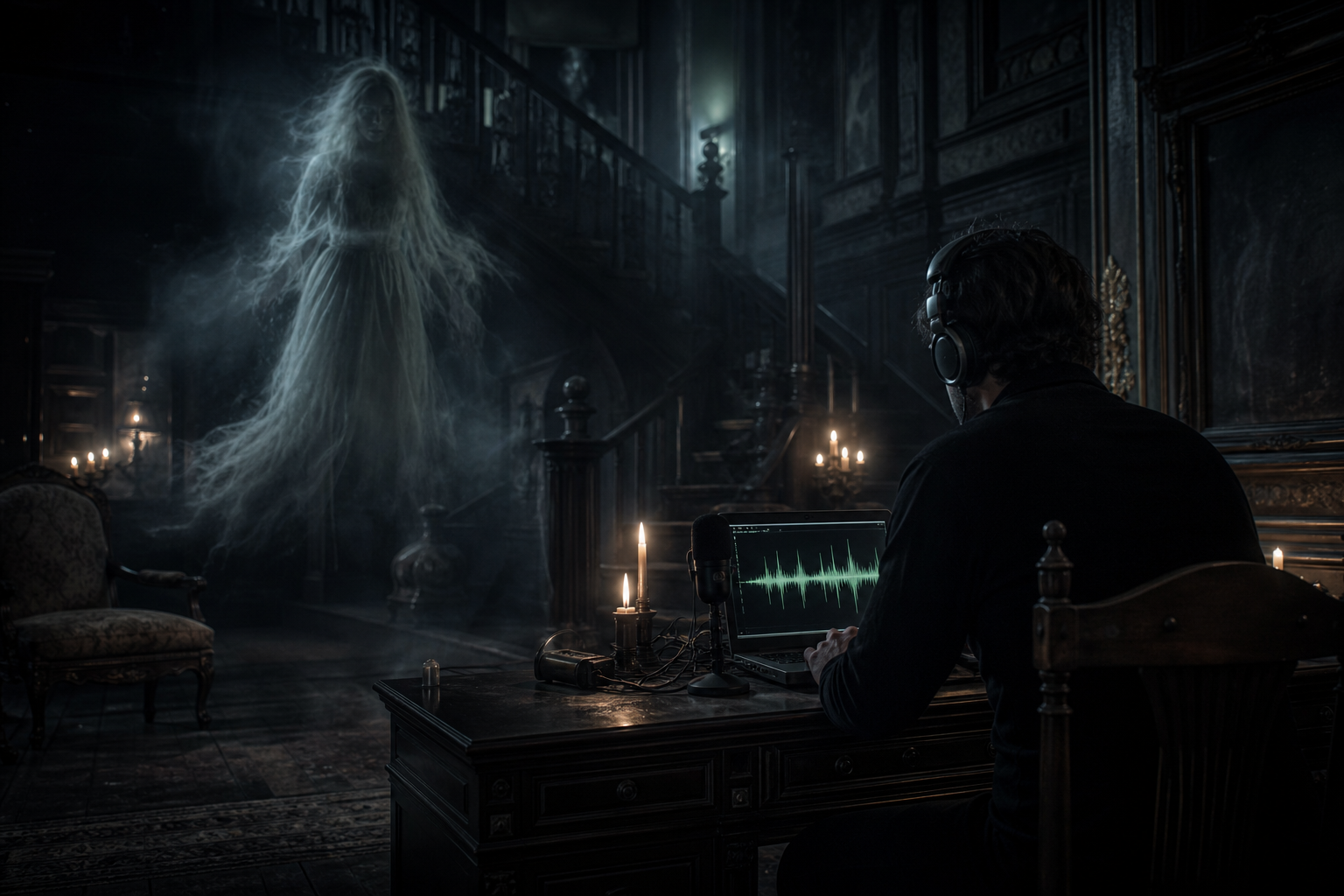
Furthermore, the rise of high-definition smartphone cameras has led to an explosion of digital EVP (Electronic Voice Phenomena) and visual captures. While technology makes it easier to fake evidence, it also provides the average person with a tool to document the impossible at a moment’s notice. The user Wild_Row8682 didn’t set out to find a ghost; they were simply documenting their daily life when the unexplained decided to make an appearance. This spontaneity often lends more credibility to a case than a planned investigation by professional ghost hunters.
What Lurks in the Shadows of Your Job?
The chilling image shared on r/Ghosts continues to garner attention, leaving many to wonder about the history of the building where it was taken. Whether it is a trick of the light or a genuine apparition, the psychological impact on the witness is undeniable. It forces us to confront the possibility that our modern, sterile workspaces are just as haunted as the gothic mansions of folklore. As we continue to digitize our lives, we may find that the spirits of the past are perfectly comfortable appearing in our selfies and work logs.
Do you believe this image shows a genuine spirit watching over a worker, or is it simply a case of the mind playing tricks in the dark? Have you ever caught something inexplicable in the background of a photo you took while alone?
Recommended Resources
- 🤖 Viktor AI — The autonomous AI platform we use to run our marketing operations. Hire Viktor to handle blogging, lead research, audits, and more.
- 💳 Greenlight — The money app and debit card for kids and teens. Teach your kids to earn, save, and invest. Earn $30 when you sign up.
- ⛏️ GoMining — Earn Bitcoin through cloud mining without the hardware hassle. A passive way to get into crypto.
- 🏦 Mercury — The business banking account built for startups and small businesses. No fees, powerful tools, and easy to set up.