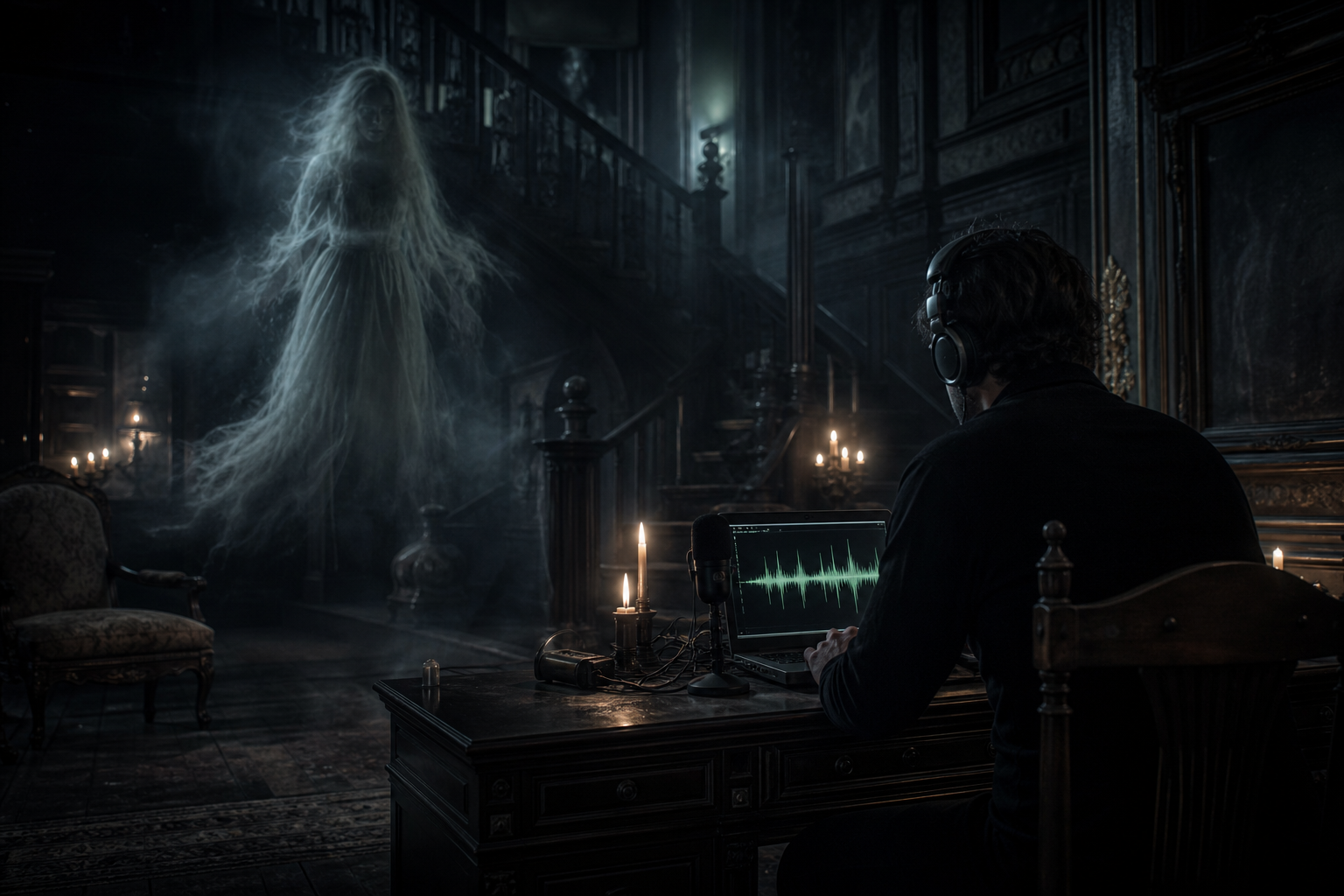
In the digital age, the hunt for the supernatural has moved from crumbling mansions and fog-drenched cemeteries into the palms of our hands. A recent post on the popular subreddit r/Ghosts by user Fantastic-Raise3217 has reignited the debate over what exactly constitutes proof of the afterlife. The user shared a brief, unsettling clip with a simple, tentative caption: “Thought I caught something idk let me know if y’all hear anything.”
This humble submission is part of a growing trend of citizen paranormal investigators who use everyday technology to document the unexplained. While the footage itself may seem subtle to the untrained eye or ear, it taps into a deep-seated human fascination with the “unseen guest” in our domestic spaces. For many in the paranormal community, these low-fi, raw captures are often more compelling than the polished, over-produced segments seen on reality television.
The Rise of Electronic Voice Phenomena (EVP)
What the Reddit user likely encountered is a phenomenon known as Electronic Voice Phenomena, or EVP. This refers to mysterious, speech-like sounds found on electronic recordings that were not audible at the time of the recording. The history of EVP is surprisingly long, dating back to the early 20th century when pioneers of radio and recording technology first noticed strange voices bleeding through the static.
Even the legendary inventor Thomas Edison was rumored to be working on a “spirit phone” to communicate with the deceased. While Edison’s device never came to fruition, the concept of spirits utilizing electromagnetic frequencies to manifest has become a cornerstone of modern ghost hunting. When a user like Fantastic-Raise3217 asks the internet to “listen closely,” they are participating in a tradition of auditory analysis that spans over a century.
In many cases, these voices are not heard by the human ear in real-time but appear clearly upon playback. This suggests that if spirits do exist, they may operate on a frequency just outside the range of human perception, requiring the sensitivity of a microphone’s diaphragm to bridge the gap between worlds.
Pareidolia or Paranormal? The Skeptic’s View
Whenever a viral clip surfaces on platforms like Reddit, it is immediately met with a wave of healthy skepticism. The most common explanation offered by critics is auditory pareidolia. This is a psychological phenomenon where the human brain attempts to find patterns or meaning in random noise. Just as we see faces in the clouds, our brains can interpret the hum of an air conditioner or the creak of a floorboard as a whispered name or a ghostly plea.
Furthermore, modern smartphones are equipped with automatic gain control and sophisticated noise-reduction algorithms. These features can sometimes create “artifacts” in the audio—digital glitches that sound remarkably like human speech. When a user is already primed to look for something supernatural, these technical hiccups can easily be mistaken for a message from the beyond.
However, seasoned investigators argue that not all captures can be debunked so easily. There are instances where the captured audio responds directly to a question asked by the investigator, a phenomenon known as a Class A EVP. These intelligent responses are the “holy grail” for researchers, as they suggest a conscious entity interacting with the living in real-time.
The Psychology of the Domestic Haunting
There is something uniquely chilling about a haunting that occurs within the home. Unlike a haunted asylum or a historic battlefield, the home is supposed to be a sanctuary. When a user captures something strange in their living room or bedroom, it shatters that sense of security. This domestic paranormal activity often starts small—a misplaced set of keys, a shadow in the peripheral vision, or a faint sound that shouldn’t be there.
Historically, these types of hauntings were often attributed to poltergeists, a German term meaning “noisy ghosts.” Unlike traditional hauntings, which are often tied to a specific location’s history, poltergeist activity is frequently centered around an individual. Whether the Reddit clip represents a lingering spirit or a temporary energy spike, it resonates because it reminds us that the veil between our world and the next might be thinner than we think.
The community response to Fantastic-Raise3217’s post highlights the collaborative nature of modern ghost hunting. Dozens of users often volunteer to clean up the audio, run it through spectrogram analysis, or isolate specific frequencies to determine the origin of the sound. This collective effort turns a solitary, frightening experience into a shared scientific inquiry.
What Lies Beneath the Static?
As technology continues to evolve, so too will our methods for capturing the unknown. From thermal imaging to SLS cameras that map skeletal figures in empty rooms, the tools at our disposal are more advanced than ever. Yet, the core of the mystery remains the same: are we truly alone, or are we surrounded by the echoes of those who came before us?
The Reddit post in question may be a definitive piece of evidence, or it may be a trick of the light and sound. Regardless of the verdict, it serves as a reminder that the world is still full of mysteries waiting to be decoded. Every “bump in the night” recorded on a smartphone is a potential window into a reality we are only beginning to understand.
Do you believe that digital recordings can truly capture the voices of the dead, or are we simply hearing what we want to hear in the white noise of our lives?
“,excerpt:
Recommended Resources
- 🤖 Viktor AI — The autonomous AI platform we use to run our marketing operations. Hire Viktor to handle blogging, lead research, audits, and more.
- 💳 Greenlight — The money app and debit card for kids and teens. Teach your kids to earn, save, and invest. Earn $30 when you sign up.
- ⛏️ GoMining — Earn Bitcoin through cloud mining without the hardware hassle. A passive way to get into crypto.
- 🏦 Mercury — The business banking account built for startups and small businesses. No fees, powerful tools, and easy to set up.
Leave a Reply