Category: UFOs & Extraterrestrial

  • Presidential Memo to Force UAP Disclosure with Stiff Penalties

    Presidential Memo to Force UAP Disclosure with Stiff Penalties

    The long-standing veil of secrecy surrounding Unidentified Anomalous Phenomena (UAP) may finally be lifting as reports emerge of a groundbreaking executive move. Representative Eric Burlison has signaled that a presidential memo is on the horizon, one designed to force transparency from deep within the federal government’s most guarded agencies. This directive promises to replace the current “cat and mouse” game of disclosure with a mandate backed by severe consequences for non-compliance.

    A New Era of Aggressive UAP Disclosure

    For decades, researchers and activists have struggled to navigate the labyrinthine bureaucracy of the Pentagon and various intelligence agencies. The primary obstacle has always been the unknown; investigators cannot request documents they do not know exist. However, according to Representative Burlison, the upcoming presidential memo will shift the burden of proof from the public to the government. This “extremely aggressive” approach aims to flush out hidden files that have remained in the shadows for generations.

    The core of this new strategy lies in its proactive nature. Rather than waiting for Freedom of Information Act (FOIA) requests to trickle in, the memo will reportedly require agencies to self-report and surrender all files related to the UAP topic. This is a significant departure from previous efforts, which often saw agencies provide heavily redacted documents or claim that no such records existed. By mandating a universal release, the administration is essentially casting a wide net to capture every scrap of data held by the Department of Defense and beyond.

    Burlison’s comments suggest that the era of “chasing ghosts” through government hallways is coming to an end. The frustration of lawmakers who have been denied access to Special Access Programs (SAPs) is palpable. This memo represents a legislative and executive hammer, intended to shatter the silos of secrecy that have protected UAP data since the days of Project Blue Book.

    Stiff Penalties for Withholding Alien Secrets

    What sets this initiative apart from previous transparency efforts is the inclusion of “stiff penalties” for those who fail to comply. In the past, internal resistance to disclosure was often met with little more than a shrug from oversight committees. By attaching real consequences to the withholding of information, the Executive Branch is signaling that the era of plausible deniability is over. This move is designed to intimidate the “gatekeepers” who have allegedly managed these secrets for decades.

    The mention of penalties suggests a high-stakes environment where career officials and private contractors could face legal or professional ruin for obstructing the declassification process. This is particularly relevant given the recent testimony of whistleblowers like David Grusch, who alleged that illegal crash retrieval programs have operated without proper Congressional oversight. If the memo carries the weight of law, it could provide the necessary leverage to finally bring these programs into the light of day.

    Furthermore, the declassification process itself is expected to be streamlined. While national security concerns will always play a role in what the public sees, the default setting is shifting toward disclosure. This means that the Intelligence Community will have to justify why a document should remain classified, rather than the public having to justify why it should be released.

    Historical Context: From Roswell to the Present

    To understand the gravity of this development, one must look at the history of UFO secrecy in the United States. Since the 1947 Roswell incident, the government has maintained a complex relationship with the truth regarding extraterrestrial or advanced terrestrial craft. Efforts like the Condon Committee were often seen as attempts to debunk the phenomenon rather than investigate it honestly. This new memo could be the most significant step toward truth since the 1960s.

    Similar cases of government pressure have yielded results in the past, though rarely on this scale. The AATIP (Advanced Aerospace Threat Identification Program) revelations in 2017 were a turning point, but they were the result of leaked videos and insider pressure rather than a top-down executive mandate. If Burlison’s predictions hold true, we are moving from a period of accidental leaks to a period of organized, state-sanctioned revelation.

    The global community is also watching closely. As other nations like Mexico and Brazil hold their own public hearings on UAPs, the United States is under increasing pressure to lead the way. A presidential memo of this magnitude would not only impact domestic policy but would likely force the hands of international allies who share intelligence on these mysterious objects.

    What Happens Next for the UFO Community?

    As the public awaits the official release of this memo, the UFO community remains cautiously optimistic. The promise of “all information and files” is a bold one, and the implementation will be the true test. Will we finally see high-resolution imagery, biological data, or technical specifications of recovered craft? Or will the “stiff penalties” be avoided through clever legal maneuvering by the agencies involved?

    The next few months will be critical for the Disclosure movement. If the memo is as aggressive as Burlison suggests, we may be on the verge of a paradigm shift that changes our understanding of physics, history, and our place in the universe. The “ghosts” are being cornered, and the truth may finally be forced out of the shadows.

    Do you believe a presidential memo with penalties is enough to finally break the decades of UFO secrecy, or will the “deep state” find a way to keep their secrets hidden?

    Recommended Resources

    • 🤖 Viktor AI — The autonomous AI platform we use to run our marketing operations. Hire Viktor to handle blogging, lead research, audits, and more.
    • 💳 Greenlight — The money app and debit card for kids and teens. Teach your kids to earn, save, and invest. Earn $30 when you sign up.
    • ⛏️ GoMining — Earn Bitcoin through cloud mining without the hardware hassle. A passive way to get into crypto.
    • 🏦 Mercury — The business banking account built for startups and small businesses. No fees, powerful tools, and easy to set up.
  • The Emilcin UFO Incident: Inside Poland’s Most Famous Alien Encounter Site

    The Emilcin UFO Incident: Inside Poland’s Most Famous Alien Encounter Site

    In the quiet, rolling countryside of eastern Poland, the small village of Emilcin remained largely unknown to the world for centuries. That changed on a misty morning in May 1978, when a local farmer had a brush with the unknown that would forever alter the town’s identity. Today, a strange, metallic monument stands in a clearing, marking the spot where many believe humanity made contact with visitors from another world.

    The Morning of the Emilcin Encounter

    On May 10, 1978, a 71-year-old farmer named Jan Wolski was driving his horse-drawn cart through the woods near his home. His peaceful morning was interrupted when he noticed two unusual figures walking alongside his wagon. Wolski initially thought they were hunters or perhaps foreigners, but as they drew closer, he realized these were not ordinary men. They stood about five feet tall, possessed olive-green faces, and wore tight-fitting black seamless coveralls that shimmered in the morning light.

    According to Wolski’s later testimony, the beings spoke to each other in a rapid, “twittering” language that sounded like birdsong. Despite the language barrier, the entities appeared friendly. They gestured for Wolski to follow them toward a clearing where a large, white, hovering craft was suspended about 15 feet above the ground. The UFO was described as a rectangular object that emitted no sound, defying the laws of conventional aviation known at the time.

    Wolski was invited—or perhaps compelled by curiosity—to enter the craft via a small platform. Inside, the environment was sparse and clinical. The farmer underwent what he described as a non-invasive physical examination. The beings used small, black tools that hummed softly against his skin. After the “check-up” was complete, Wolski was offered a translucent substance to eat, which he politely declined. The beings then gestured that he was free to go, and he watched as the craft ascended vertically and vanished into the clouds.

    Investigating the Evidence in Poland

    Unlike many alien abduction stories that are dismissed as hallucinations, the Emilcin incident gained immediate traction due to Wolski’s reputation as a sober, hardworking man with no prior interest in science fiction. When he returned home and told his family, his sons rushed to the clearing. While the craft was gone, they found flattened grass and unusual footprints that did not match any local footwear. The horse, too, had reportedly behaved erratically during the encounter, showing signs of extreme distress.

    The case caught the attention of Zbigniew Blania-Bolnar, a prominent Polish ufologist, who conducted an extensive investigation. Blania-Bolnar subjected Wolski to psychological testing and even hypnosis, concluding that the farmer genuinely believed every word of his story. The lack of a motive for a hoax—Wolski sought neither fame nor fortune—added a layer of credibility that made the Emilcin case a cornerstone of Eastern European ufology.

    The incident occurred during the height of the Cold War, a time when reports of “Western” phenomena like UFOs were often suppressed by Soviet-aligned governments. However, the sheer detail of Wolski’s account broke through the Iron Curtain, drawing comparisons to the Roswell incident in the United States. It remains one of the most well-documented close encounters of the third kind in history.

    A Monument to the Unknown

    In 2005, the Nautilus Foundation, an organization dedicated to researching paranormal phenomena, decided that Wolski’s experience deserved a permanent memorial. They erected a striking monument in the very clearing where the craft had hovered. The monument consists of a silver metal cube balanced precariously on a jagged stone base. An inscription on the plaque reads: “On May 10, 1978, in Emilcin, a UFO object landed. The truth will amaze us in the future.”

    This site has since become a pilgrimage destination for paranormal enthusiasts and curious tourists alike. While the village remains small, the “Alien Monument” has put it on the global map of high-strangeness hotspots. Visitors often report a lingering sense of “stillness” in the woods, and some claim that electronic devices behave strangely near the monument site, though these reports remain anecdotal.

    The Emilcin monument serves as a rare official acknowledgment of a paranormal event. While most governments shy away from memorializing extraterrestrial encounters, Poland has embraced this piece of local folklore, turning a farmer’s terrifying morning into a symbol of cosmic mystery. It stands as a reminder that sometimes, the most extraordinary events happen to the most ordinary people in the most quiet of places.

    As we look toward the stars and wonder about our place in the universe, the story of Jan Wolski continues to resonate. Was it a genuine encounter with a biological entity from another star system, or a psychological phenomenon that we have yet to fully understand? What do you think really happened in the woods of Emilcin that morning in 1978?

    Recommended Resources

    • 🤖 Viktor AI — The autonomous AI platform we use to run our marketing operations. Hire Viktor to handle blogging, lead research, audits, and more.
    • 💳 Greenlight — The money app and debit card for kids and teens. Teach your kids to earn, save, and invest. Earn $30 when you sign up.
    • ⛏️ GoMining — Earn Bitcoin through cloud mining without the hardware hassle. A passive way to get into crypto.
    • 🏦 Mercury — The business banking account built for startups and small businesses. No fees, powerful tools, and easy to set up.
  • Arizona UFO Report 2026: Why the Latest Findings Are Stranger Than Fiction

    Arizona UFO Report 2026: Why the Latest Findings Are Stranger Than Fiction

    The desert skies of the American Southwest have long been a canvas for the unexplained, but a newly released report regarding Unidentified Anomalous Phenomena (UAP) in Arizona is turning the traditional alien narrative on its head. While enthusiasts were hoping for a “smoking gun” that would finally confirm extraterrestrial visitation, the findings suggest a reality that is far more complex and unsettling than a simple metallic craft from another planet.

    Arizona has a storied history with the unknown, most notably the 1997 Phoenix Lights incident, which remains one of the most witnessed mass sightings in history. However, the 2026 data suggests that the phenomena currently haunting the Grand Canyon State are evolving, displaying characteristics that defy conventional physics and even our standard understanding of “spacecraft.”

    Beyond the Phoenix Lights: A New Era of Sightings

    For decades, the gold standard for UFO sightings in Arizona was the massive, V-shaped craft seen by thousands over Phoenix. That event solidified the state’s reputation as a global hotspot for ufology. Yet, the latest report indicates that the objects being tracked today are smaller, more erratic, and significantly more difficult to capture on traditional radar systems.

    Witnesses across the Mogollon Rim and the high deserts of Sedona are no longer just reporting lights in the sky; they are describing trans-medium travel, where objects appear to move seamlessly between the atmosphere and the vacuum of space. These reports are being taken seriously by local authorities and independent researchers alike, as the frequency of these encounters has spiked by nearly 30% over the last twelve months.

    The lack of a “smoking gun”—such as physical debris or a clear, high-resolution photograph of a cockpit—has frustrated some. However, investigators argue that the absence of physical evidence is a clue in itself. It suggests that whatever is operating in Arizona’s restricted airspaces may not be “physical” in the way we currently define the term.

    The Data Dilemma: Why There is No “Smoking Gun”

    The recent report, compiled by a coalition of independent analysts and former military personnel, highlights a frustrating paradox. While there is an abundance of electronic signatures and sensor data confirming the presence of something anomalous, there is a total lack of biological or mechanical “exhaust.” These objects do not leave heat trails, nor do they produce the sonic booms associated with supersonic travel.

    This has led some experts to reference the work of the AARO (All-domain Anomaly Resolution Office), the Pentagon’s official office for investigating these mysteries. The AARO has often pointed out that many sightings can be attributed to sensor ghosts or sophisticated drones, but the Arizona report identifies a subset of cases that exhibit “extreme maneuverability” that no known human technology can replicate.

    If these aren’t nuts-and-bolts ships, what are they? The report hints at electromagnetic interference so localized and intense that it suggests the objects are manipulating the fabric of space-time itself. This “stranger” reality is what has investigators worried; we may be looking at a phenomenon that is not just from another place, but perhaps another dimension entirely.

    The “Stranger” Reality: Interdimensional or Atmospheric?

    The most provocative section of the new Arizona report discusses the interdimensional hypothesis. This theory suggests that UAPs are not traveling across vast interstellar distances from distant stars, but are instead “bleeding through” from a parallel reality. This would explain why they appear and disappear instantaneously, a phenomenon often described by witnesses as “blinking out.”

    Another possibility raised is that these sightings are a form of sentient plasma or atmospheric phenomena that we are only now beginning to detect with modern sensors. Arizona’s unique geological makeup, rich in quartz and other conductive minerals, has long been thought to play a role in the state’s high level of paranormal activity. Some researchers believe the earth itself might be generating these “stranger” anomalies under specific atmospheric conditions.

    This shift in focus from “aliens in tin cans” to “multidimensional anomalies” marks a turning point in the study of the unexplained. It moves the conversation away from the Project Blue Book era of simple identification and into a realm of theoretical physics that challenges our very perception of the universe.

    Arizona as a Global UAP Hotspot

    Why does Arizona remain the epicenter for these strange occurrences? The state is home to several sensitive military installations, including Luke Air Force Base and the Barry M. Goldwater Range. Historically, UAP activity has always been concentrated around nuclear facilities and advanced military testing grounds, leading many to believe there is a direct correlation between our technological progress and their presence.

    Furthermore, the cultural significance of the land cannot be ignored. Many Indigenous tribes in the region have oral histories that speak of “Star People” and portals within the desert mountains. The new report acknowledges that while the technology used to track these objects is new, the objects themselves may have been here for millennia, watching and waiting.

    As we move further into 2026, the pressure for full disclosure continues to mount. While this latest report may not have provided the definitive “alien handshake” the world is waiting for, it has opened a door to a much deeper mystery. We are no longer just asking if we are alone; we are asking what kind of reality we actually live in.

    Do you believe these Arizona sightings are physical craft from another planet, or are we witnessing something far more mysterious and interdimensional in nature? Let us know your theories in the comments below.

    Recommended Resources

    • 🤖 Viktor AI — The autonomous AI platform we use to run our marketing operations. Hire Viktor to handle blogging, lead research, audits, and more.
    • 💳 Greenlight — The money app and debit card for kids and teens. Teach your kids to earn, save, and invest. Earn $30 when you sign up.
    • ⛏️ GoMining — Earn Bitcoin through cloud mining without the hardware hassle. A passive way to get into crypto.
    • 🏦 Mercury — The business banking account built for startups and small businesses. No fees, powerful tools, and easy to set up.
  • The Mystery of the Six-Pointed UFO: Optical Illusion or Alien Tech?

    The Mystery of the Six-Pointed UFO: Optical Illusion or Alien Tech?

    The digital age has brought us closer to the stars than ever before, but it has also introduced a new layer of complexity to the search for extraterrestrial life. A recent viral video featuring a six-pointed star UFO has ignited a firestorm of debate within the online community, specifically on the popular subreddit r/UFOs. While the footage appears to show a geometric craft hovering in the night sky, eagle-eyed investigators are pointing toward a technical anomaly that might debunk the entire sighting.

    The Mystery of the Fixed Orientation

    The controversy began when a user known as /u/DividedSkyBalls11 raised a critical observation regarding the behavior of the object in the frame. In the footage, the object appears as a bright, luminous shape with six distinct points, resembling a hexagram or a stylized star. However, as the witness rotates their camera to track the object, a strange phenomenon occurs: the points of the star remain perfectly fixed relative to the camera frame, even as the background horizon tilts.

    This lack of independent rotation is a major red flag for digital analysts and Ufologists alike. If the object were a physical craft maneuvering in three-dimensional space, one would expect its orientation to shift or remain consistent with the environment, not the lens of the observer. This has led many to believe that the “star” shape isn’t part of the object at all, but rather a byproduct of the equipment used to film it.

    The original poster expressed deep skepticism, stating that for the object to be physical, it would have to be “locked” to the camera’s internal sensors with impossible precision. This observation shifts the conversation from “what is that craft?” to “what is happening inside the camera lens?” It highlights the ongoing struggle to differentiate between genuine Unidentified Aerial Phenomena (UAP) and common optical artifacts.

    Bokeh and the Science of Lens Artifacts

    To understand why a UFO might appear as a geometric shape, we have to look at the physics of light. One of the most common explanations for this type of sighting is bokeh. This term refers to the aesthetic quality of the out-of-focus parts of an image. When a camera lens struggles to focus on a distant, bright point of light—such as a planet, a star, or a distant drone—it can render that light as a geometric shape based on the camera’s aperture blades.

    If a camera has a six-bladed iris, out-of-focus highlights will often appear as hexagons or six-pointed stars. This explains why the points remain stationary relative to the camera; they are literally a reflection of the camera’s internal hardware. Another possibility is diffraction spikes, which occur when light bends around the support structures within a telescope or complex lens system, creating a cross or starburst pattern that stays oriented to the viewer.

    Historical cases often mirror this technical confusion. During the Black Triangle wave of the 1990s, many videos were later debunked as out-of-focus captures of the planet Venus or bright stars like Sirius. The human eye and the digital sensor both have a tendency to “shape” light into something recognizable, often leading to the misidentification of mundane objects as exotic spacecraft.

    Could It Still Be Something Extraordinary?

    Despite the technical explanations, a segment of the paranormal community remains unconvinced that every geometric sighting is a mere trick of the light. Some theorists suggest that advanced non-human intelligence (NHI) might utilize propulsion systems that distort the space-time around the craft. This gravitational lensing effect could, in theory, create visual distortions that mimic optical artifacts, making it difficult for standard cameras to capture a clear image.

    There is also the “spoofing” theory, which suggests that some UAPs may intentionally project light patterns to confuse human observers or electronic sensors. If a craft were utilizing a plasma-based cloaking system, the resulting glow might interact with camera lenses in ways that produce these strange, fixed-orientation shapes. While this remains speculative, it keeps the door open for those who believe the truth is still out there.

    The debate over the six-pointed star UFO serves as a vital reminder for the modern ghost hunter and UFO researcher. As our technology becomes more sophisticated, so too must our understanding of how that technology can fail or mislead us. The line between a interdimensional visitor and a simple lens flare has never been thinner, requiring a skeptical eye and a scientific mind to navigate.

    In the world of the paranormal, we often want to believe so badly that we overlook the simplest explanations. However, by ruling out the mundane, we actually get closer to identifying the truly anomalous. Whether this specific case is a camera glitch or a cloaked visitor, it has provided a masterclass in digital forensics for the UFO community.

    Do you believe the six-pointed star is a genuine craft using advanced stabilization, or is this a clear-cut case of a camera lens playing tricks on the observer?

    Recommended Resources

    • 🤖 Viktor AI — The autonomous AI platform we use to run our marketing operations. Hire Viktor to handle blogging, lead research, audits, and more.
    • 💳 Greenlight — The money app and debit card for kids and teens. Teach your kids to earn, save, and invest. Earn $30 when you sign up.
    • ⛏️ GoMining — Earn Bitcoin through cloud mining without the hardware hassle. A passive way to get into crypto.
    • 🏦 Mercury — The business banking account built for startups and small businesses. No fees, powerful tools, and easy to set up.
  • Neil deGrasse Tyson’s Alien Etiquette: How to Greet Extraterrestrials

    Neil deGrasse Tyson’s Alien Etiquette: How to Greet Extraterrestrials

    For decades, the question of whether we are alone in the universe has haunted the dreams of scientists and the imaginations of the public alike. Now, world-renowned astrophysicist Neil deGrasse Tyson is shifting the conversation from the mere possibility of life to the practicalities of a cosmic introduction. As the director of the Hayden Planetarium, Tyson has spent his career demystifying the cosmos, but his latest contribution focuses on a more grounded concern: how humanity should behave during First Contact.

    The concept of meeting an extraterrestrial intelligence is no longer confined to the realms of science fiction. With the recent surge in UAP (Unidentified Anomalous Phenomena) reports and government hearings, the scientific community is taking the prospect of alien life more seriously than ever. Tyson’s “etiquette guide” serves as a bridge between high-level astrophysics and the very human need for a protocol when faced with the unknown. It is a set of rules designed to ensure that our first interaction with a galactic neighbor doesn’t become our last.

    The Golden Rules of Galactic Greeting

    According to Tyson, the most important thing humans can do when faced with an alien entity is to remain calm. While Hollywood movies often depict extraterrestrials as invaders to be feared or gods to be worshipped, Tyson suggests a more measured, scientific approach. He emphasizes that we should avoid any sudden movements or aggressive posturing that could be misinterpreted as a threat. In the vastness of space, communication is the ultimate barrier, and our body language may be the first thing an alien species “reads.”

    Tyson’s guide also touches on the importance of non-verbal communication. He suggests that we should not assume an alien species understands our spoken languages or even our basic gestures, like a handshake or a wave. Instead, we should look for universal constants, such as mathematical sequences or the fundamental laws of physics, to establish a common ground. By focusing on the “language of the universe,” we can demonstrate that humanity is a sentient, technologically capable species worthy of a peaceful dialogue.

    Furthermore, Tyson warns against the “shoot first, ask questions later” mentality that has dominated much of our history. If a craft from another world enters our atmosphere, our instinctual reaction might be to deploy military force. However, Tyson argues that any civilization capable of interstellar travel would likely possess technology far superior to our own. Attacking them would not only be a diplomatic disaster but a potentially suicidal move for the human race.

    Lessons from History and the Fermi Paradox

    To understand the weight of Tyson’s advice, we must look at our own history of exploration. When different human cultures met for the first time, the results were often catastrophic due to misunderstandings and power imbalances. Tyson’s etiquette guide aims to prevent a repeat of these historical tragedies on a planetary scale. He draws inspiration from the Voyager Golden Record, a phonograph record launched into space in 1977 containing sounds and images selected to portray the diversity of life and culture on Earth.

    The guide also addresses the Fermi Paradox—the apparent contradiction between the high probability of extraterrestrial civilizations and the lack of evidence for, or contact with, such civilizations. If the universe is teeming with life, why haven’t we heard from anyone? Tyson suggests that perhaps other civilizations are waiting for us to reach a certain level of maturity. By establishing a clear protocol for contact, we signal to the cosmos that we are ready to join the “galactic club.”

    This isn’t the first time humanity has tried to prepare for the “Big Hello.” In 1960, the SETI Institute (Search for Extraterrestrial Intelligence) began its mission to listen for signals from distant stars. Since then, various protocols have been drafted by international bodies, but Tyson’s guide brings a modern, accessible perspective to the table. It reminds us that while we look to the stars, we must also look at ourselves and how we represent our species.

    The Psychological Impact of the Unknown

    Beyond the scientific and diplomatic hurdles, First Contact would represent the single greatest psychological shock in human history. The realization that we are not the center of the universe would ripple through every facet of society, from religion and philosophy to politics and economics. Tyson’s guide encourages us to prepare for this shift by fostering a sense of cosmic perspective. By understanding our place in the vast timeline of the universe, we can approach an alien encounter with humility rather than hubris.

    There is also the question of what an alien species might actually look like. Tyson often points out that life on Earth is incredibly diverse, and life on another planet—evolved under different gravity, atmosphere, and light—could be beyond our wildest imagination. They might not be “little green men” or “grey aliens” at all. They could be silicon-based lifeforms, sentient clouds of gas, or even advanced artificial intelligences that have long outlived their biological creators. Tyson’s etiquette guide is flexible enough to account for these possibilities, focusing on the intent of the interaction rather than the appearance of the visitor.

    As we continue to scan the heavens with the James Webb Space Telescope and other advanced instruments, the possibility of a signal or a sighting grows every day. Neil deGrasse Tyson’s guide is a reminder that we are the ambassadors of Earth. Whether we meet our neighbors tomorrow or in a thousand years, our first impression will define the future of our species among the stars. We must be ready to put our best foot forward, even if that “foot” is something the aliens don’t quite recognize.

    If an alien spacecraft landed in your backyard tomorrow, what is the first thing you would say—or show them—to represent the best of humanity?

    Recommended Resources

    • 🤖 Viktor AI — The autonomous AI platform we use to run our marketing operations. Hire Viktor to handle blogging, lead research, audits, and more.
    • 💳 Greenlight — The money app and debit card for kids and teens. Teach your kids to earn, save, and invest. Earn $30 when you sign up.
    • ⛏️ GoMining — Earn Bitcoin through cloud mining without the hardware hassle. A passive way to get into crypto.
    • 🏦 Mercury — The business banking account built for startups and small businesses. No fees, powerful tools, and easy to set up.
  • The Ariel School Encounter: Zimbabwe’s 1994 Mass Alien Sighting Revisited

    The Ariel School Encounter: Zimbabwe’s 1994 Mass Alien Sighting Revisited

    On a quiet morning in September 1994, the rural landscape of Ruwa, Zimbabwe, became the stage for what many researchers consider the most significant mass sighting in the history of Ufology. While teachers at the Ariel School were attending a faculty meeting, 62 children, ranging in age from six to twelve, were playing outside during their mid-morning break. What they witnessed over the next few minutes would not only change their lives forever but would also provide some of the most compelling evidence of extraterrestrial visitation ever recorded.

    The Silver Craft and the Beings in Black

    The encounter began when the children noticed three or more silver, disc-shaped objects hovering in the sky. According to the young witnesses, these Unidentified Aerial Phenomena (UAP) moved with a silent, erratic motion before one of the crafts descended toward a wooded area just beyond the school’s playground. The area was thick with thorn bushes and tall grass, making it difficult for adults to see, but the children had a clear vantage point from the edge of the clearing.

    As the children approached the perimeter, they reported seeing a small, humanoid figure standing on top of the craft. Shortly after, another being appeared on the ground. These entities were described as being about three feet tall, with slender necks, pale skin, and large, almond-shaped black eyes. They were reportedly dressed in tight-fitting black suits that shimmered in the sunlight. The children were frozen in a mixture of curiosity and intense fear, as the beings seemed to glide across the rough terrain rather than walk.

    Unlike many modern sightings that involve distant lights in the sky, the Ariel School incident was a Close Encounter of the Third Kind. The proximity was so intimate that the children could see the texture of the beings’ skin and the depth of their eyes. Many of the younger students ran back to the school buildings in tears, convinced that the “demons” or “tokoloshes” of local folklore had come to take them away.

    Telepathic Warnings and Environmental Messages

    What sets the Zimbabwe encounter apart from other sightings is the reported communication between the children and the visitors. Several of the older students claimed that they didn’t hear voices, but rather experienced a form of telepathic communication. They described images “flooding” into their minds, depicting a grim future for the Earth. The messages were centered on the destruction of the environment and the dangers of humanity’s reliance on technology.

    One student, who was ten years old at the time, later recounted that the being’s eyes seemed to project a sense of “horrible” concern. The entity allegedly warned that the world would end if humans did not change their ways. This ecological message has been a recurring theme in various high-profile alien encounters, yet it was particularly striking coming from children in a rural African community who had little to no exposure to Western sci-fi media or environmental activism in 1994.

    The consistency of the children’s stories was remarkable. When asked to draw what they had seen, the 62 students produced nearly identical sketches of the silver craft and the large-eyed beings. Despite being interviewed separately by teachers, parents, and later by world-renowned researchers, their accounts did not waver. There was no evidence of mass hysteria or coaching, as the children’s emotional reactions were deeply personal and varied from terror to profound sadness.

    The Investigation of Dr. John Mack

    The news of the sighting eventually reached Cynthia Hind, Africa’s foremost UFO researcher, who brought the case to the attention of Dr. John Mack. Mack was a Pulitzer Prize-winning author and a professor of psychiatry at Harvard Medical School. He traveled to Zimbabwe to interview the children personally, applying his clinical expertise to determine if they were lying or suffering from a collective delusion.

    After days of rigorous interviews, Dr. Mack concluded that the children were telling the truth. He noted that the quality of their testimony—the way they described the “vibrating” air and the “soul-piercing” gaze of the beings—was consistent with individuals who had experienced a genuine traumatic event. Mack’s involvement brought a level of academic legitimacy to the case, though it also sparked controversy within the scientific community, as he openly stated that these children were describing a physical reality that modern science could not yet explain.

    The Ariel School incident shares striking similarities with the 1966 Westall UFO encounter in Australia, where over 200 students and teachers witnessed a craft land in a paddock. In both cases, the witnesses were young, the sightings occurred in broad daylight, and the authorities were quick to dismiss the events despite the overwhelming number of consistent testimonies. These “schoolyard encounters” remain some of the most difficult cases for skeptics to debunk because of the sheer volume of witnesses.

    A Legacy of Mystery

    Decades have passed since that September morning, and the children of Ariel School are now adults living all over the world. In recent documentaries and follow-up interviews, they have maintained their original stories. Many describe the event as a “pivotal moment” that shaped their worldview, leaving them with a lifelong sense of connection to something beyond our planet. They have nothing to gain by sticking to their story, yet they refuse to recant, even in the face of ridicule.

    The 1994 Zimbabwe encounter remains a cornerstone of the extraterrestrial hypothesis. It challenges our understanding of consciousness, technology, and our place in the universe. If 62 children saw the same thing at the same time, and that “thing” wasn’t from Earth, what does that mean for the future of our civilization?

    Do you believe that children are more “tuned in” to paranormal phenomena, or could there be a psychological explanation for such a massive shared experience?

    Recommended Resources

    • 🤖 Viktor AI — The autonomous AI platform we use to run our marketing operations. Hire Viktor to handle blogging, lead research, audits, and more.
    • 💳 Greenlight — The money app and debit card for kids and teens. Teach your kids to earn, save, and invest. Earn $30 when you sign up.
    • ⛏️ GoMining — Earn Bitcoin through cloud mining without the hardware hassle. A passive way to get into crypto.
    • 🏦 Mercury — The business banking account built for startups and small businesses. No fees, powerful tools, and easy to set up.
  • Neil deGrasse Tyson on Aliens: How Should We Greet Extraterrestrials?

    Neil deGrasse Tyson on Aliens: How Should We Greet Extraterrestrials?

    The question of whether we are alone in the universe has shifted from the fringes of science fiction to the forefront of serious scientific inquiry. As sightings of Unidentified Aerial Phenomena (UAPs) continue to dominate headlines, the world’s most famous astrophysicist is weighing in on how humanity should handle a first contact scenario. In his latest exploration, Neil deGrasse Tyson challenges our preconceived notions of extraterrestrial life and how we might actually communicate with a civilization from the stars.

    The Cosmic Perspective on First Contact

    For decades, Hollywood has conditioned us to expect one of two things when aliens arrive: a peaceful, enlightened exchange of wisdom or a catastrophic interstellar invasion. However, Neil deGrasse Tyson suggests that the reality of First Contact might be far more complex and humbling than any movie script. In his recent discussions surrounding the concept of “Take Me to Your Leader,” Tyson emphasizes that our human-centric view of intelligence might be our biggest blind spot.

    Tyson often points out that the genetic difference between humans and chimpanzees is remarkably small, yet our intellectual capacities are worlds apart. If an extraterrestrial civilization is even one percent more advanced than us, they might view human intelligence the same way we view a worm or a blade of grass. This perspective shifts the narrative from a diplomatic meeting of equals to a potential encounter where we are the primitive species being observed.

    The challenge, then, is not just how we greet them, but whether they would even recognize us as a species worth greeting. Tyson’s approach encourages a sense of cosmic humility, urging us to look past our own egos as we scan the heavens for signals. If we are to be ready for a visitor, we must first understand our place in the vast, ancient timeline of the Milky Way Galaxy.

    Decoding the Language of the Universe

    If a spacecraft were to land tomorrow, how would we actually speak to the occupants? Tyson argues that mathematics and physics are the only truly universal languages. While English, Mandarin, or Spanish are localized human constructs, the laws of gravity and the properties of the hydrogen atom remain the same across the entire cosmos. This “universal Rosetta Stone” would likely be the foundation of any initial communication.

    Historical attempts to reach out, such as the Voyager Golden Record or the Arecibo Message, relied heavily on these scientific principles. We sent diagrams of DNA, mathematical constants, and our location relative to pulsars. Tyson suggests that any civilization capable of interstellar travel would have mastered these same concepts, making science the bridge between two vastly different biological histories.

    However, there is a risk in assuming that “they” would think like us. The Fermi Paradox asks why, if life is so common, we haven’t heard from anyone yet. Tyson’s insights suggest that perhaps we are looking for the wrong types of signals, or perhaps our “greetings” are simply too primitive to be noticed by a civilization that has moved beyond radio waves and into technologies we cannot yet conceive.

    The History of Close Encounters and Modern Skepticism

    The discussion of how to greet leaders from another world isn’t happening in a vacuum. It comes at a time when the Pentagon and NASA are taking reports of UFOs more seriously than ever before. From the 1947 Roswell Incident to the modern-day “Tic-Tac” videos captured by Navy pilots, the history of sightings has always been met with a mix of wonder and intense skepticism.

    Tyson remains a staunch advocate for the scientific method, often reminding the public that “eyewitness testimony is the lowest form of evidence in science.” While he doesn’t rule out the existence of life elsewhere, he demands high-quality, peer-reviewed data before declaring that we have been visited. This skeptical yet open-minded approach is crucial for navigating the modern era of paranormal research.

    By examining past “encounters,” we see a pattern of human projection. During the Cold War, aliens were often depicted as metaphors for nuclear anxiety. Today, as we face global challenges, our vision of ET often reflects our hopes for technological salvation or our fears of environmental collapse. Tyson’s work helps strip away these projections to focus on the raw, astronomical reality of what an encounter would actually entail.

    Preparing for the Ultimate Discovery

    As we continue to discover exoplanets in the “Goldilocks Zone” of distant stars, the statistical probability of life elsewhere only grows. Neil deGrasse Tyson’s exploration of these themes serves as a roadmap for a future that feels increasingly inevitable. Whether the first sign of life is a microbial fossil on Mars or a massive structure orbiting a distant sun, the impact on human society will be profound.

    The “Take Me to Your Leader” trope assumes a centralized power structure that an alien might recognize. But what if they don’t have leaders? What if they are a hive mind or a post-biological artificial intelligence? Tyson’s inquiries force us to broaden our definitions of life, intelligence, and society. Preparing for the unknown requires us to be more than just scientists; it requires us to be philosophers of the stars.

    Ultimately, the search for aliens is a search for ourselves. By asking how we would greet a stranger from another world, we are forced to look at how we treat the strangers on our own planet. If we aren’t ready to represent humanity as a unified, peaceful species, are we truly ready for the responsibility of joining a galactic community?

    If an alien craft landed in your backyard today, what is the first thing you would say to represent the human race? Join the conversation in the comments below!

    Recommended Resources

    • 🤖 Viktor AI — The autonomous AI platform we use to run our marketing operations. Hire Viktor to handle blogging, lead research, audits, and more.
    • 💳 Greenlight — The money app and debit card for kids and teens. Teach your kids to earn, save, and invest. Earn $30 when you sign up.
    • ⛏️ GoMining — Earn Bitcoin through cloud mining without the hardware hassle. A passive way to get into crypto.
    • 🏦 Mercury — The business banking account built for startups and small businesses. No fees, powerful tools, and easy to set up.
  • Rep. Eric Burlison: Can UAP Disclosure and Christianity Coexist?

    Rep. Eric Burlison: Can UAP Disclosure and Christianity Coexist?

    For decades, the intersection of faith and the unexplained has been a battleground of conflicting ideologies. While some view the potential existence of Non-Human Intelligence (NHI) as a threat to traditional religious structures, others see it as a natural extension of a vast, divine creation. Recently, Missouri Congressman Eric Burlison stepped into this fray, offering a perspective that bridges the gap between ancient scripture and modern aerial mysteries.

    Burlison, a self-described skeptic from the “Show-Me State,” has become a prominent voice in the ongoing push for UAP Disclosure. As a member of the House Oversight Committee, he has been privy to testimonies that would shake the foundation of many worldviews. Yet, for Burlison, the revelation of craft and entities that defy conventional physics hasn’t led to a crisis of faith, but rather a deeper dive into the texts he holds sacred.

    The Skeptic’s Journey into the Unknown

    The journey for Burlison began with a healthy dose of Missouri-bred skepticism. In a political landscape often filled with hyperbole, he approached the subject of Unidentified Aerial Phenomena with a critical eye, demanding empirical evidence over anecdotal stories. However, as the evidence mounted and the secrecy surrounding the phenomenon began to crack, he found himself grappling with the implications for his personal beliefs.

    “I am a Christian and I believe the only way to salvation is through Jesus Christ, but this has challenged my faith,” Burlison recently shared. This admission highlights a growing sentiment among religious lawmakers who are forced to reconcile their Biblical Worldview with the possibility that humanity is not the only intelligent life in the cosmos. For many, the idea of “aliens” suggests a universe where human divinity is sidelined, but Burlison argues that this is a misunderstanding of the source material.

    By focusing on what the Bible actually says rather than modern cultural interpretations, Burlison concluded that the existence of UAPs does not conflict with his faith. He suggests that the “heavens” described in ancient texts are far more complex than a simple blue sky. In his view, the Paranormal and the spiritual are often two sides of the same coin, separated only by our current lack of scientific understanding.

    Ancient Texts and Modern Anomalies

    Burlison’s perspective echoes a growing movement within theological circles that explores the Interdimensional nature of the phenomenon. Rather than viewing UAPs as biological entities from distant planets, some theorists suggest they may be the “messengers” or “watchers” described in antiquity. This Ancient Astronaut Theory, while often dismissed by mainstream science, finds a strange sort of harmony in Burlison’s call to stick to the literal word of the Bible.

    Historically, the church has had a complex relationship with the “plurality of worlds.” From the trial of Giordano Bruno to the Vatican’s modern-day astronomical research, the question of whether God created other sentient beings has been debated for centuries. Burlison’s stance is a modern evolution of this debate, suggesting that if God is truly infinite, then His creation must be equally boundless, potentially including entities that operate outside our three-dimensional reality.

    This “grounded” approach to the supernatural allows for a framework where Extraterrestrial life is not a replacement for God, but another facet of a complex, multi-layered reality. By removing the “personal interpretations” that have built up over centuries, Burlison finds a space where faith and the unexplained can coexist without contradiction.

    The Crumbling Wall of Government Secrecy

    Beyond the spiritual implications, Burlison is focused on the practical reality of government transparency. He notes that the era of hiding the truth behind Classification Walls is rapidly coming to an end. The public’s demand for answers is no longer a fringe movement; it is a bipartisan push for accountability that spans from the halls of Congress to the pews of local churches.

    The Congressman’s advocacy for disclosure is rooted in the belief that the truth, no matter how strange, is always preferable to state-sponsored obfuscation. Whether these objects are advanced human technology, Secret Space Programs, or something truly “other,” Burlison believes the American people have a right to know. The dismantling of these secrets is, in his eyes, a necessary step for both scientific progress and spiritual clarity.

    As more whistleblowers come forward and more sensor data is released, the conversation is shifting from “if” these objects exist to “what” they are and “where” they come from. For Burlison, the answer doesn’t require a new religion, but perhaps a more expansive understanding of the one he already practices. He remains steadfast in his conviction that the truth of the universe will ultimately align with the truths of his faith.

    The intersection of the divine and the Ufological remains one of the most provocative frontiers of the 21st century. As we move closer to a potential “Great Disclosure,” the insights of leaders like Burlison provide a roadmap for how traditional institutions might survive—and even thrive—in a world where we are finally forced to acknowledge we are not alone.

    Do you believe that the discovery of non-human intelligence would strengthen or shatter modern religious institutions?

    Recommended Resources

    • 🤖 Viktor AI — The autonomous AI platform we use to run our marketing operations. Hire Viktor to handle blogging, lead research, audits, and more.
    • 💳 Greenlight — The money app and debit card for kids and teens. Teach your kids to earn, save, and invest. Earn $30 when you sign up.
    • ⛏️ GoMining — Earn Bitcoin through cloud mining without the hardware hassle. A passive way to get into crypto.
    • 🏦 Mercury — The business banking account built for startups and small businesses. No fees, powerful tools, and easy to set up.
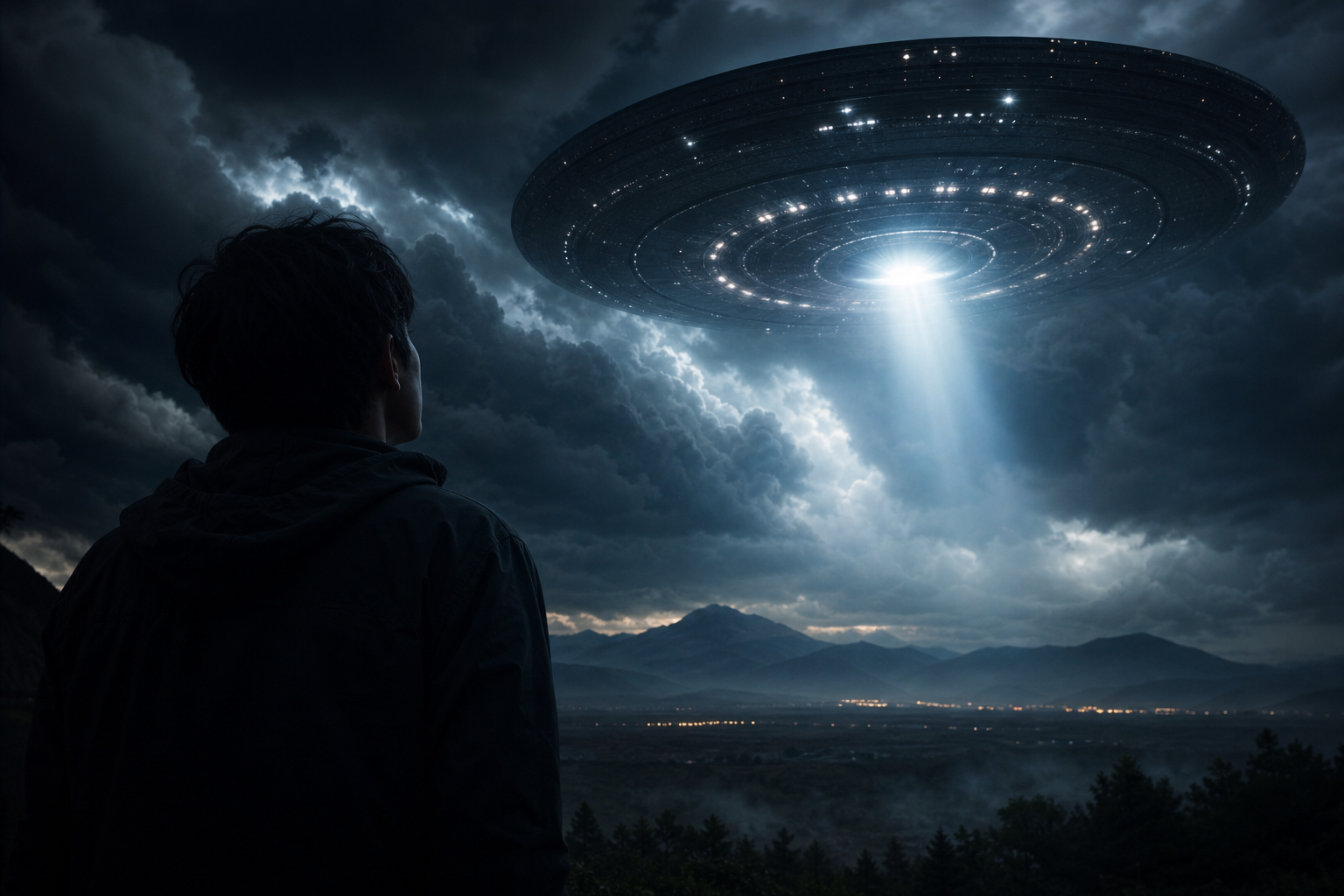
  • Neil deGrasse Tyson on First Contact: How Should We Greet Aliens?

    Neil deGrasse Tyson on First Contact: How Should We Greet Aliens?

    The question of whether we are alone in the universe has transitioned from the fringes of science fiction to the forefront of serious scientific inquiry. As reports of Unidentified Anomalous Phenomena (UAPs) continue to dominate headlines and trigger congressional hearings, the world’s most famous astrophysicist is weighing in on the ultimate hypothetical: what happens when they finally arrive? In his latest exploration, “Take Me to Your Leader,” Neil deGrasse Tyson dives deep into the logistics, ethics, and sheer cosmic wonder of meeting an extraterrestrial intelligence.

    For decades, the paranormal community and the scientific establishment have often been at odds, but the gap is narrowing as the search for Extraterrestrial Intelligence (SETI) gains mainstream momentum. Tyson, known for his skeptical yet enthusiastic approach to the cosmos, is now challenging us to think beyond the “lights in the sky” and consider the actual moment of First Contact. If a craft were to land on the White House lawn or transmit a signal from the depths of the Proxima Centauri system, would we even know how to say hello?

    The Science of the Handshake: Communicating with the Unknown

    One of the most profound challenges of meeting an alien species is the language barrier. In “Take Me to Your Leader,” the discussion shifts away from the Hollywood trope of aliens speaking perfect English or using telepathy. Instead, Tyson emphasizes that the only truly universal language is mathematics and physics. If an advanced civilization has the technology to traverse interstellar space, they must have a fundamental understanding of the laws of the universe, such as the Fine-Structure Constant or the properties of the hydrogen atom.

    Tyson suggests that our first greeting shouldn’t be a verbal “hello,” but rather a demonstration of our scientific literacy. By broadcasting prime numbers or the mathematical constant Pi, we signal that we are a sentient, technologically capable species. This mirrors the logic behind the Voyager Golden Record, a gold-plated phonograph record launched in 1977 containing sounds and images selected to portray the diversity of life and culture on Earth. However, Tyson’s modern take asks if we are truly prepared for the response such a greeting might trigger.

    There is also the biological reality to consider. Astrobiology suggests that life on other planets may not be humanoid. They might not have mouths to speak or hands to shake. They could be silicon-based, exist as gaseous clouds, or operate as a collective hive mind. Tyson’s exploration forces us to confront our “human-centric” bias, urging us to keep an open mind about what “life” actually looks like in the dark reaches of the Milky Way.

    The Fermi Paradox and the Great Silence

    To understand why Tyson is focusing on the “how” of greeting aliens, we must first address the “where.” The Fermi Paradox remains one of the most haunting questions in astronomy: if the universe is so vast and so old, why haven’t we seen anyone else? With billions of Earth-like planets in our galaxy alone, the “Great Silence” is deafening. Tyson’s work often touches on the Drake Equation, a probabilistic formula used to estimate the number of active, communicative extraterrestrial civilizations in the galaxy.

    Some theorists suggest that civilizations may reach a “Great Filter”—a point of self-destruction—before they can achieve interstellar travel. Others believe we are simply being ignored, treated like an ant farm by superior beings who find us uninteresting. By preparing a formal “greeting” protocol, Tyson argues that we are essentially maturing as a species. We are moving from being passive observers of the night sky to active participants in a potential Galactic Community.

    Historical context provides a sobering look at what happens when two civilizations of vastly different technological levels meet. On Earth, these encounters have rarely ended well for the less advanced group. This has led some scientists, including the late Stephen Hawking, to warn against broadcasting our existence to the stars. Tyson, however, leans toward a more optimistic, or at least curious, perspective, suggesting that any civilization capable of crossing the stars might have moved past the primitive urge for conquest.

    Preparing for the Psychological Shock of First Contact

    Beyond the math and the biology lies the human element. How would the world react to the confirmed existence of aliens? Tyson’s “Take Me to Your Leader” doesn’t just look at the stars; it looks in the mirror. The discovery of extraterrestrial life would be the single most disruptive event in human history, potentially upending religions, crashing stock markets, and redefining our place in the Cosmos.

    We have seen glimpses of this reaction in the public’s fascination with Area 51 and the Roswell incident of 1947. The “disclosure” movement, which advocates for the government to release classified information regarding UFOs, is fueled by a deep-seated human need to know the truth. Tyson’s approach provides a bridge between the rigorous demands of Astrophysics and the speculative wonder of the paranormal community. He acknowledges that while we need extraordinary evidence for extraordinary claims, the search itself is a noble endeavor.

    As we continue to point our telescopes toward distant suns and listen for whispers in the radio spectrum, the protocols discussed by Tyson serve as a roadmap for the unknown. Whether the first encounter happens tomorrow or in a thousand years, the preparation starts now. We are no longer just looking for “them”; we are deciding who “we” want to be when they arrive.

    If an alien craft landed in your backyard tomorrow, what is the first thing you would say—or show them—to represent the human race? Let us know in the comments below!

    Recommended Resources

    • 🤖 Viktor AI — The autonomous AI platform we use to run our marketing operations. Hire Viktor to handle blogging, lead research, audits, and more.
    • 💳 Greenlight — The money app and debit card for kids and teens. Teach your kids to earn, save, and invest. Earn $30 when you sign up.
    • ⛏️ GoMining — Earn Bitcoin through cloud mining without the hardware hassle. A passive way to get into crypto.
    • 🏦 Mercury — The business banking account built for startups and small businesses. No fees, powerful tools, and easy to set up.
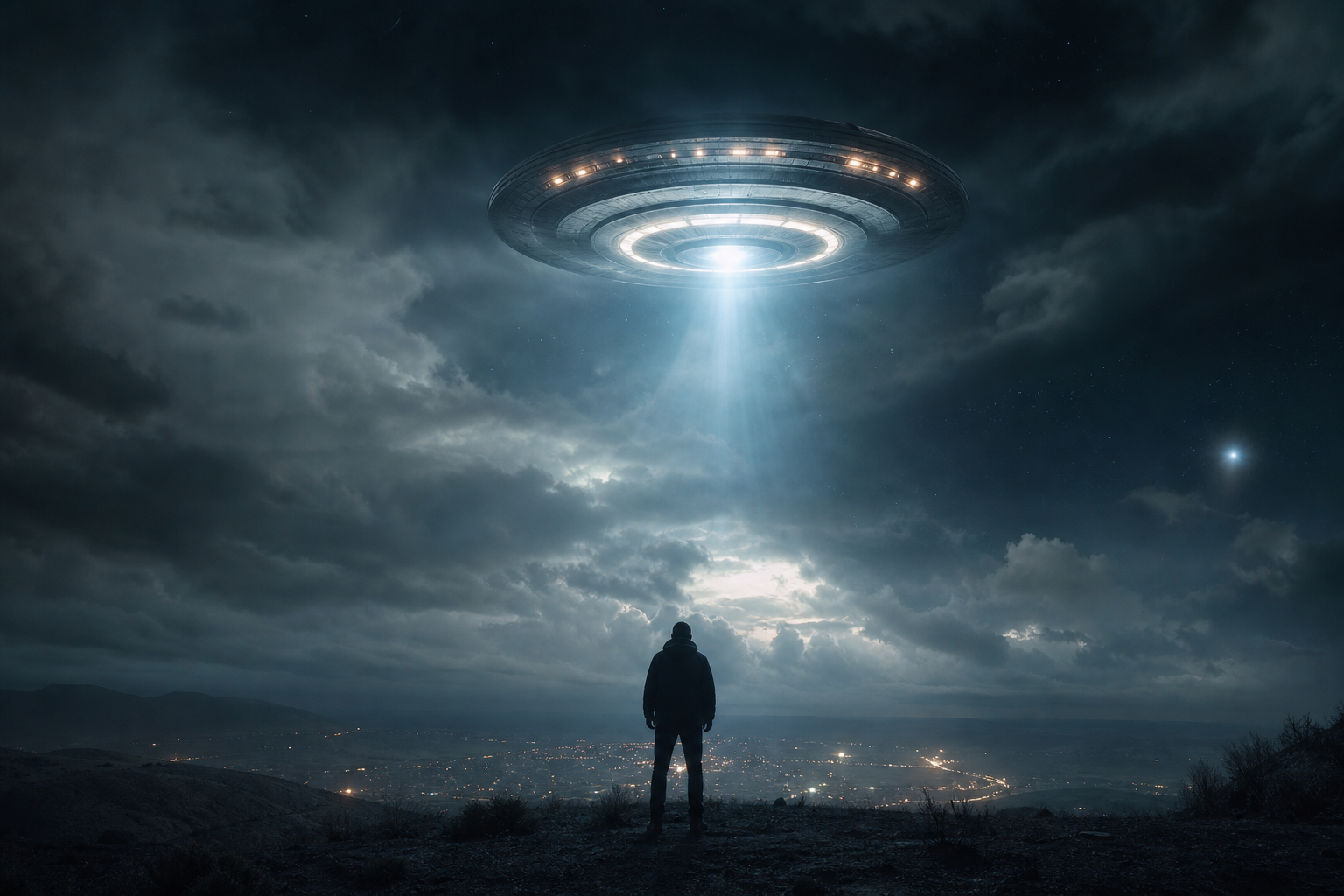
  • Pentagon UFO Files 2026: New Declassified Reports Reveal UAP Secrets

    Pentagon UFO Files 2026: New Declassified Reports Reveal UAP Secrets

    The veil of secrecy surrounding the skies has grown a little thinner this week as the Department of Defense officially pulled back the curtain on its latest collection of unexplained encounters. In a move that has sent shockwaves through the investigative community, the Pentagon has released a massive trove of declassified files detailing sightings of what the government now officially terms Unidentified Anomalous Phenomena (UAP).

    The 2026 Disclosure: A New Era of Transparency?

    For decades, the subject of UFOs was relegated to the fringes of conspiracy theories and late-night radio talk shows. However, the latest report issued by the All-domain Anomaly Resolution Office (AARO) suggests that these sightings are not only frequent but are being taken with the utmost seriousness by military intelligence. This new batch of documents includes sensor data, pilot testimonies, and high-resolution imagery that challenge our current understanding of aerospace technology.

    The release comes at a time when public pressure for disclosure has reached an all-time high. Following the landmark congressional hearings of previous years, the 2026 files represent a significant step toward transparency. While the government maintains that many sightings can be attributed to weather balloons or foreign surveillance drones, a significant percentage of the cases remain categorized as “unresolved,” displaying flight characteristics that defy the known laws of physics.

    What makes this specific release so compelling is the sheer volume of data collected from multi-sensor platforms. We are no longer looking at grainy, black-and-white footage from the 1950s. These reports include data from advanced radar systems, infrared cameras, and satellite telemetry, providing a 360-degree view of objects that appear to move with instantaneous acceleration and no visible means of propulsion.

    Trans-medium Capabilities and Physics-Defying Maneuvers

    One of the most startling revelations within the new files is the documentation of trans-medium travel. Several reports describe objects that can transition seamlessly from high altitudes to underwater environments without a splash or any detectable change in velocity. This capability suggests a level of hydrodynamic and aerodynamic integration that far surpasses any known human technology currently in development.

    Military pilots involved in these encounters often describe the craft as “glowing orbs” or “metallic cylinders” that exhibit hypersonic speeds without creating a sonic boom. In one notable case from the 2026 files, a flight of F-35 Lightning II pilots reported being circled by a “tic-tac” shaped object that appeared to jam their electronic warfare suites before vanishing into the upper atmosphere in a fraction of a second.

    The implications of these maneuvers are staggering. If these objects are not utilizing traditional combustion engines or lift-generating wings, they may be manipulating gravity or spacetime itself. Scientists reviewing the declassified data are particularly interested in the “cold” signatures of these craft, which suggest they produce very little heat even when traveling at thousands of miles per hour.

    Historical Context: From Project Blue Book to the Present

    To understand the weight of this release, one must look back at the history of government involvement in the paranormal. In the mid-20th century, Project Blue Book served as the official Air Force investigation into UFOs, ultimately concluding that there was no evidence of extraterrestrial intervention. However, many researchers believe that project was designed more to debunk than to discover.

    The shift in tone began in 2017 with the revelation of the Advanced Aerospace Threat Identification Program (AATIP), a secret Pentagon project that proved the government never truly stopped looking at the skies. Since then, the narrative has shifted from “swamp gas” to “national security threat.” The 2026 files build upon the foundation laid by the famous Gimbal and GoFast videos, providing even more context to the encounters that have baffled the Navy for years.

    By comparing these new reports to historical sightings like the 1947 Roswell incident or the 1997 Phoenix Lights, patterns begin to emerge. The consistency in the shapes of the craft and their behavior over decades suggests a persistent presence in our airspace. Whether these are non-human intelligence (NHI) or highly classified “black budget” projects remains the central question of the modern era.

    The Search for Truth: National Security or Something More?

    While the Pentagon focuses on the potential threat these objects pose to flight safety and national security, the public is more interested in the “who” and “where” of the mystery. The 2026 report carefully avoids using the word “alien,” instead opting for the more clinical non-human origin terminology when discussing the most anomalous cases. This linguistic shift is subtle but profound, signaling a departure from the era of total denial.

    Critics argue that the government is still withholding the “smoking gun” evidence—the high-resolution close-ups and recovered materials that whistleblowers have hinted at for years. However, the inclusion of biological effects reported by witnesses in this latest release adds a new, darker layer to the investigation. Some pilots reported physiological symptoms after close encounters, ranging from skin irritation to neurological changes, suggesting a powerful energy field surrounding the craft.

    As we digest the hundreds of pages of data, one thing is certain: the sky is no longer a lonely place. The 2026 Pentagon files have provided more questions than answers, but they have also validated the experiences of thousands of witnesses who were once told they were seeing things. We are standing on the precipice of a new understanding of our place in the universe, guided by data that can no longer be ignored.

    Do you believe the Pentagon is finally telling us the whole truth, or is the most shocking evidence still hidden behind a “Top Secret” stamp?

    Recommended Resources

    • 🤖 Viktor AI — The autonomous AI platform we use to run our marketing operations. Hire Viktor to handle blogging, lead research, audits, and more.
    • 💳 Greenlight — The money app and debit card for kids and teens. Teach your kids to earn, save, and invest. Earn $30 when you sign up.
    • ⛏️ GoMining — Earn Bitcoin through cloud mining without the hardware hassle. A passive way to get into crypto.
    • 🏦 Mercury — The business banking account built for startups and small businesses. No fees, powerful tools, and easy to set up.