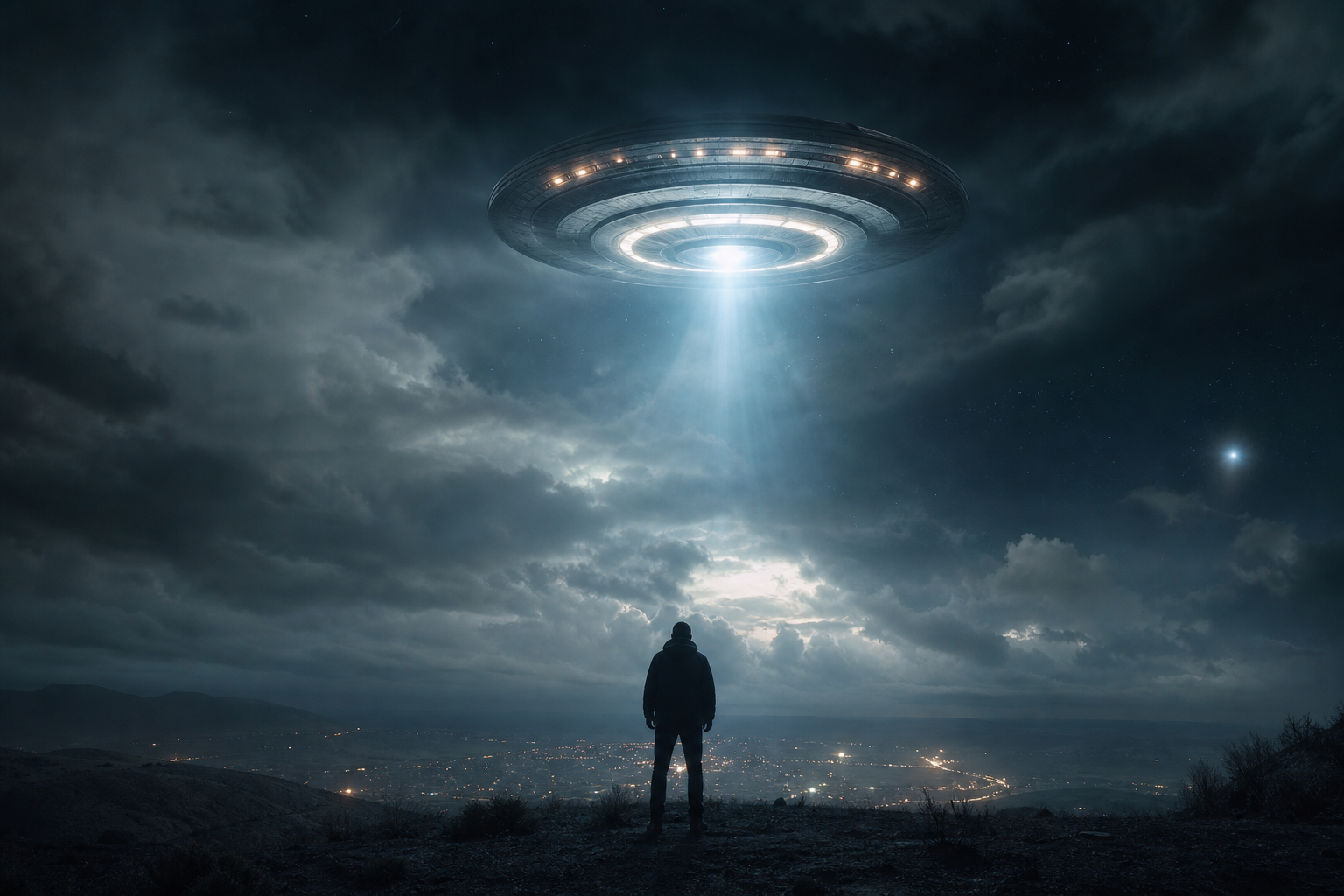
The Intersection of High Strangeness and Personal Liberty
For decades, the world of the paranormal has been relegated to the fringes of society, often dismissed by mainstream institutions as mere fantasy or delusion. However, for those who have experienced the unexplainable, these phenomena represent a profound truth that challenges the very foundations of our established reality. When an individual embraces the possibility of UFOs, spirits, or cryptids while simultaneously harboring a deep-seated distrust of authoritarianism, they find themselves at a unique cultural crossroads.
This intersection isn’t just about ghosts and goblins; it is about the fundamental right to question the “official” narrative. To be a seeker of the unknown is, by its very nature, an act of rebellion against a world that demands conformity and standardized thought. If the authorities tell us that the skies are empty and the woods are silent, but our eyes tell us otherwise, the seeds of skepticism are sown deep within the psyche.
The Psychology of the Fringe: Why We Question Everything
The connection between paranormal belief and a skeptical view of authority is more than just coincidental. Psychologists often point to a trait known as cognitive liberty—the right of an individual to control their own mental processes and beliefs. Those who are open to the supernatural often possess a high degree of this liberty, refusing to let government agencies or scientific dogmas dictate the boundaries of their reality.
Historically, the “paranormal community” has been a haven for those who feel alienated by traditional power structures. Whether it is the Ufologist tracking silent triangles over the desert or the Ghost Hunter recording EVPs in an abandoned asylum, these individuals are searching for a truth that has been ignored or suppressed by the “powers that be.” This search inherently requires a level of anti-authoritarianism, as it assumes that the institutions meant to inform us are either incompetent or intentionally deceptive.
Consider the legacy of Project Blue Book, the United States Air Force’s systematic study of unidentified flying objects. While it was presented as a scientific endeavor, many researchers now view it as a public relations tool designed to debunk sightings and pacify a nervous public. For the person who values transparency, such historical gaslighting serves as a permanent warning: do not trust the official story without evidence.
A History of Hidden Truths: From Roswell to Disclosure
The tension between the paranormal and authority reached a fever pitch with the 1947 Roswell Incident. What began as a report of a “flying disc” was quickly retracted and replaced with a story about a weather balloon. This single event birthed the modern conspiracy theory movement and solidified the idea that the government is hiding the most significant discovery in human history. For the anti-authoritarian, Roswell is the ultimate proof that those in power will prioritize control over the truth.
In recent years, the conversation has shifted toward UAP Disclosure. With the release of the “Tic-Tac” videos by the Pentagon and subsequent Congressional hearings, the government has finally admitted that there are objects in our airspace that defy known physics. Yet, even this admission is met with skepticism by the paranormal community. Why now? What is the hidden agenda? When you spend a lifetime questioning authority, even the “truth” feels like a calculated maneuver.
This skepticism extends to the realm of Cryptozoology as well. The search for Bigfoot or the Loch Ness Monster is often framed as a battle against a scientific establishment that refuses to acknowledge evidence that doesn’t fit into a pre-approved box. To the seeker, the forest is not just a collection of trees, but a vast, unmapped territory where the rules of the state do not apply.
The Rebel Seeker: Why Skepticism and Wonder Collide
What does it make you if you believe in the paranormal and hate authoritarianism? It makes you a Maverick Seeker. This identity is defined by a refusal to outsource one’s worldview to a central authority. It is a philosophy that prizes personal experience over institutional decrees. In a world that is increasingly digitized, tracked, and regulated, the paranormal represents the last great frontier of the uncontrollable.
The paranormal is, by definition, that which cannot be governed. You cannot tax a ghost, you cannot legislate a poltergeist, and you cannot border-control an interdimensional craft. For the person who fears the overreach of the state, the existence of the supernatural is a comforting reminder that there are forces in this universe far greater than any human government. It is a source of existential wonder that provides a sense of freedom that no political system can offer.
Ultimately, the marriage of paranormal interest and anti-authoritarianism is about the pursuit of sovereignty. It is the belief that the individual is the final arbiter of what is real. As we move further into an era of deepfakes and misinformation, the ability to look at the world with a critical eye—while remaining open to the impossible—may be the most important survival skill we have.
Do you believe that the government is intentionally hiding the truth about the paranormal to maintain social control, or is the mystery simply too big for any institution to contain? Join the conversation in the comments below.
Recommended Resources
- 🤖 Viktor AI — The autonomous AI platform we use to run our marketing operations. Hire Viktor to handle blogging, lead research, audits, and more.
- 💳 Greenlight — The money app and debit card for kids and teens. Teach your kids to earn, save, and invest. Earn $30 when you sign up.
- ⛏️ GoMining — Earn Bitcoin through cloud mining without the hardware hassle. A passive way to get into crypto.
- 🏦 Mercury — The business banking account built for startups and small businesses. No fees, powerful tools, and easy to set up.
Leave a Reply