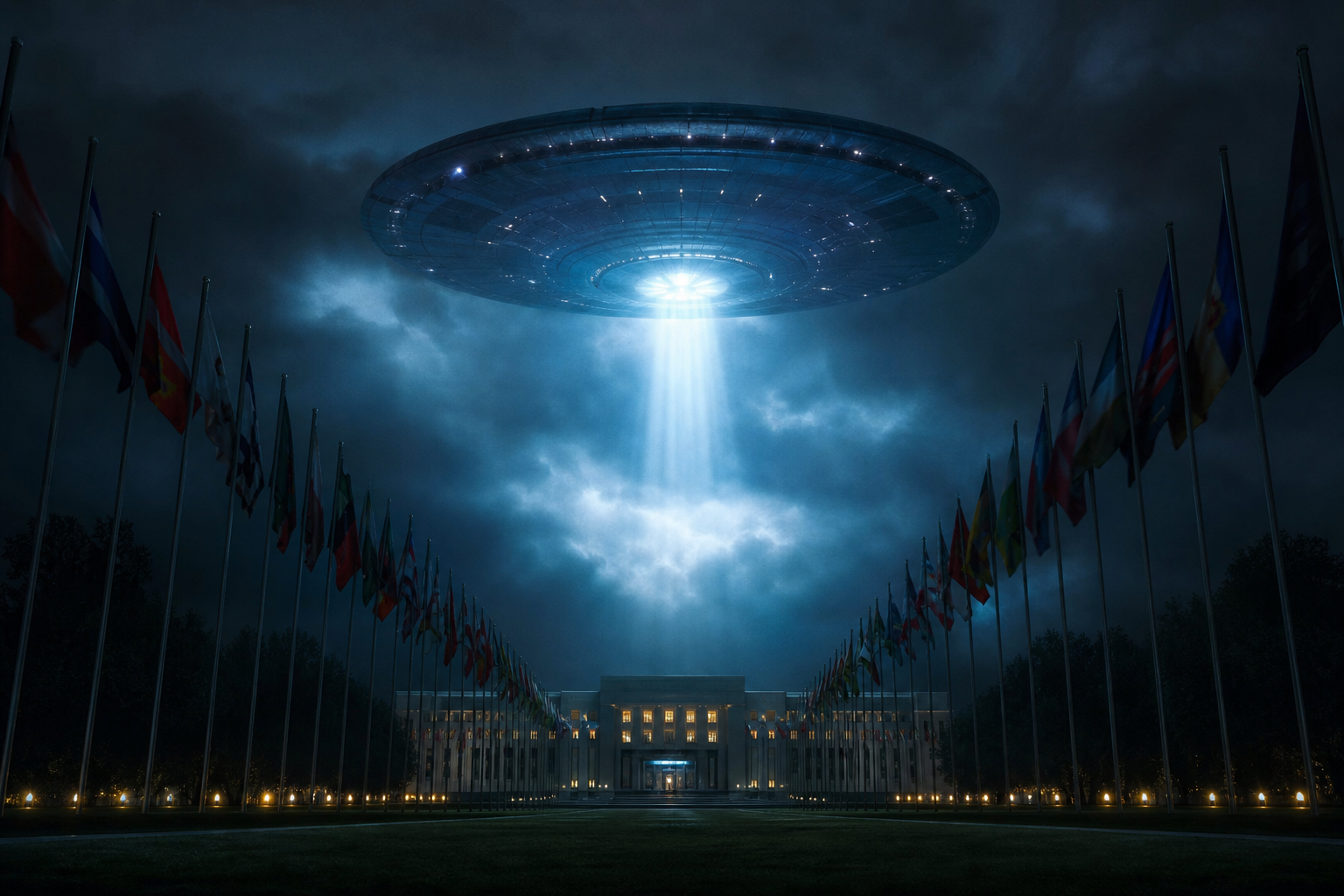
The prospect of First Contact has long been the domain of science fiction, but as global tensions rise and unidentified aerial phenomena (UAP) become a matter of congressional record, the reality of an extraterrestrial arrival is being scrutinized by national security experts. While Hollywood movies often depict a unified world greeting visitors at the United Nations, the geopolitical reality is far more cynical. If a spacecraft were to touch down tomorrow, the first calls made by the world’s superpowers wouldn’t be to diplomats, but to intelligence services and clandestine military units.
The Race for Extraterrestrial Technology
In the event of an alien landing, the primary motivation for nations like the United States and China would likely be technological supremacy. The discovery of an advanced propulsion system or a new form of energy production would represent the ultimate “high ground” in global defense. Experts suggest that the first instinct of any major power would be to secure the site, classify all findings, and prevent rival nations from gaining any insight into the visitors’ capabilities.
This “winner-take-all” mentality stems from the current Cold War 2.0 atmosphere. Just as the U.S. and the Soviet Union raced to capture Nazi rocket scientists at the end of World War II, modern superpowers would view an extraterrestrial craft as the ultimate prize. Sharing information through the United Nations would be seen as a strategic blunder, potentially giving an adversary the keys to global dominance. Consequently, the initial response would be shrouded in the highest levels of government secrecy.
Intelligence Agencies vs. Global Diplomacy
The Central Intelligence Agency (CIA) and China’s Ministry of State Security (MSS) are designed to operate in the shadows, making them the natural leads for a First Contact scenario. These agencies are equipped to handle sensitive information and manage the psychological impact of such an event on the public. By keeping the discovery within the intelligence community, governments can control the narrative and ensure that any potential threats—or opportunities—are managed behind closed doors.
Historical precedents, such as the Roswell incident of 1947, suggest that the military-intelligence complex has a long-standing protocol for containment. While the public clamors for transparency, the institutional reflex is to obfuscate. In a modern context, this would involve immediate electronic jamming of the area, the implementation of no-fly zones, and the deployment of specialized Foreign Material Recovery teams. The goal is simple: isolate the phenomenon before the rest of the world even knows it exists.
The Failure of International Protocols
While organizations like SETI (Search for Extraterrestrial Intelligence) have established “post-detection protocols,” these guidelines are non-binding and carry no legal weight. These protocols suggest that the discoverer should inform the Secretary-General of the UN and the international scientific community. However, in a world governed by realpolitik, these suggestions are likely to be ignored in favor of national interests. The lack of a formal, enforceable treaty regarding alien contact leaves a dangerous vacuum that intelligence agencies are all too happy to fill.
Furthermore, the Outer Space Treaty of 1967 focuses primarily on the moon and other celestial bodies, offering little guidance on how to handle an actual biological or mechanical visitor on Earth. Without a clear framework for international cooperation, the default setting for the U.S. and China remains competition. This creates a “prisoner’s dilemma” where neither side wants to be the first to share information, fearing they will lose their competitive edge.
A New Era of Secrecy and Suspicion
The shift in how we discuss UAPs in the halls of Congress indicates that the government is taking the phenomenon seriously, but always through the lens of national security. Recent whistleblowers have hinted at Legacy Programs involving the retrieval and reverse-engineering of non-human craft. If these programs truly exist, they represent the ultimate manifestation of the intelligence-first approach, operating for decades without public or international oversight.
As we look toward the stars, we must confront the reality that our first encounter with another civilization may be filtered through the dark lens of espionage and military strategy. The wonder of discovering we are not alone could quickly be overshadowed by the fear of what our neighbors on Earth might do with that knowledge. The silence of the universe may eventually be broken, but the silence of our own governments might be even more profound.
If a craft landed in a remote area today, do you believe any government would actually tell the truth, or is the lure of alien technology simply too great to share?
Recommended Resources
- 🤖 Viktor AI — The autonomous AI platform we use to run our marketing operations. Hire Viktor to handle blogging, lead research, audits, and more.
- 💳 Greenlight — The money app and debit card for kids and teens. Teach your kids to earn, save, and invest. Earn $30 when you sign up.
- ⛏️ GoMining — Earn Bitcoin through cloud mining without the hardware hassle. A passive way to get into crypto.
- 🏦 Mercury — The business banking account built for startups and small businesses. No fees, powerful tools, and easy to set up.
Leave a Reply