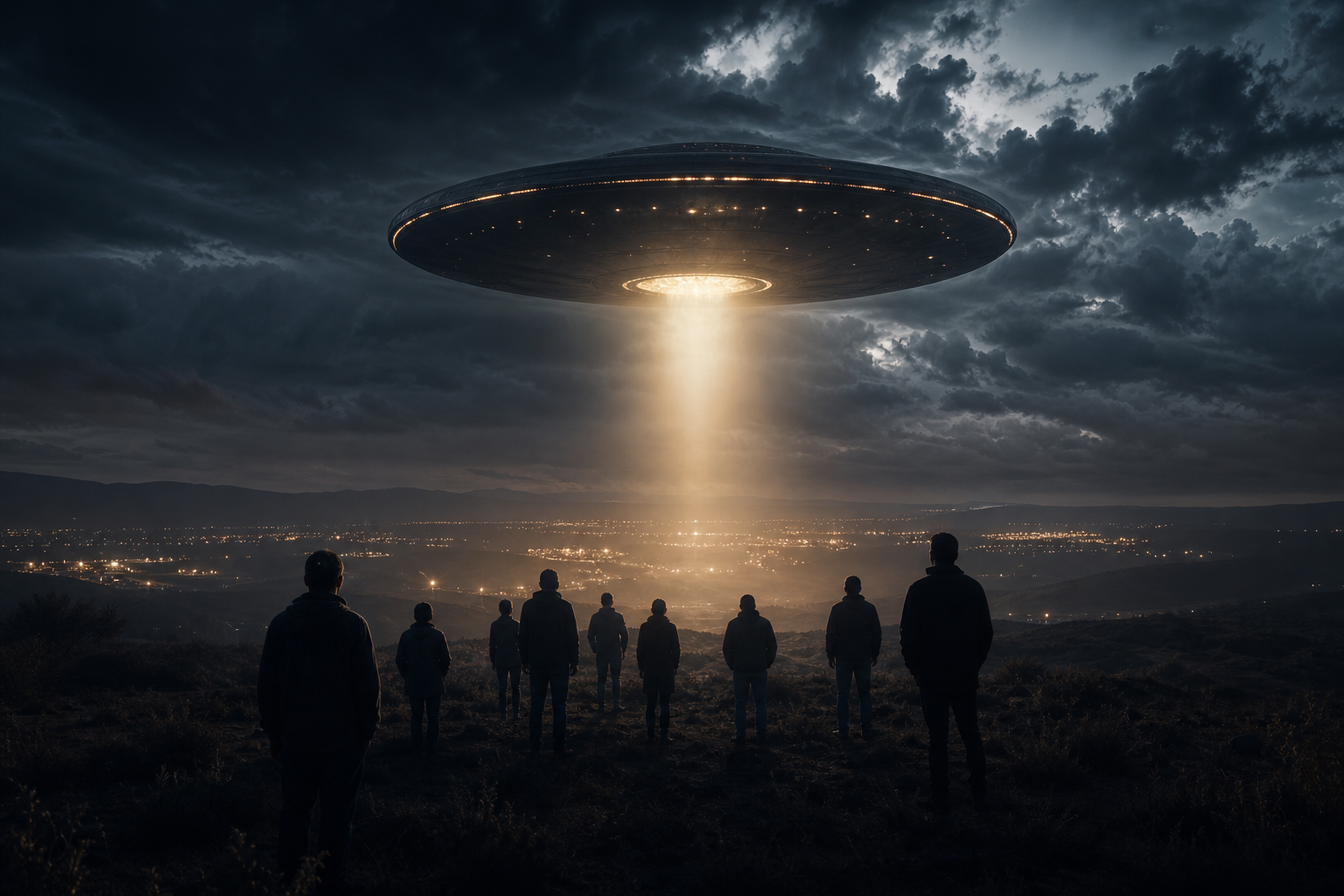
The question of whether we are alone in the universe has shifted from the fringes of science fiction to the forefront of serious scientific inquiry. As the search for Extraterrestrial Intelligence (SETI) intensifies, one of the world’s most famous scientific voices, Neil deGrasse Tyson, is weighing in on the ultimate hypothetical: if they arrive, how on Earth should we greet them? In his latest explorations into the cosmos, Tyson challenges our Hollywood-driven expectations of first contact.
The Cosmic Protocol: Beyond ‘Take Me to Your Leader’
For decades, the trope of the silver-skinned visitor stepping off a saucer and demanding to see a head of state has dominated our collective consciousness. However, Tyson suggests that our human-centric view of First Contact might be our biggest blind spot. The assumption that an advanced civilization would even recognize our political structures, or care about our “leaders,” is a projection of our own social hierarchies onto the infinite unknown.
Tyson argues that if a civilization has the technology to bridge the massive gaps between stars, their intelligence and biology might be fundamentally unrecognizable to us. We often imagine aliens as slightly modified humans—perhaps with larger eyes or green skin—but the reality of Astrobiology suggests they could be silicon-based, hive-minded, or even purely digital entities. Greeting such a being requires more than a handshake or a diplomatic summit; it requires a universal language.
Historically, scientists have looked to mathematics and physics as this universal bridge. The Pioneer Plaques and the Voyager Golden Records, launched in the 1970s, utilized hydrogen atom diagrams and mathematical constants to communicate our existence. Tyson emphasizes that any greeting must be rooted in these fundamental truths of the universe, rather than the fleeting nuances of human culture or language.
The Dark Forest and the Ethics of Contact
While the excitement of meeting a galactic neighbor is palpable, Tyson also touches upon the inherent risks of shouting into the cosmic dark. This brings to mind the Dark Forest Theory, a chilling solution to the Fermi Paradox which suggests that civilizations remain silent to avoid being destroyed by predatory neighbors. If we greet a visiting craft with open arms, are we inviting enlightenment or extinction?
Tyson’s perspective often leans toward the scientific curiosity of the encounter. He suggests that a civilization capable of interstellar travel would likely have moved past the resource-scarcity conflicts that drive human aggression. To them, Earth might not be a prize to be conquered, but a biological curiosity to be observed—much like how we view a colony of ants in a remote forest. The “greeting” might not even be a conversation, but a one-sided observation by a vastly superior intellect.
This echoes the Zoo Hypothesis, which posits that aliens are already here, watching us from a distance and waiting for us to reach a certain level of technological or ethical maturity before making their presence known. If Tyson is correct, our “greeting” might need to be a demonstration of our worthiness as a species, showing that we can steward our own planet before joining a galactic community.
Preparing for the Unthinkable
So, what does a practical greeting look like? Tyson suggests that we should lead with our best foot forward—our scientific achievements and our capacity for art and empathy. However, the logistical reality of UAP (Unidentified Anomalous Phenomena) sightings today suggests that the government might have a very different protocol involving military interception and classified data collection.
The disconnect between the scientific community’s desire for open communication and the military’s focus on national security is a major hurdle. Tyson’s advocacy for a transparent, science-led approach to alien encounters is a call to move away from fear-based reactions. He encourages us to look at the stars not as a source of potential threats, but as a laboratory of endless possibilities.
In the event of a landing, the Post-Detection Protocol established by SETI researchers suggests a global consensus before any response is sent. Tyson’s insights remind us that we are representatives of Earth, not just individual nations. The greeting must be a unified human voice, acknowledging our place in a much larger, much older neighborhood.
As we continue to scan the skies for signals and strange craft, the wisdom of scientists like Tyson helps ground our wonder in reality. Whether the first greeting happens via a radio telescope or a craft hovering over a major city, it will be the most significant moment in human history. We must be ready to speak a language that the universe understands.
If a craft landed in your backyard tomorrow, what is the first thing you would say—or show—to prove that humanity is a species worth befriending?
Recommended Resources
- 🤖 Viktor AI — The autonomous AI platform we use to run our marketing operations. Hire Viktor to handle blogging, lead research, audits, and more.
- 💳 Greenlight — The money app and debit card for kids and teens. Teach your kids to earn, save, and invest. Earn $30 when you sign up.
- ⛏️ GoMining — Earn Bitcoin through cloud mining without the hardware hassle. A passive way to get into crypto.
- 🏦 Mercury — The business banking account built for startups and small businesses. No fees, powerful tools, and easy to set up.
Leave a Reply