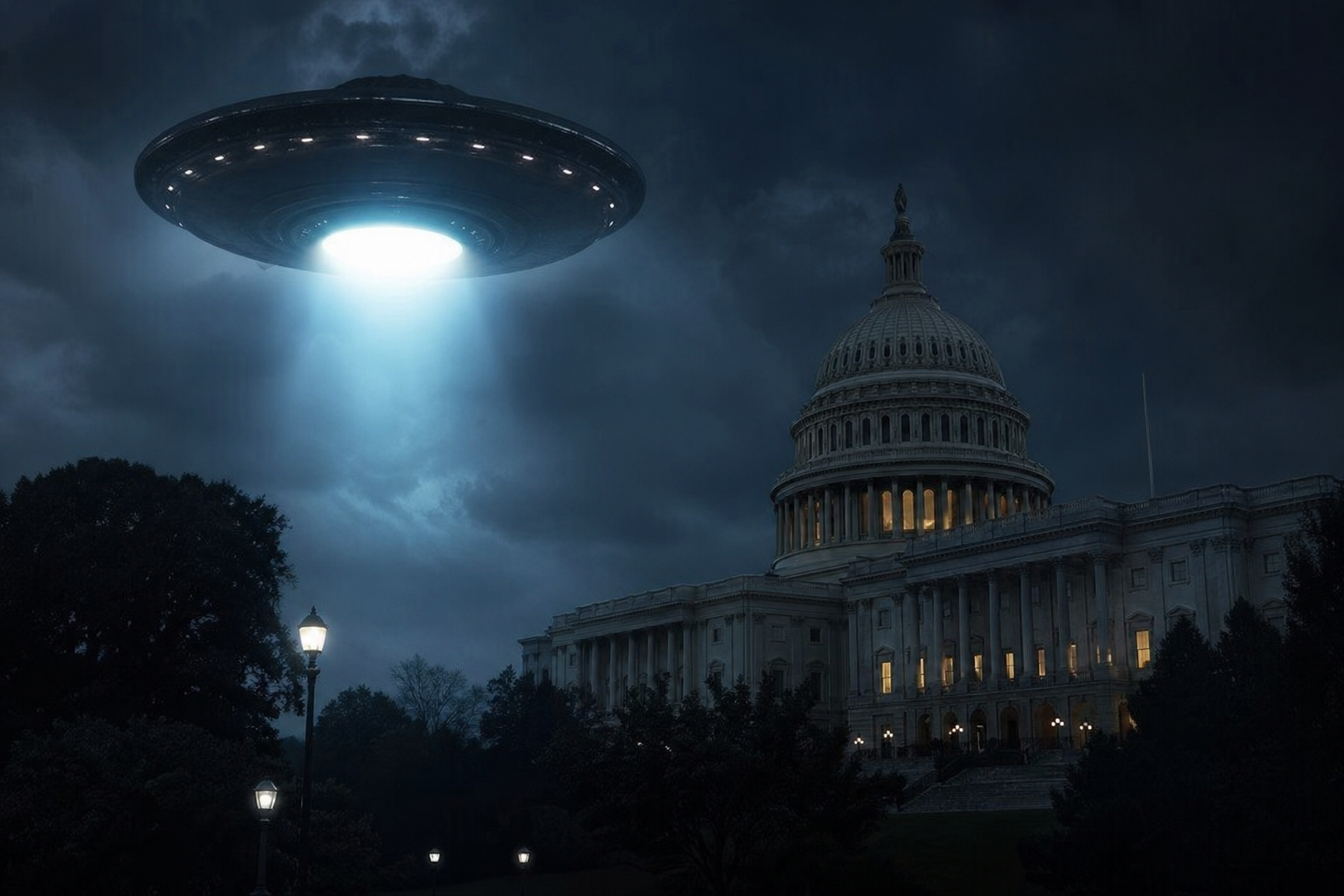
The halls of Congress are increasingly becoming the front lines of a battle for the truth regarding Unidentified Anomalous Phenomena (UAP). While the public waits for definitive answers, some lawmakers are sounding the alarm that the push for transparency is being met with aggressive resistance from the shadows. Rep. Tim Burchett (R-TN), one of the most vocal advocates for disclosure, recently suggested that a powerful “message” is being sent to those attempting to pull back the curtain on the UFO mystery.
The Message Behind the Silence
According to Burchett, the current atmosphere surrounding the UAP investigation is one of intimidation and suppression. He believes that the recent pushback against legislative transparency is not accidental but a calculated effort to protect deeply buried secrets. “I think clearly someone’s sending a message of one or two things,” Burchett remarked, highlighting a growing concern that the disclosure movement is being actively sabotaged by internal forces.
The first possibility, according to the Congressman, is a desire to “squash our technology.” This refers to the long-standing theory that the United States government, or private aerospace contractors, are in possession of craft that utilize non-human intelligence (NHI) propulsion systems. If such technology exists, the implications for the global energy sector and the military-industrial complex would be seismic, potentially explaining why some would go to great lengths to keep it hidden.
The second possibility is even more chilling: a warning to others. Burchett suggests that the treatment of current investigators and witnesses serves as a deterrent to prevent more whistleblowers from coming forward. By making the process difficult and the personal stakes high, the “gatekeepers” of this information ensure that the status quo remains undisturbed.
Poking the Hornet’s Nest
Burchett’s use of the phrase “poking the hornet’s nest” captures the volatile nature of the current UAP discourse. For decades, the topic of UFOs was relegated to the fringes of society, often dismissed with ridicule. However, since the 2017 revelation of the Advanced Aerospace Threat Identification Program (AATIP), the conversation has shifted into the mainstream, forcing the Pentagon to acknowledge that there are indeed objects in our skies that defy conventional explanation.
The stakes have never been higher. As more credible individuals, such as former intelligence officer David Grusch, come forward with allegations of reverse-engineering programs, the pressure on the government to provide a full accounting has reached a boiling point. Burchett’s warnings suggest that as the investigation gets closer to the truth, the resistance from those within Special Access Programs (SAPs) will only intensify.
This resistance often manifests as bureaucratic roadblocks. Lawmakers have frequently complained about being denied access to classified briefings or “Sensitive Compartmented Information Facilities” (SCIFs) when attempting to follow the trail of UAP funding. This “stonewalling,” as Burchett describes it, is a hallmark of a system designed to protect itself from outside scrutiny.
A Legacy of Secrecy
To understand the gravity of Burchett’s claims, one must look at the historical context of the UFO phenomenon. From the 1947 Roswell incident to the closing of Project Blue Book in 1969, the official government stance has largely been one of denial. Yet, internal documents released through the Freedom of Information Act (FOIA) often tell a different story—one of genuine concern and high-level interest in these aerial anomalies.
The modern era of disclosure is attempting to break this cycle of secrecy. The creation of the All-domain Anomaly Resolution Office (AARO) was intended to centralize UAP reporting, but many, including Burchett, remain skeptical of its effectiveness. Critics argue that AARO may serve more as a “filter” for information rather than a conduit for the truth, further complicating the efforts of the House Oversight Committee.
The “hornet’s nest” isn’t just about the technology itself; it’s about the accountability of unelected officials who may have been operating without congressional oversight for decades. If Burchett is correct, the struggle for disclosure is a struggle for the very soul of government transparency.
The Future of Disclosure
As we move further into 2024, the tension between the legislative branch and the intelligence community shows no signs of abating. With new legislation being proposed to force the declassification of UAP records, the “message” Burchett speaks of may become even louder. Whether that message is one of fear or a desperate attempt to maintain control remains to be seen.
The Congressman remains undeterred, insisting that the American people have a right to know what is flying in their airspace and what their tax dollars are supporting. However, the path forward is fraught with political and perhaps even physical risks for those brave enough to lead the charge.
Do you believe the government is actively intimidating whistleblowers to prevent the truth about UAP technology from reaching the public?
Recommended Resources
- 🤖 Viktor AI — The autonomous AI platform we use to run our marketing operations. Hire Viktor to handle blogging, lead research, audits, and more.
- 💳 Greenlight — The money app and debit card for kids and teens. Teach your kids to earn, save, and invest. Earn $30 when you sign up.
- ⛏️ GoMining — Earn Bitcoin through cloud mining without the hardware hassle. A passive way to get into crypto.
- 🏦 Mercury — The business banking account built for startups and small businesses. No fees, powerful tools, and easy to set up.
Leave a Reply