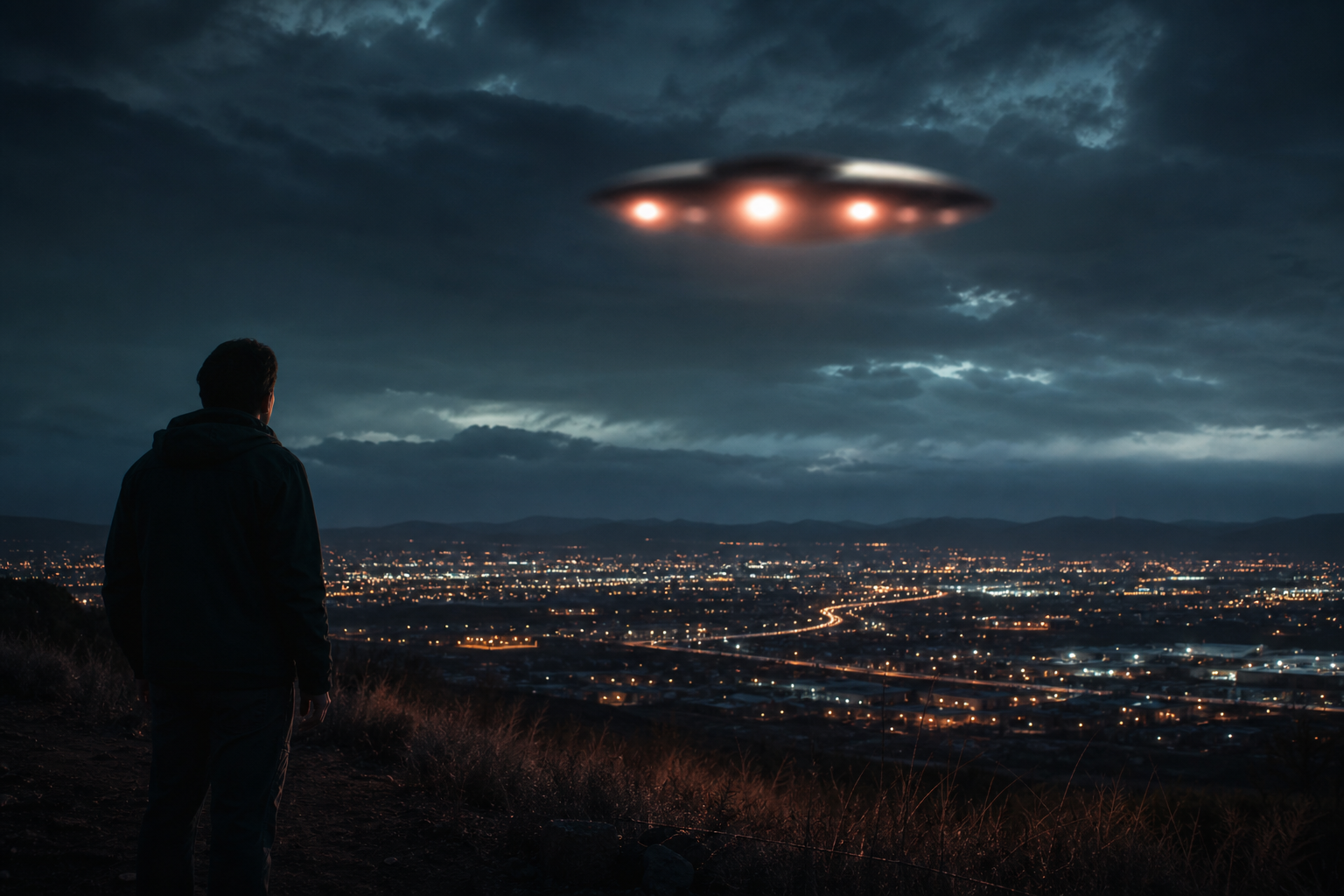
In an era where every smartphone promises cinematic 4K resolution, the paranormal community is often met with a frustrating paradox: why do UFO sightings still look like blurry “blobs of light” or grainy “potatoes”? This disconnect between modern technology and the reality of low-light videography has fueled skepticism for years, leading many to dismiss genuine anomalies as mere camera artifacts. However, a deeper look into the physics of computational photography reveals that our pocket-sized devices are fundamentally ill-equipped to capture the mysteries of the night sky.
The Myth of the 4K Smartphone Sensor
The most common criticism found in the comments sections of paranormal forums is the “4K argument.” Skeptics argue that if unidentified aerial phenomena (UAP) were real, we would have crystal-clear, high-definition footage by now. The reality, however, is that resolution is not the same as light-gathering capability. While a phone might record in 4K, the physical image sensor inside the device is incredibly small—often measuring just 5.76mm x 4.29mm. This tiny surface area is tasked with capturing photons in the vast, dark expanse of the atmosphere, a feat that pushes the limits of physics.
To compensate for these small sensors, manufacturers rely on digital processing to “guess” what the image should look like. When you point your phone at a distant light in the sky, the software struggles to distinguish between a solid object and digital noise. This results in the “smearing” effect often seen in viral videos. Furthermore, most users instinctively use digital zoom, which doesn’t actually bring the object closer but merely crops and enlarges the existing pixels, destroying any remaining detail and making a 4K video look like it was filmed in the 1990s.
Professional Gear vs. The Night Sky
To understand the struggle of the average witness, we must look at what happens when professional-grade equipment is used. A full-frame camera, such as a Canon EOS R6, possesses a sensor roughly 34 times larger than that of a standard smartphone. Even with this massive advantage, capturing fast-moving objects at night is a nightmare for photographers. To even see a satellite or a high-altitude craft, a professional must crank the ISO sensitivity to extreme levels, often exceeding 100,000, which introduces significant grain.
Even with a “fast” lens—one with a wide aperture like f/1.8 to let in maximum light—the shutter speed must be slowed down significantly to produce a visible image. This creates a “motion blur” effect that can make a structured craft look like a glowing streak. If a $2,500 professional camera setup struggles to produce a sharp image of a known object like a satellite, it is statistically improbable that a person using an iPhone or Android device will capture a clear, metallic hull of a craft moving at hypersonic speeds.
Historical Context: From Film to Digital Grain
The history of Ufology is a history of technological limitations. In the 1950s and 60s, we had the grainy black-and-white film of the McMinnville UFO photographs. While these images were physical negatives, they suffered from the grain of the film stock and the limitations of the lenses of the time. Today, we have traded film grain for digital noise. The problem hasn’t changed; only the medium has. The Pentagon UFO videos, such as the famous “FLIR” and “Gimbal” clips, were captured using sophisticated Infrared (IR) sensors on fighter jets, yet even those are subject to debate and “glare” theories.
This suggests that the “perfect” UFO video may be a statistical impossibility for the general public. Unless a witness happens to be a professional astrophotographer with a tripod-mounted tracking system already calibrated and recording, the results will almost always be underwhelming. The atmospheric distortion caused by heat waves and moisture further degrades the image, ensuring that even the most spectacular sighting remains a “low-quality” piece of evidence in the eyes of the public.
Why We Must Stop “Bashing” the Quality
The culture of “quality bashing” in the paranormal community may actually be hindering research. When witnesses are mocked for the poor quality of their footage, they become less likely to share their experiences. Understanding the technical constraints of mobile photography allows us to look past the blur and focus on the flight characteristics and patterns of the objects being reported. We are currently in a transition period where sensor technology is improving, but we are still years away from having “night vision” capabilities in our pockets that can rival the human eye.
Until infrared sensors or larger curved sensors become standard in mobile devices, the “blurry UFO” is here to stay. It is a byproduct of physics, not a lack of effort from the witness. Instead of asking why the video is bad, we should be asking why these objects continue to appear in our skies, seemingly indifferent to our inability to capture them in high definition.
Do you think the lack of high-quality UFO footage is purely a technical limitation, or could there be something about the nature of these objects that interferes with our digital sensors?
“,excerpt:
Recommended Resources
- 🤖 Viktor AI — The autonomous AI platform we use to run our marketing operations. Hire Viktor to handle blogging, lead research, audits, and more.
- 💳 Greenlight — The money app and debit card for kids and teens. Teach your kids to earn, save, and invest. Earn $30 when you sign up.
- ⛏️ GoMining — Earn Bitcoin through cloud mining without the hardware hassle. A passive way to get into crypto.
- 🏦 Mercury — The business banking account built for startups and small businesses. No fees, powerful tools, and easy to set up.
Leave a Reply