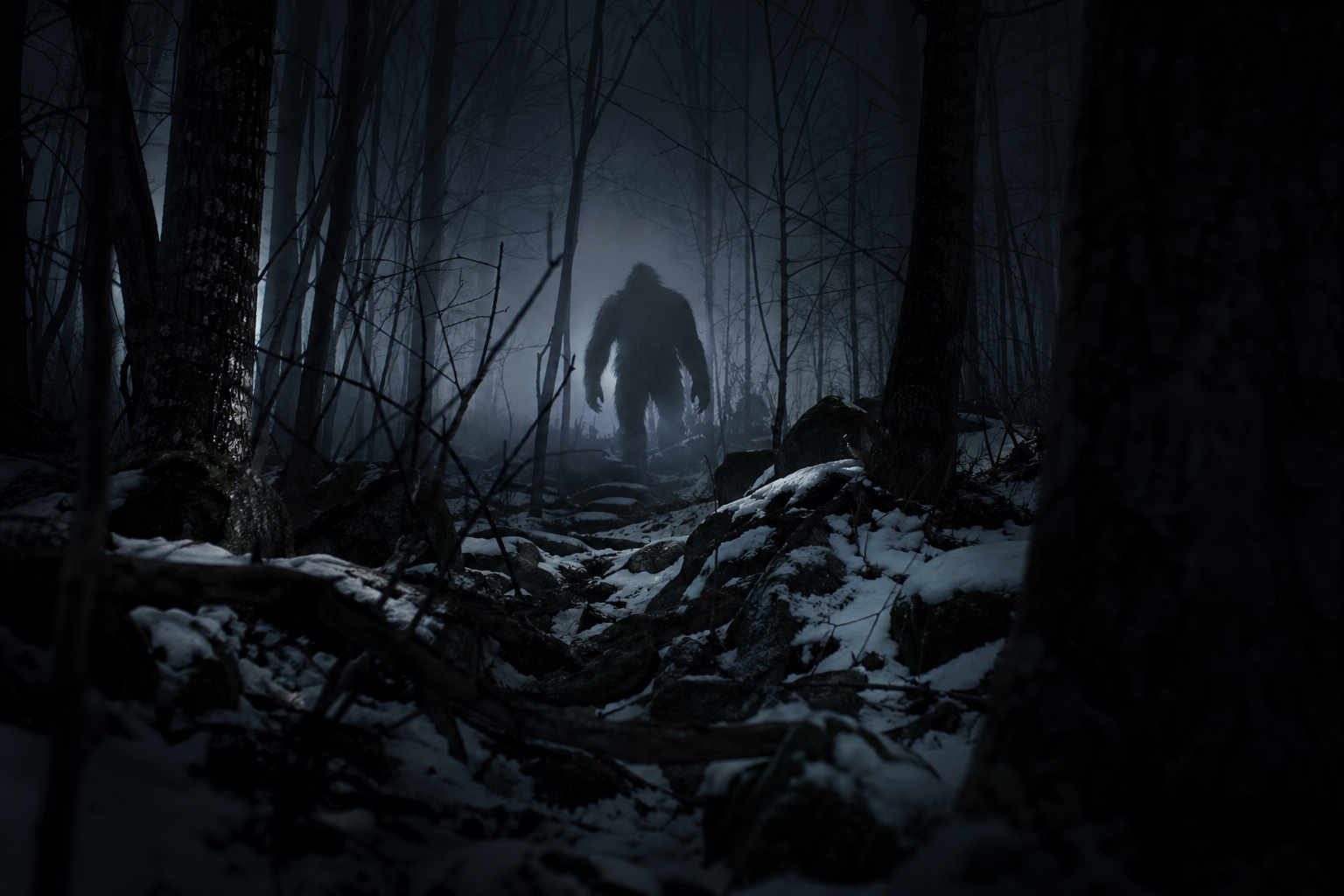
In the late 1960s, a chilling spectacle began appearing at shopping malls and state fairs across the United States, drawing crowds of thousands who paid a few cents to peer into a frozen tomb. Encased in a massive, cloudy block of ice was the hairy, contorted body of a creature that defied conventional biology. Known as the Minnesota Iceman, this specimen sparked a decade of debate, scientific intrigue, and a mystery that still haunts the annals of cryptozoology today.
The Discovery of the Frozen Hominid
The story began with Frank Hansen, a former military pilot and showman who claimed he was merely the caretaker of the specimen. According to Hansen, the creature had been discovered in the frozen wastes of Siberia, though he later changed his story several times, occasionally suggesting it was found off the coast of Vietnam. He claimed the “original” owner was an eccentric, anonymous millionaire from California who had entrusted him with the creature’s exhibition.
The specimen itself was described as a hominid standing roughly six feet tall, covered in dark, coarse hair with oversized hands and feet. Its face was flattened, with a snub nose and one eye socket that appeared to have been damaged by a gunshot. For years, Hansen paraded the ice block around the country, always keeping the creature behind thick glass and layers of ice, which prevented anyone from performing a physical examination or verifying the organic nature of the remains.
Scientific Interest and the Smithsonian Scandal
While many dismissed the exhibit as a typical “sideshow gaff,” the Minnesota Iceman caught the attention of two serious researchers: Ivan T. Sanderson, a renowned naturalist, and Bernard Heuvelmans, often cited as the father of cryptozoology. In 1968, the duo spent days examining the specimen in a trailer in Minnesota. They became convinced they were looking at a genuine biological entity, possibly a surviving Neanderthal or a relict species of Homo pongoides.
Sanderson’s excitement led him to contact the Smithsonian Institution, urging them to investigate what he believed was the “missing link” in human evolution. However, as the scientific community began to take notice, the situation took a bizarre turn. Fearing potential legal trouble regarding the “corpse,” Hansen suddenly withdrew the specimen from public view. He claimed the mysterious millionaire owner had reclaimed it, only to replace it later with a version that many observers claimed looked suspiciously like a latex model.
The Latex Verdict and the Museum of the Weird
The Smithsonian’s interest eventually cooled when primatologist John Napier investigated the claims. Napier, working alongside the FBI, reportedly traced the origins of the “new” specimen to a Hollywood effects house. The official verdict from the Smithsonian was scathing: the exhibit was nothing more than a “carnival exhibit made of latex and hair.” Hansen eventually admitted to having a model made, but he maintained until his death that the original, biological creature was real and had been hidden away to avoid federal prosecution for “killing” a hominid.
The legacy of the Minnesota Iceman didn’t melt away with the controversy. In 2013, the specimen—or at least the version Hansen had been touring in his later years—was purchased by Steve Busti, owner of the Museum of the Weird in Austin, Texas. It remains one of the museum’s most popular attractions, sitting in its refrigerated case as a testament to the golden age of American sideshows and the enduring human desire to believe in the unknown.
A Relic of the Unknown or a Masterful Hoax?
The case of the Minnesota Iceman remains a polarizing topic in the paranormal community. Skeptics point to the shifting stories of Frank Hansen and the confirmed existence of latex models as proof of a long-running hoax. They argue that the “original” seen by Sanderson and Heuvelmans was simply a better-crafted dummy that benefited from the distorting effects of melting ice and dim lighting.
However, true believers suggest that Hansen may have actually possessed a genuine cryptid—perhaps a juvenile Bigfoot or a Yeti—and used the latex models as “decoy” replacements once the authorities began asking questions. If the original specimen was indeed a biological entity, its current location remains one of the greatest unsolved mysteries in the field. Was the Minnesota Iceman a genuine breakthrough in human history that was lost to the shadows, or was it simply the greatest magic trick ever performed in a shopping mall parking lot?
Do you believe Frank Hansen ever possessed a real biological creature, or was the entire saga a brilliant piece of performance art?
Recommended Resources
- 🤖 Viktor AI — The autonomous AI platform we use to run our marketing operations. Hire Viktor to handle blogging, lead research, audits, and more.
- 💳 Greenlight — The money app and debit card for kids and teens. Teach your kids to earn, save, and invest. Earn $30 when you sign up.
- ⛏️ GoMining — Earn Bitcoin through cloud mining without the hardware hassle. A passive way to get into crypto.
- 🏦 Mercury — The business banking account built for startups and small businesses. No fees, powerful tools, and easy to set up.
Leave a Reply