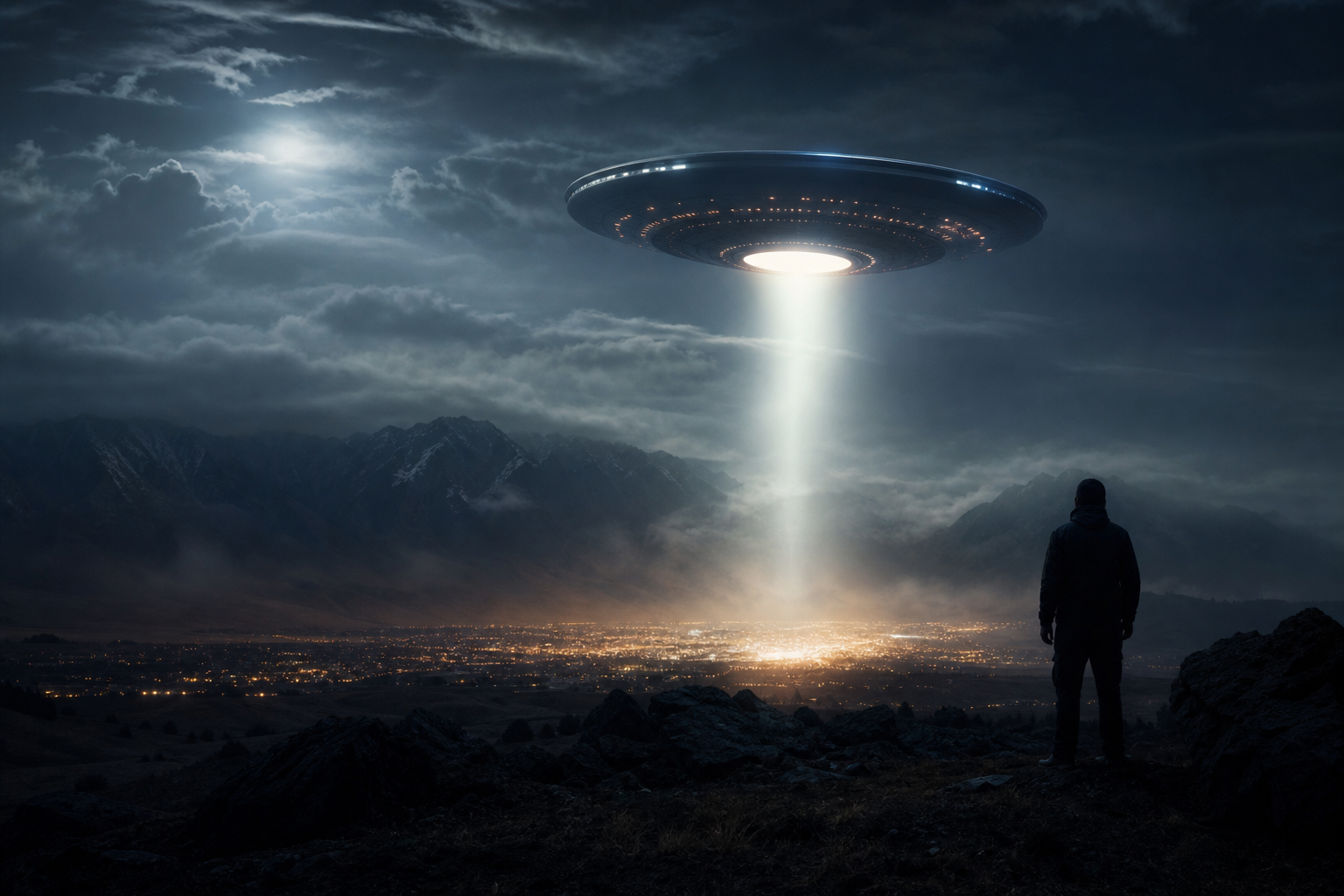
For decades, humanity has looked toward the stars with a mixture of profound curiosity and deep-seated dread. While the scientific community searches for microbial life on distant moons, the world of cinema has already invited the extraterrestrial threat into our living rooms, depicting every possible scenario from peaceful first contact to total planetary annihilation. These films do more than just entertain; they serve as a cultural barometer for our collective anxiety regarding the UFO phenomenon and the possibility that we are not alone in the universe.
The Cinematic Evolution of the Alien Threat
The history of alien invasion cinema is inextricably linked to the real-world history of UFO sightings and government secrecy. In the 1950s, films like The Day the Earth Stood Still and The War of the Worlds mirrored the Cold War paranoia of the era, using the “invader from space” as a metaphor for terrestrial enemies. However, for many in the paranormal community, these films were more than just metaphors; they were a reflection of the burgeoning Flying Saucer craze that began with Kenneth Arnold’s 1947 sighting and the infamous Roswell Incident.
As our understanding of the cosmos evolved, so did the complexity of these stories. Modern masterpieces like Arrival and Annihilation move away from the “little green men” tropes to explore the truly alien—beings whose biology and language are so foreign that communication becomes the primary conflict. This shift mirrors the modern UAP (Unidentified Aerial Phenomena) discourse, where officials now admit that these objects exhibit flight characteristics that defy our current understanding of physics and aerodynamics.
Rankings and Realism: What Makes an Invasion “Real”?
When looking at the top-ranked alien invasion films according to critics, a pattern emerges: the most successful movies are those that ground the extraordinary in the ordinary. Signs, directed by M. Night Shyamalan, remains a staple of the genre because it focuses on the intimate terror of a single family experiencing a global event. The crop circles and clicking sounds depicted in the film draw directly from decades of paranormal lore, tapping into the “high strangeness” often reported by real-world witnesses of close encounters.
On the other end of the spectrum, high-octane blockbusters like Independence Day or Edge of Tomorrow satisfy our primal need to see humanity fight back against an overwhelming force. While these films are less about the nuance of the paranormal, they highlight the “threat narrative” that has dominated recent Pentagon briefings regarding national security and unidentified craft. Whether it is a biological infection or a massive mothership over a city, these films force us to ask: are we prepared for the day the fiction becomes reality?
The Psychological Impact of Extraterrestrial Fiction
Why are we so obsessed with watching our own civilization crumble at the hands of interstellar travelers? Psychologists suggest that these films allow us to process the “Great Filter” theory—the idea that there is a developmental wall that prevents civilizations from becoming interstellar. By surviving an invasion on screen, we vicariously overcome that filter. For the paranormal investigator, these movies provide a visual language for experiences that are often difficult to describe, such as alien abductions or “missing time” episodes.
Furthermore, the ranking of these films often reflects the social climate of the time. During periods of relative peace, we see more “benevolent” visitor films like E.T. the Extra-Terrestrial or Close Encounters of the Third Kind. During times of global instability, the “hostile invader” narrative takes center stage. This suggests that our cinematic taste for aliens is a mirror held up to our own sense of security on this fragile blue marble we call home.
From the Silver Screen to the Night Sky
As we continue to analyze the best alien invasion movies ever made, we must acknowledge the bridge between Hollywood and the disclosure movement. Many researchers believe that the steady stream of extraterrestrial media has served as a form of “cultural acclimation,” preparing the public for the eventual admission that non-human intelligence is interacting with Earth. Whether it is the terrifying realism of Cloverfield or the philosophical depth of Contact, these stories expand our imagination to encompass the infinite possibilities of the multiverse.
The next time you sit down to watch a classic invasion flick, pay attention to the details. The flickering lights, the electromagnetic interference, and the silent, hovering crafts are not just products of a screenwriter’s imagination—they are the hallmarks of a mystery that has haunted humanity for generations. As the line between science fiction and science fact continues to blur, we may find that the most realistic alien invasion movie hasn’t been filmed yet; it might be happening right outside our windows.
Do you believe that Hollywood is using alien invasion movies to prepare us for the reality of extraterrestrial contact, or are these films purely a product of our own imagination? Share your thoughts in the comments below!
Recommended Resources
- 🤖 Viktor AI — The autonomous AI platform we use to run our marketing operations. Hire Viktor to handle blogging, lead research, audits, and more.
- 💳 Greenlight — The money app and debit card for kids and teens. Teach your kids to earn, save, and invest. Earn $30 when you sign up.
- ⛏️ GoMining — Earn Bitcoin through cloud mining without the hardware hassle. A passive way to get into crypto.
- 🏦 Mercury — The business banking account built for startups and small businesses. No fees, powerful tools, and easy to set up.
Leave a Reply