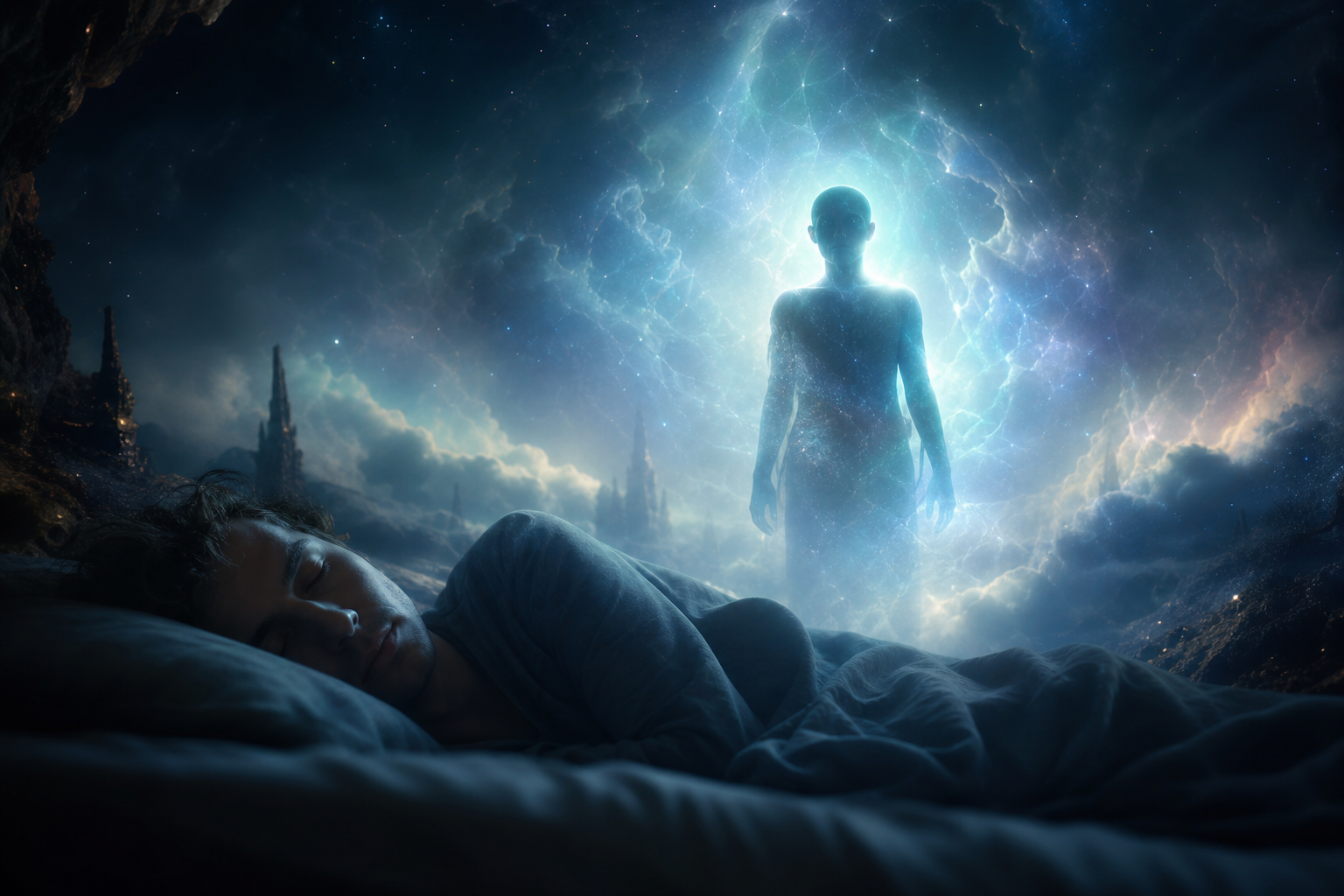
Imagine standing in a crowded city square, the sun shining with an ethereal glow that feels just a bit too perfect. You realize, with a sudden jolt of clarity, that you are asleep. This is a Lucid Dream, a state where the dreamer becomes aware they are within a constructed reality. Usually, the first instinct is to fly or manifest a luxury car, but a chilling new trend in the paranormal community suggests a much more dangerous experiment: asking the inhabitants of your dream what time it is.
For years, practitioners of Astral Projection and lucid dreaming have shared whispered warnings about “breaking the fourth wall” of the subconscious. While dreams are often viewed as private playgrounds of the mind, those who have dared to confront dream characters with the reality of their situation report terrifying, uniform consequences. It appears that the entities populated within our sleep cycles do not take kindly to being told they aren’t real, or worse, being asked to track the linear passage of time.
The Glitch in the Matrix: Why Time Doesn’t Exist in Dreams
The phenomenon gained significant traction on social media platforms like Reddit and TikTok, where users began documenting their attempts to ask dream characters for the time. In almost every account, the atmosphere of the dream shifts instantly from whimsical to malevolent. One dreamer reported that upon asking a “stranger” in their dream for the time, every person in the crowded room stopped moving and turned to stare with pitch-black eyes. The Subconscious Mind, it seems, has a defensive mechanism that triggers when its internal logic is questioned.
From a psychological perspective, time is a construct of the waking, rational brain. In the dream state, the Prefrontal Cortex—the part of the brain responsible for logic and time perception—is largely deactivated. When you ask a dream character for the time, you are essentially forcing a “system error.” The brain cannot provide a coherent answer because time in the dream world is fluid and non-linear. This “glitch” often manifests as the dream character becoming angry, distorted, or even physically aggressive as the dream architecture begins to collapse.
Hostile Entities and the “Uncanny Valley” of Sleep
What is most unsettling about these reports is the consistency of the reactions. Many dreamers describe their dream characters—often referred to as Non-Player Characters (NPCs) in modern paranormal circles—undergoing a terrifying transformation. “The moment I said ‘this is a dream,’ the woman I was talking to grew six inches taller, her face became a blur, and she screamed that I wasn’t supposed to know,” one witness shared. This suggests that these entities may be more than just projections of our own thoughts.
Some researchers in the field of Oneirology (the study of dreams) and the paranormal suggest that these characters might be “gatekeepers.” In various occult traditions, it is believed that the dream plane is a literal place—a Liminal Space between our world and the next. If we are merely visitors in this realm, the inhabitants may be tasked with keeping us within the illusion. By asking for the time or declaring the dream’s nature, you are effectively announcing yourself as an intruder who has seen behind the curtain.
Historical Parallels: The Fair Folk and Shadow People
The idea that one must follow specific rules when interacting with non-human entities is not new. Folklore is rich with stories of the Fae or “The Fair Folk,” who would kidnap humans into their realm. A primary rule in these legends was to never give your real name and never ask about the passage of time, as time moved differently in the land of the spirits. Modern dreamers confronting hostile NPCs may be experiencing a digital-age version of these ancient encounters.
Furthermore, the presence of Shadow People in these “glitched” dreams cannot be ignored. Many who experiment with lucid dreaming report that once they challenge the dream’s reality, a dark, hooded figure appears to forcibly wake them up. This entity, often called the “Dream Warden,” seems to act as a cosmic reset button, ejecting the conscious mind from the dream state before it can explore too deeply into the forbidden corners of the psyche.
Should You Experiment with Your Own Dreams?
While the curiosity to test the boundaries of your own mind is tempting, many seasoned Oneironauts advise caution. The psychological toll of a “hostile wake-up” can lead to Sleep Paralysis or a lingering sense of dread that lasts for days. When you challenge the inhabitants of your dreams, you are essentially challenging the foundation of your own mental sanctuary. If the dream world is a mirror, breaking it might invite something from the other side to look back at you.
The mystery of why dream characters react with such visceral horror to the concept of time remains one of the most compelling “glitches” in the human experience. Whether it is a simple biological limitation of the brain or a sign that we are navigating a shared, objective reality during our darkest hours, the results are undeniably haunting. The next time you find yourself in a dream, you might want to think twice before checking your watch.
Have you ever dared to tell a dream character they weren’t real, and if so, how did they react to your revelation?
Recommended Resources
- 🤖 Viktor AI — The autonomous AI platform we use to run our marketing operations. Hire Viktor to handle blogging, lead research, audits, and more.
- 💳 Greenlight — The money app and debit card for kids and teens. Teach your kids to earn, save, and invest. Earn $30 when you sign up.
- ⛏️ GoMining — Earn Bitcoin through cloud mining without the hardware hassle. A passive way to get into crypto.
- 🏦 Mercury — The business banking account built for startups and small businesses. No fees, powerful tools, and easy to set up.
Leave a Reply