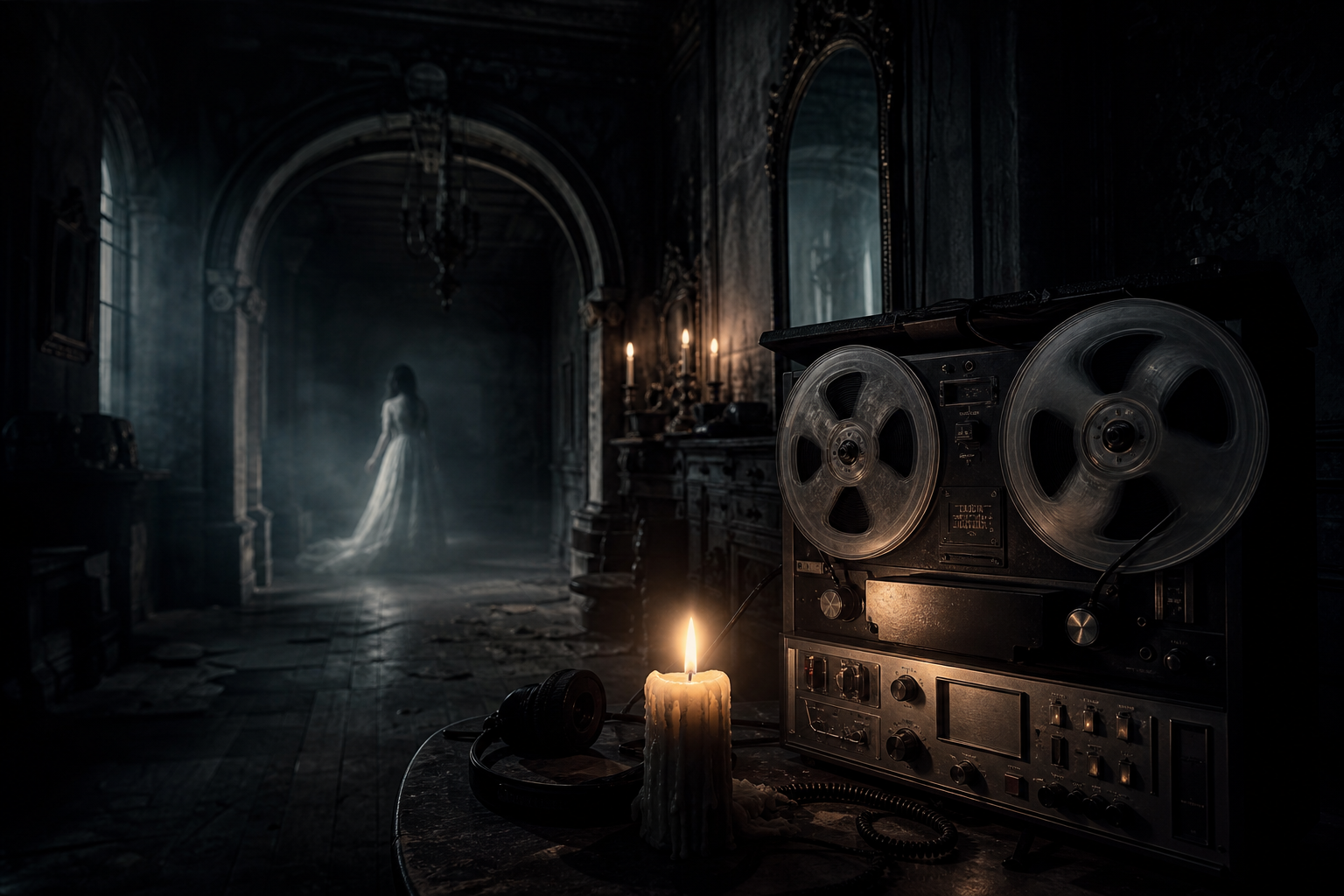
There is a specific kind of chill that settles in the bones when you play back an audio file and hear a voice that wasn’t there during the recording. For many paranormal enthusiasts, this is the ultimate “smoking gun” of the afterlife, a phenomenon that bridges the gap between the physical and the spiritual. Recently, a user on the popular r/Ghosts subreddit sparked a fresh wave of debate by sharing a recording that has left the community divided and searching for answers.
The Reddit Recording: A Cry for Help from the Silence
The mystery began when a user known as Fantastic-Raise3217 uploaded a brief audio clip with a simple, haunting question: “Can anyone hear anything in this recording?” In the world of paranormal investigation, this is often how the most compelling cases begin—not with a scream, but with a whisper. The user didn’t provide an elaborate backstory of a haunted mansion or a tragic history; instead, they presented raw data, inviting the internet’s collective ear to decipher the static.
Listeners immediately began dissecting the audio, using headphones and sound-editing software to isolate frequencies. Some claim to hear a distinct, breathy voice uttering a short phrase, while others hear nothing more than the ambient hum of a room. This type of recording is known as Electronic Voice Phenomena (EVP), a staple of modern ghost hunting where disembodied voices are captured on digital or analog media that were not audible to the human ear at the time of the event.
What makes this specific Reddit post so intriguing is the lack of “leading.” Often, investigators will tell you what they think they hear, which can influence your brain to interpret the sound in a specific way. By asking an open-ended question, the user allowed for a blind study of sorts, testing whether the paranormal community could find a consensus in the noise.
The Science of Sound: EVP vs. Auditory Pareidolia
While the idea of a ghost speaking through a digital recorder is thrilling, skeptics and scientists often point to a psychological explanation known as Auditory Pareidolia. This is the tendency of the human brain to find meaningful patterns—such as words or music—in random noise. Just as we see faces in the clouds, our brains are hardwired to make sense of the world, often “filling in the blanks” when we encounter white noise or static.
In the case of the recording shared by Fantastic-Raise3217, the debate centers on whether the sounds are truly anomalous or simply stray radio frequencies and mechanical artifacts. Digital recorders are sensitive instruments; they can pick up the sound of a distant neighbor, the settling of floorboards, or even the internal hum of the device’s own hardware. When these sounds are amplified, they can take on a rhythmic, vocal quality that mimics human speech.
However, seasoned EVP researchers argue that there are distinct characteristics to a “true” paranormal voice. These voices often have a different cadence than human speech, sometimes sounding sped up, slowed down, or possessing a metallic, “robotic” quality. They often appear in response to direct questions, a phenomenon known as a Class A EVP, which is clear enough to be understood by anyone without the use of headphones.
A History of Voices from the Beyond
The quest to capture the voices of the dead is not a new obsession. Long before Reddit threads and digital apps, pioneers like Friedrich Jürgenson and Konstantin Raudive were experimenting with reel-to-reel tape recorders. In 1959, Jürgenson, a Swedish film producer, was recording bird songs in a forest when he discovered voices on his tape that seemed to be addressing him personally. This discovery laid the groundwork for the study of Instrumental Transcommunication (ITC).
Raudive, a Latvian psychologist, took Jürgenson’s work further, recording thousands of clips under controlled conditions. He believed that these voices were coming from a “middle world” or a purgatory-like state. Today, the tools have changed—moving from magnetic tape to digital voice recorders and spirit boxes—but the core mystery remains the same. Are we tapping into a frequency where the consciousness of the deceased still vibrates?
The Reddit post by Fantastic-Raise3217 is a modern continuation of this legacy. It highlights how the digital age has democratized paranormal research. You no longer need a laboratory or expensive equipment to hunt for ghosts; you only need a smartphone and a quiet room. This accessibility has led to a massive influx of data, but it also makes the task of separating paranormal evidence from digital glitches more difficult than ever.
The Verdict: Ghostly Message or Digital Ghost?
As the thread continues to grow, the consensus remains elusive. Some users have filtered the audio to reveal what sounds like a name, while others remain convinced it is merely the sound of the user’s own movement or breath. In the realm of the supernatural, certainty is a rare commodity. Most evidence exists in the “gray area,” where belief and skepticism collide.
Whether the recording contains a message from the other side or is simply a trick of the ear, it serves as a reminder of our enduring fascination with the unknown. We listen to the silence because we hope, deep down, that the silence will eventually speak back. Every EVP, no matter how faint, represents a potential bridge to a world we have yet to fully understand.
Have you ever captured a sound on a recording that you couldn’t explain, and do you believe these voices are truly from the afterlife or just tricks of our own minds?
“,excerpt:
Recommended Resources
- 🤖 Viktor AI — The autonomous AI platform we use to run our marketing operations. Hire Viktor to handle blogging, lead research, audits, and more.
- 💳 Greenlight — The money app and debit card for kids and teens. Teach your kids to earn, save, and invest. Earn $30 when you sign up.
- ⛏️ GoMining — Earn Bitcoin through cloud mining without the hardware hassle. A passive way to get into crypto.
- 🏦 Mercury — The business banking account built for startups and small businesses. No fees, powerful tools, and easy to set up.
Leave a Reply