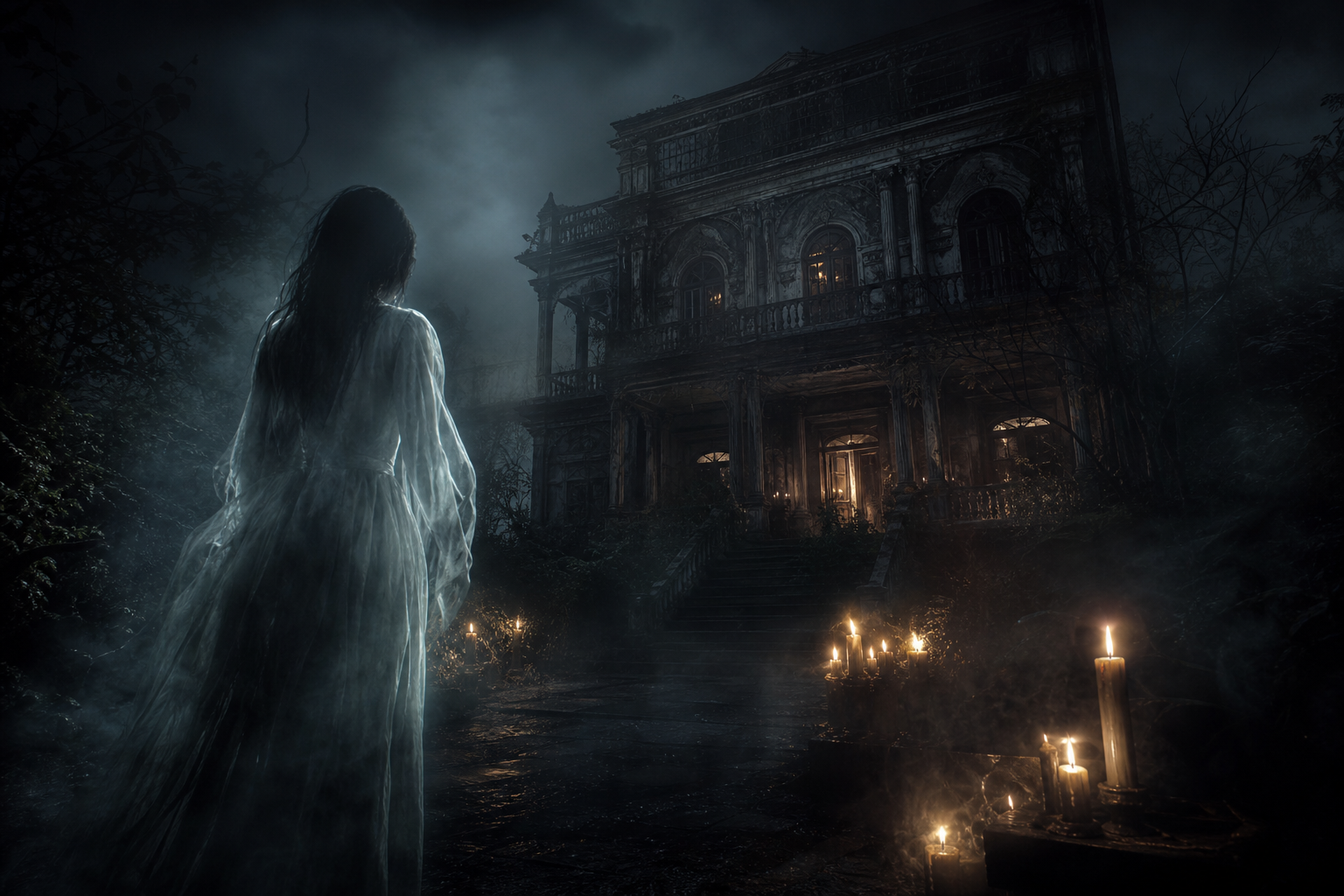
Across the vast expanse of the Asian continent, ancient traditions and modern urban legends collide to create some of the world’s most terrifying paranormal hotspots. From the dense, mist-covered forests of Japan to the crumbling colonial ruins of Indonesia, these locations are more than just tourist attractions; they are repositories of historical trauma and restless spirits. For those who dare to explore the supernatural, Asia offers a unique brand of haunting that is deeply rooted in ancestral honor, tragic warfare, and ancient curses.
The Cursed Stones of Bhangarh Fort
In the Alwar district of Rajasthan, India, lies the 17th-century Bhangarh Fort, a site so notoriously haunted that the Archaeological Survey of India has officially banned entry between sunset and sunrise. Local legend speaks of a powerful sorcerer named Singhia who fell in love with the beautiful Princess Ratnavati. When his attempt to use a love potion failed, he cursed the city with his dying breath, decreeing that everyone within the fort would perish and their souls would remain trapped for eternity without the hope of rebirth.
Visitors to the site frequently report an overwhelming sense of claustrophobia and the feeling of being watched by unseen eyes. Some claim to have heard the sound of phantom music and dancing emanating from the ruins of the dancers’ palace, while others have reported physical sensations of being pushed or slapped. The architectural layout of the fort remains remarkably intact, yet the lack of roofs on the surrounding houses adds to the eerie atmosphere; locals believe that any roof built in the vicinity will inevitably collapse due to the sorcerer’s lingering malice.
Echoes of War: Old Changi Hospital and Lawang Sewu
Southeast Asia’s paranormal landscape is heavily defined by the scars of World War II. In Singapore, the Old Changi Hospital stands as a grim monument to the Japanese occupation. Originally built in the 1930s, the facility was used as a prison camp and a torture chamber by the Kempeitai, the Japanese military police. Today, the abandoned structure is said to be inhabited by the spirits of executed soldiers and patients who never left their beds.
Witnesses often describe seeing shadow figures lurking in the long, dilapidated corridors and hearing disembodied screams echoing through the morgue. Similar reports come from Indonesia’s Lawang Sewu, which translates to “Thousand Doors.” This Dutch colonial building in Semarang served as a headquarters for the Indonesian Railway, but during the war, its basement was converted into a brutal detention center. The most famous spirit here is the “Kuntilanak,” a vengeful female vampire-like entity, alongside the headless apparitions of Dutch soldiers who were executed during the conflict.
The Yurei of the East: Aokigahara and Tat Tak School
In East Asia, the concept of the Yurei—ghosts kept from a peaceful afterlife by intense emotions like jealousy or sorrow—dominates the paranormal narrative. Japan’s Aokigahara Forest, located at the base of Mount Fuji, is perhaps the most infamous example. Known as the “Sea of Trees,” the forest’s dense vegetation and volcanic soil, which interferes with compasses, create a natural labyrinth. It has become a site of tragic loss, and many believe the woods are haunted by the spirits of those who took their own lives, manifesting as white, floating figures among the trees.
Hong Kong offers its own chilling counterpart in the form of the Tat Tak School. Surrounded by graves and the site of a bloody massacre during the British colonial era, the school is rumored to be the home of a “Red Lady”—the ghost of a teacher who committed suicide while wearing a red dress. This specific imagery is a staple of Chinese ghost lore, as red is believed to empower a spirit with immense vengeful energy. Urban explorers have reported sudden drops in temperature and the sound of children’s footsteps in the empty classrooms, despite the building being sealed for decades.
The Intersection of History and the Unknown
What makes these Asian hauntings so compelling is the undeniable link between the paranormal and the historical record. These are not merely campfire stories; they are reflections of cultural memory and the collective psyche of nations that have endured centuries of upheaval. Whether it is the spiritual weight of a cursed Indian fort or the lingering echoes of a secret police dungeon in Singapore, these locations remind us that the past is rarely truly buried.
As paranormal investigators continue to use modern technology like Electronic Voice Phenomena (EVP) and thermal imaging to document these sites, the legends only seem to grow. The consistency of the reports across different cultures and languages suggests that there is something truly anomalous occurring within these ancient walls and darkened forests. For the brave, these sites offer a window into a world where the veil between the living and the dead is dangerously thin.
Have you ever experienced a chilling encounter at a historical site that felt like more than just a trick of the light? Share your stories of the supernatural in the comments below.
Recommended Resources
- 🤖 Viktor AI — The autonomous AI platform we use to run our marketing operations. Hire Viktor to handle blogging, lead research, audits, and more.
- 💳 Greenlight — The money app and debit card for kids and teens. Teach your kids to earn, save, and invest. Earn $30 when you sign up.
- ⛏️ GoMining — Earn Bitcoin through cloud mining without the hardware hassle. A passive way to get into crypto.
- 🏦 Mercury — The business banking account built for startups and small businesses. No fees, powerful tools, and easy to set up.
Leave a Reply