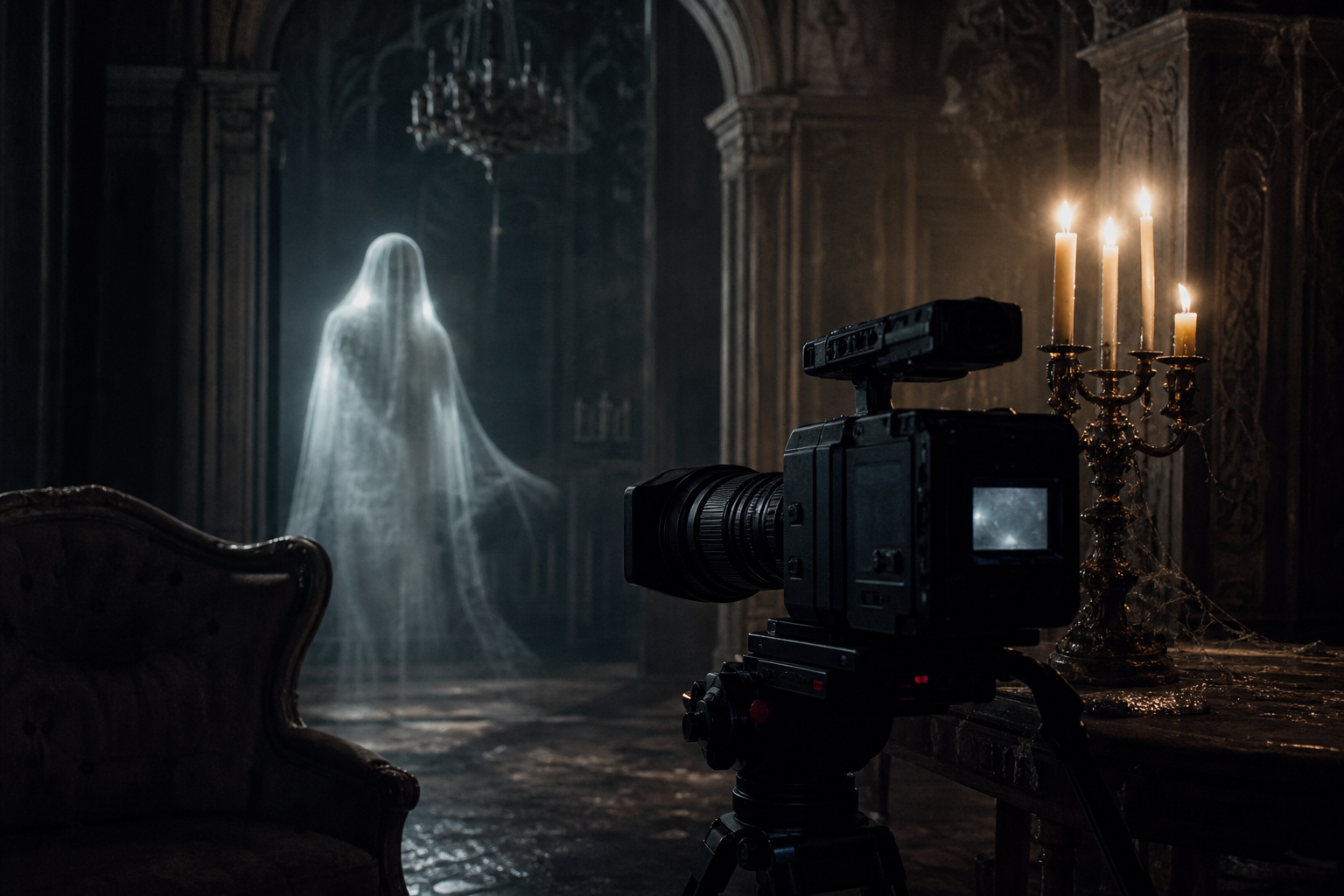
In the high-stakes world of paranormal investigation, the difference between a definitive capture and a “lens flare” often comes down to the glass and sensors inside the camera. While modern smartphones boast incredible resolution, a growing community of veteran researchers is looking backward to a specific era of digital recording to find the ultimate tool for documenting the unknown. The 3CCD camera, once the gold standard for television news and independent filmmaking, is seeing a massive resurgence as the preferred weapon of choice for professional ghost hunters.
The Technical Edge: Why 3CCD Sensors Outshine Modern CMOS
To understand why a piece of “vintage” tech is dominating the paranormal field, one must look at how images are processed. Most modern cameras use a single CMOS sensor (Complementary Metal-Oxide-Semiconductor) that uses a Bayer filter to guess colors. In contrast, a 3CCD system uses a dichroic prism to split incoming light into three distinct beams: red, green, and blue. Each beam is then processed by its own dedicated Charge-Coupled Device sensor, resulting in superior color accuracy and significantly less digital noise.
For a paranormal investigator, “noise” is the enemy. When filming in low-light environments—the natural habitat of the Electronic Voice Phenomenon (EVP) and physical manifestations—modern sensors often create “grain” that can be mistaken for orbs or misty figures. The 3CCD architecture provides a cleaner, more organic image. This clarity allows researchers to distinguish between a speck of dust reflecting an infrared light and a genuine apparition manifesting in a darkened hallway.
A Legacy of Professionalism: From Broadcast to the Beyond
The 3CCD movement is largely centered around legendary camcorders like the Panasonic AG-DVX100 and the Sony VX2100. These weren’t toys; they were the workhorses of the early 2000s broadcast industry. Their popularity in the paranormal community isn’t just about the sensors, but the high-quality optical glass lenses that accompany them. These lenses allow for a depth of field and light sensitivity that tiny smartphone apertures simply cannot replicate.
Historically, the shift toward these cameras began when early “ghost hunting” television shows needed equipment that could survive rugged environments while providing broadcast-quality footage. Investigators realized that the low-light sensitivity of these specific models was unparalleled. Even without Full Spectrum modifications, a 3CCD camera can “see” into the shadows with a level of detail that preserves the texture of the environment, making any anomalous movement stand out with startling clarity.
The “Look” of the Paranormal: Authenticity in the Digital Age
There is also a psychological component to the use of 3CCD technology. In an era of CGI and sophisticated mobile filters, footage captured on a professional-grade camcorder carries a weight of authenticity. The interlaced video format and the specific color science of these cameras create a visual aesthetic that many associate with the “golden age” of paranormal research. It feels grounded, tangible, and most importantly, difficult to fake.
Furthermore, these cameras often feature XLR audio inputs, allowing investigators to plug in professional-grade microphones. This integration is crucial for capturing disembodied voices or subtle environmental shifts that occur during a haunting. By syncing high-fidelity audio with the superior 3CCD video, researchers create a comprehensive record of an event that stands up to much more rigorous scrutiny than a shaky, compressed clip from a social media app.
Is Older Tech the Future of Ghost Hunting?
As we move further into the digital frontier, the reliance on 3CCD technology highlights a fascinating trend: the most advanced tool isn’t always the newest one. For the serious paranormal researcher, the goal isn’t just to record a video, but to capture data that is as close to reality as possible. The 3CCD sensor remains a pinnacle of light-processing technology that, for many, has yet to be surpassed in the specific, shadowy conditions of a haunted location.
Whether you are exploring a derelict asylum or a private residence with a history of poltergeist activity, the equipment you carry defines the validity of your findings. The 3CCD camera represents a bridge between the analog past and the digital future, providing a reliable, high-quality window into the world of the unseen. As more investigators rediscover these professional tools, we may be on the verge of a new era of high-definition evidence that finally provides the proof the world has been waiting for.
Do you believe that older, professional-grade technology provides more reliable paranormal evidence than the latest high-resolution smartphones?
Recommended Resources
- 🤖 Viktor AI — The autonomous AI platform we use to run our marketing operations. Hire Viktor to handle blogging, lead research, audits, and more.
- 💳 Greenlight — The money app and debit card for kids and teens. Teach your kids to earn, save, and invest. Earn $30 when you sign up.
- ⛏️ GoMining — Earn Bitcoin through cloud mining without the hardware hassle. A passive way to get into crypto.
- 🏦 Mercury — The business banking account built for startups and small businesses. No fees, powerful tools, and easy to set up.
Leave a Reply