Connecticut's New Haunted History Trail Puts Its Witch Trials on the Map
Connecticut's 130-stop Haunted History Trail mixes ghost legends with a real record: the colonies' first witchcraft execution, in Hartford in 1647.
History & folklore: legends and reported experiences, not verified fact
The ghost stories in this article are legends and reported experiences, not verified fact. The witch-trial history is documented, and we say where each detail comes from.
Connecticut now has an official map of its ghosts. The state's tourism office calls it the Connecticut Haunted History Trail, and it mixes folklore about restless spirits with one of the darkest records in early American history: the colony's witch trials, which began decades before Salem.
What the trail is
Governor Ned Lamont and the Connecticut Office of Statewide Marketing and Tourism announced the trail on September 16 (opens in a new tab), describing more than 130 locations "connected to haunted landmarks, paranormal lore, witch-trial history, and centuries of unexplained stories." The release lists nine categories, from haunted homes, museums and theaters to cemeteries, hiking trails, ghost tours, restaurants, lighthouses, hotels, occult collections and witch-trial sites. It was formally unveiled at an evening event at the Webb-Deane-Stevens Museum in Wethersfield.
The state frames it as tourism. The trail follows earlier state campaigns such as the Connecticut Pizza Trail and the Christmas Movie Trail, according to the same release. The official trail page (opens in a new tab) is candid about what visitors will find: some of the stories "are preserved in court records and cemetery stones. Others survive only in whispers."
A Boston Globe travel piece published November 21 (opens in a new tab) by Hillary Richard describes the trail as having "no true path to follow." Visitors pick their own route among the 130 locations.
Before Salem, there was Hartford
The trail's strongest material is not a ghost story. According to the Law Library of Congress (opens in a new tab), Alice Young became the first person in the American colonies to be executed for witchcraft when she was hanged in Hartford in 1647. Connecticut's trials ran from that first case to a last trial in 1697. Because court records were lost or destroyed, the library notes, nobody knows exactly how many trials took place.
The governor's office (opens in a new tab) says at least 49 people were accused, at least 34 were indicted and at least 11 were executed. Young's hanging came about 45 years before the Salem trials of 1692, the Globe (opens in a new tab) notes, and it marked the start of a 16-year "witch panic" around Hartford.
That history is now officially acknowledged. In May 2023, the Connecticut General Assembly passed House Joint Resolution 34, the House by 121 to 30 and the Senate by 33 to 1, according to the Library of Congress (opens in a new tab). It is a resolution, not a law. It named and absolved 11 people who were convicted and sentenced to execution, plus one person who was convicted and granted a reprieve, and it also named 21 people who were indicted but not convicted. The resolution says "misogyny played a large part in the trials."
Where the history sits on the map
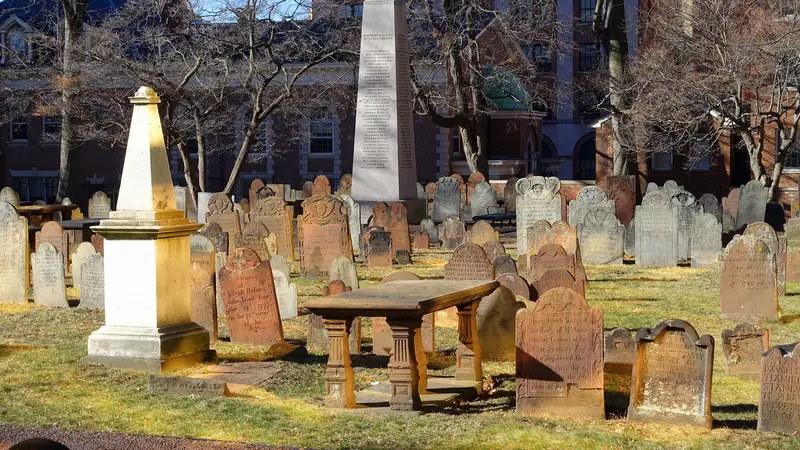
Several trail stops connect to those trials. At Hartford's Ancient Burying Ground, shown above, the Globe reports (opens in a new tab) the graves of 14 men connected to the witchcraft trials. They include Jonathan Gilbert, who carried out executions in 1662 and 1663, and Colony Governor John Haynes, a magistrate during the 1650 trials. The grounds where the Old State House now stands are thought to be where the first execution took place.
Christine Jewell, director of the Ancient Burying Ground Association, told the Globe that accusations were not always about religion. "They were very litigious back then, and slander entered into it a lot," she said.
In nearby Wethersfield, nine people were accused of witchcraft and three were executed between 1648 and 1668, according to the same report. The Webb-Deane-Stevens Museum, where the trail was launched, runs a tour that blends that history with old funeral customs and local lore.
The ghost stories, labeled as legends
The rest of the trail leans on lore, and the stories below are just that. At the Mark Twain House in Hartford, the Globe reports (opens in a new tab) that staff members have described hearing footsteps and feeling playful tugs inside the writer's home. In the Globe's telling, the house's best-known ghost is Susy Clemens, Twain's eldest daughter, who "has a habit of playfully haunting the staff."
In Simsbury, a restaurant in the former Pettibone Tavern comes with a legend: as the story goes, a whaling captain, John Pettibone, killed his wife Abigail and her lover, and she is said to haunt the second floor. Employees and diners have reported cold spots and moving furniture, according to the Globe. Inns in Preston, Norfolk and East Haddam have their own resident-ghost stories, including a "Lady in White" in Norfolk.
None of these accounts has been independently verified. The Globe's writer tried divining rods at the Twain house and visited several sites, but concluded: "I didn't find a true haunting in Connecticut this time." Of New Haven's Grove Street Cemetery, she notes that "there are no persistent hauntings on record."
Why it matters
Haunted tourism can blur the line between a good story and a real event. Connecticut's trail at least puts both on the same map, and the documented part is grim enough on its own. Governor Lamont described the history behind the trail as including "chapters of our history that deserve to be remembered and understood," according to the state's announcement (opens in a new tab).
For readers interested in why old houses and burial grounds feel haunted, see our explainers on why houses seem haunted and on the 19 Hz "ghost in the machine".
Sources
- Governor Lamont, Tourism Officials Announce Launch of the Connecticut Haunted History Trail (opens in a new tab), Office of Governor Ned Lamont, State of Connecticut, published 2026-09-16. Accessed 2026-11-22.
- Connecticut's Haunted History Trail (opens in a new tab), CTvisit (Connecticut Office of Tourism). Accessed 2026-11-22.
- Connecticut is haunted, and it wants everyone to know it (Hillary Richard) (opens in a new tab), The Boston Globe, published 2026-11-21. Accessed 2026-11-22.
- More Than Three Centuries Later, Connecticut General Assembly Absolves Accused Witches (Sarah Friedman) (opens in a new tab), Library of Congress, In Custodia Legis, published 2023-11-21. Accessed 2026-11-22.
This article is an original summary written from the sources above. Quotes are short and attributed. Paranormal claims are reported as claims and have not been independently verified. Spotted an error? See our contact page.
Keep reading
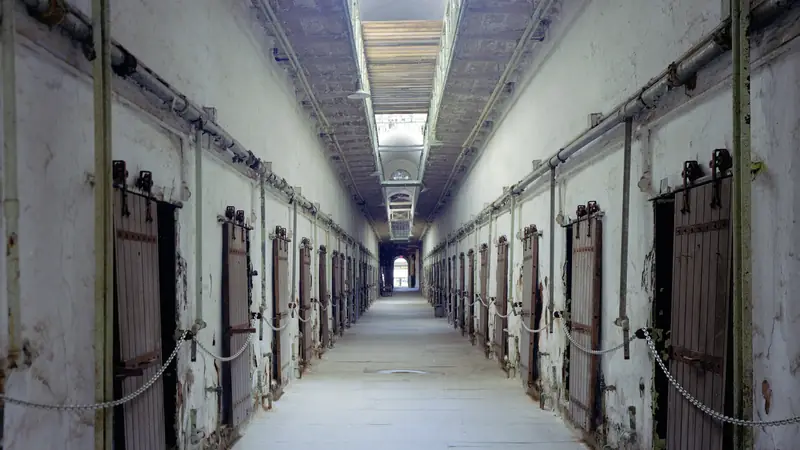
Eastern State Penitentiary: The History Behind One of America's Most 'Haunted' Prisons
Philadelphia's Eastern State Penitentiary has a ghostly reputation built on 140 years of hard history. Here's what visitors report and what the site itself says.
3 sources · 3 min read
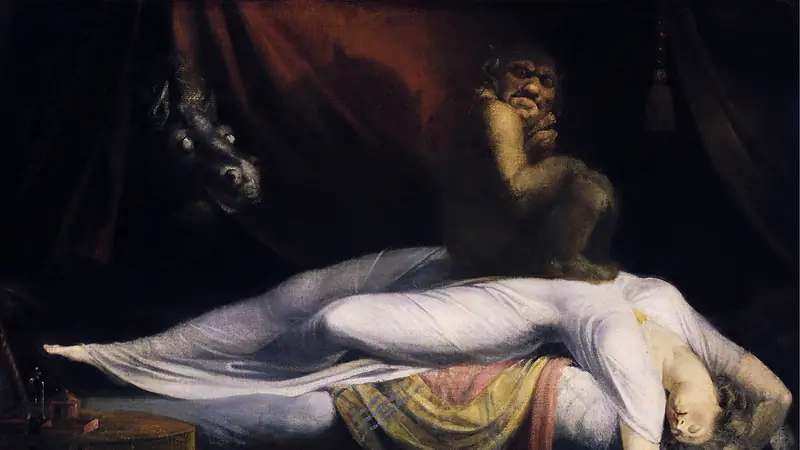
6 in 10 Medical Students in Guinea Report Sleep Paralysis, Study Finds
A survey of 320 future doctors in Conakry found most reported sleep paralysis, and many explained it with both brain science and spirits.
4 sources · 5 min read

Pentagon UFO Files Reveal a Contractor's Plan for an 'Exotic Material' Vault
The Pentagon's eighth UAP file batch includes a 2009 vault plan, a fast 2023 radar track and a 1953 sighting by the SR-71's designer the Air Force called a cloud.
6 sources · 5 min read