6 in 10 Medical Students in Guinea Report Sleep Paralysis, Study Finds
A survey of 320 future doctors in Conakry found most reported sleep paralysis, and many explained it with both brain science and spirits.
Science: research findings and proposed natural explanations
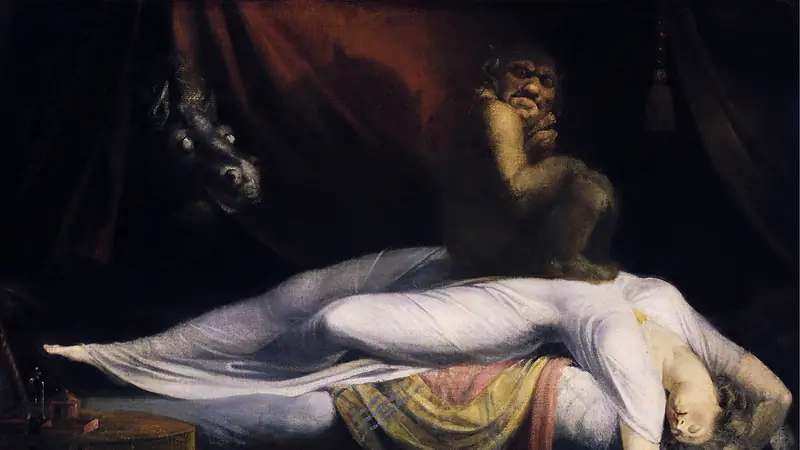
You wake up, but your body won't move. You can't speak. Something seems to be in the room, maybe pressing down on your chest. The NHS (opens in a new tab) describes sleep paralysis as being unable to move or speak while waking up or falling asleep, and says simply: "It can be scary but it's harmless." Around the world, it has been blamed on witches, jinn and other night attackers (opens in a new tab). A new study from West Africa shows how both explanations still live side by side, even among people training to be doctors.
The study
Researchers from Guinea's National Institute of Public Health and Gamal Abdel Nasser University of Conakry surveyed 320 medicine, pharmacy and dental students (opens in a new tab) at three universities in Conakry between April and September 2025. The paper was published on November 12 in the International Journal of Environmental Research and Public Health. The authors say it is, to their knowledge, the first study of sleep paralysis among medical science students in Guinea, and that data from sub-Saharan Africa are scarce.
Overall, 198 students, or 61.9% (opens in a new tab), said they had experienced at least one episode in their lifetime. That number shrinks with a stricter definition. When the researchers required students to report being unable to move, it fell to 56.6%. When they required recurrent episodes with inability to move, it fell to 39.7%, and with intense fear added, to 26.9%.
What the episodes felt like
Among students who reported sleep paralysis, the most common features were inability to move (91.4%), inability to speak (82.8%) and intense fear (61.6%) (opens in a new tab). The paper's abstract lists a sense of presence in 60.1%. Half (50.5%) reported chest pressure, the study adds. During episodes, 81.8% tried to move, 59.1% tried to shout, and 52.5% prayed or sought spiritual comfort.
Researchers describe this kind of figure as a "bedroom intruder" (opens in a new tab), sometimes seen as a shadowy, human-like shape. The NHS lists feeling "like someone is in your room" (opens in a new tab) and "like something is pushing you down" among the things people may feel during an episode.
Brain science and spirits, side by side
The students' written answers mixed explanations. According to the paper (opens in a new tab), 79 named a biomedical or psychological cause, while 141 of 189 answers to a question about culture referred to a supernatural interpretation, such as witchcraft or sorcery, evil spirits, jinn or the devil. Most named the belief without saying whether they shared it. Twenty-five attributed it to others, five endorsed it in the first person, and 42 used both kinds of explanation.
One student wrote, in the authors' translation: "I am not superstitious, but I think there is a large spiritual dimension." Another said they no longer greet their grandfather "because he is the one I see during my episodes".
Fear was common, and so was silence. Fewer than half (44.9%) of students with sleep paralysis had looked for information or help, the study found. One student wrote that people who have had it "are afraid to talk about it because they think they will be rejected by society". Only 20.8% of students who had heard of sleep paralysis named university teaching as their main source of information, and 84.1% of all students said they would attend an awareness session.
Why the number is so high, and why to be careful
The 61.9% figure is far above the averages from earlier research. A systematic review of 35 studies (opens in a new tab) covering 36,533 people found that 7.6% of the general population, 28.3% of students and 31.9% of psychiatric patients had experienced at least one episode.
The authors are candid about why their figure may be inflated. They measured sleep paralysis with a single yes-or-no question without a definition (opens in a new tab), placed after knowledge statements that described it, and say students may have counted things like hypnic jerks, nightmares or a numb limb. They note that 31 of the 94 students who had never heard of sleep paralysis still reported having had it, which is consistent with some misclassification. The study did not measure sleep quality, stress, anxiety or trauma, and two-thirds of participants were foreign students from 16 countries.
Students who had experienced sleep paralysis also scored higher on a knowledge test. The researchers say this most likely reflects learning after an episode, not knowledge preventing or causing it.
A worldwide pattern
The pairing of a frightening physical experience with a supernatural story is not unique to Guinea. The Guinea paper (opens in a new tab) itself cites earlier research linking sleep paralysis to the Karabasan in Turkey and to the jinn in Egypt. In Italy's Abruzzo region, a 2021 study by Baland Jalal and colleagues (opens in a new tab) describes a folklore figure called the Pandafeche, a name the authors say derives from the Italian word for ghost. In local legend, it has been described as a witch, a black cat or the soul of someone who died a violent death.
In that study of 67 people who had experienced sleep paralysis, 42% feared they could die from it and 78% reported some type of hallucination during episodes. The authors compare this to Denmark, where they say there are no elaborate supernatural beliefs about sleep paralysis and fewer people (17%) fear dying from it. They suggest cultural beliefs may shape aspects of the experience itself.
What helps
The NHS says sleep paralysis has been linked with insomnia, disrupted sleep, narcolepsy, PTSD, anxiety and panic disorder (opens in a new tab), and suggests regular sleep of 7 to 9 hours and not sleeping on your back. It advises seeing a doctor if episodes happen often and leave you very anxious about sleeping or tired all the time.
The Guinea researchers recommend teaching sleep paralysis and its cultural interpretations in medical school. Educational materials, they write, should engage with spiritual explanations rather than dismiss them (opens in a new tab). Many of these future doctors, who may one day reassure a frightened patient, already know the experience firsthand (opens in a new tab).
Related reading: Out-of-body experiences linked to a brain state between sleep and waking and why faceless shadow figures now dominate ghost accounts.
Sources
- Knowledge, Attitudes, Practices, and Perceptions of Sleep Paralysis Among Medical Science Students in Guinea (Bah, Magassouba et al.), Int. J. Environ. Res. Public Health 23(11), 1412 (opens in a new tab), MDPI, published 2026-11-12. Accessed 2026-11-23.
- Lifetime prevalence rates of sleep paralysis: a systematic review (Sharpless and Barber) (opens in a new tab), PubMed, U.S. National Library of Medicine, published 2011. Accessed 2026-11-23.
- Sleep paralysis (opens in a new tab), NHS (UK National Health Service). Accessed 2026-11-23.
- Sleep paralysis in Italy: Frequency, hallucinatory experiences, and other features (Jalal, Romanelli and Hinton), Transcultural Psychiatry 58(3) (opens in a new tab), University of Cambridge Apollo repository (author manuscript), published 2021. Accessed 2026-11-23.
This article is an original summary written from the sources above. Quotes are short and attributed. Paranormal claims are reported as claims and have not been independently verified. Spotted an error? See our contact page.
Keep reading
Out-of-Body Experiences Linked to a Brain State Between Sleep and Waking
A sleep-lab study logged 36 'unusual bodily experiences,' 10 of them out-of-body episodes. Brain signals during them mixed features of sleep and waking.
3 sources · 5 min read

Faith Without Church: UK Study Links Religious Belief to the Paranormal
A new survey study of 2,100 UK adults finds belief in angels and demons goes with paranormal belief, while regular churchgoing goes the other way.
4 sources · 5 min read

Mirror-Gazing 'Ghost' Study: 24 of 30 Volunteers Sensed a Presence
In a small new study, 30 people gazed into a tilted mirror after recalling someone who died. Most sensed a presence. What the paper does and doesn't show.
4 sources · 5 min read