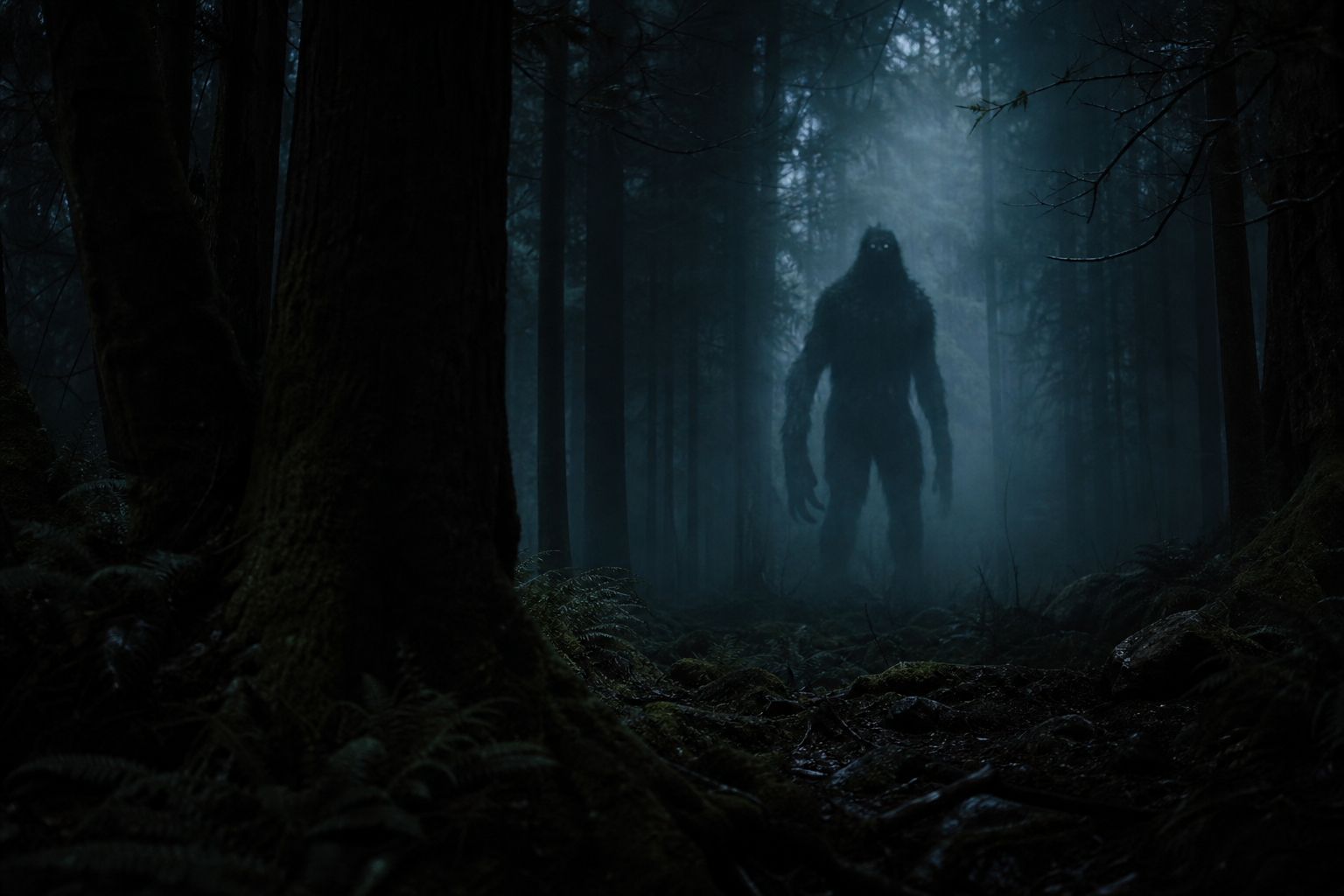
Imagine a wilderness where the shadows lurking between the pines aren’t threats to be feared, but guardians of the trail. In a fascinating intersection of digital art and subconscious exploration, a new concept known as Cryptid Valley National Park has captured the imagination of the paranormal community, reimagining the world’s most elusive creatures as stewards of the environment. This vision transforms the terrifying legends of the deep woods into educational figures, teaching visitors about nature conservation, animal behavior, and essential camp safety.
The Genesis of Cryptid Valley National Park
The concept first emerged from the vivid dreams of a creative visionary known online as /u/trampstampcollector, who shared a series of striking illustrations on the popular r/Cryptids subreddit. The premise is as charming as it is eerie: a sprawling National Park where the staff consists entirely of legendary monsters. In this alternate reality, the National Park Service has partnered with the very beings that cryptozoologists have spent decades trying to prove exist.
In the world of Cryptid Valley, the Mothman might lead a seminar on nocturnal navigation, while the Jersey Devil explains the delicate ecosystem of the Pine Barrens. It is a radical departure from the traditional “monster hunter” narrative, suggesting a world where humanity and the unknown have reached a peaceful, educational coexistence. The art accompanying the project depicts these creatures not as predators, but as wise, ancient mentors wearing park ranger hats and holding clipboards.
Why We Are Drawn to Friendly Monsters
This shift in how we perceive cryptids reflects a broader cultural trend often referred to as “Cryptidcore.” For decades, cryptozoology was defined by grainy footage of Bigfoot and terrifying accounts of the Chupacabra. However, a new generation of paranormal enthusiasts is looking at these entities through a lens of environmentalism and whimsy. By casting these creatures as protectors of the wild, we are perhaps expressing a collective desire to reconnect with the “untamed” parts of our world that are rapidly disappearing.
Psychologically, the idea of a Sasquatch teaching fire safety is a powerful subversion of the “wild man” archetype. Instead of a beast that kidnaps hikers—a common trope in Missing 411 theories—this version of Bigfoot is a seasoned woodsman who knows the terrain better than any human ever could. It turns the “fear of the unknown” into a “respect for the unknown,” suggesting that if we listen to the forest, we might actually learn how to survive within it.
Historical Legends and National Park Lore
The connection between National Parks and the paranormal is deeply rooted in American history. From the “Great Smoky Mountains” to the “Everglades,” nearly every major park has its own resident legend. For instance, Yellowstone National Park has long been a hotspot for reported Bigfoot sightings, with some theorists suggesting that the vast, protected lands provide the perfect sanctuary for a breeding population of undiscovered primates.
By framing these legends within the context of a “Cryptid Valley,” the project taps into the very real mystery of our public lands. There is a long-standing tradition of urban legends involving park rangers who claim to have seen things they cannot explain. By leaning into this folklore, Cryptid Valley National Park creates a bridge between the documented history of the park system and the speculative world of the supernatural. It asks the question: what if the rangers have been working alongside these creatures all along?
The Power of Paranormal Art and Storytelling
The visual medium is often where the most compelling paranormal theories take flight. The artwork for Cryptid Valley uses a nostalgic, mid-century aesthetic reminiscent of vintage WPA National Park posters. This choice is intentional, grounding the fantastical elements in a sense of official authority and historical weight. When we see a Flatwoods Monster depicted on a “Leave No Trace” sign, it forces us to reconsider the creature’s place in our cultural landscape.
This project serves as a reminder that folklore is a living, breathing entity. It evolves with our society. Just as the terrifying fae of medieval Europe eventually became the whimsical fairies of Victorian literature, our modern monsters are undergoing a transformation. They are becoming symbols of the wilderness itself—mysterious, powerful, and in need of our protection. Cryptid Valley isn’t just a dream about a park; it’s a manifesto for a new kind of mythology.
As we continue to explore the deepest corners of our planet, the line between discovery and imagination remains thin. Whether these creatures are flesh-and-blood animals or manifestations of our collective subconscious, they continue to teach us about our relationship with the earth. If you could spend a weekend at a park managed by the world’s most famous monsters, which cryptid would you want as your trail guide?
Recommended Resources
- 🤖 Viktor AI — The autonomous AI platform we use to run our marketing operations. Hire Viktor to handle blogging, lead research, audits, and more.
- 💳 Greenlight — The money app and debit card for kids and teens. Teach your kids to earn, save, and invest. Earn $30 when you sign up.
- ⛏️ GoMining — Earn Bitcoin through cloud mining without the hardware hassle. A passive way to get into crypto.
- 🏦 Mercury — The business banking account built for startups and small businesses. No fees, powerful tools, and easy to set up.
Leave a Reply