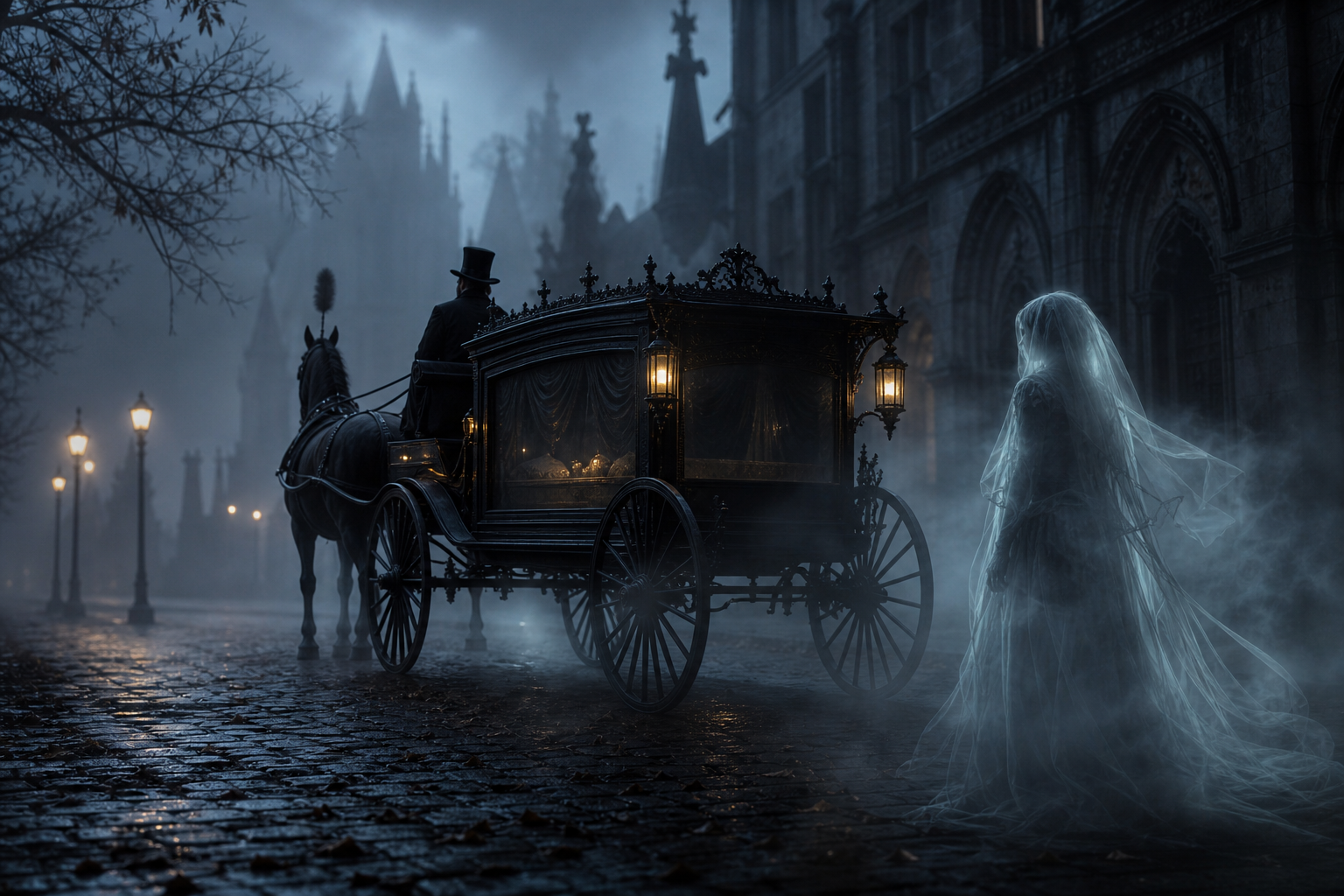
The “van life” movement has taken the world by storm, with adventurous souls converting everything from old school buses to retired ambulances into mobile homes. However, a new trend is emerging that sits at the intersection of DIY craftsmanship and the macabre: the hearse camper conversion. While these vehicles offer a sleek profile and ample space for a bed, they carry a heavy history that many paranormal enthusiasts find unsettling.
A recent viral discussion has sparked a debate over whether these specialized funeral vehicles can harbor lingering spirits or residual energy from their former passengers. For those looking to sleep where the deceased once lay, the question isn’t just about gas mileage or insulation—it’s about whether they are inviting an invisible hitchhiker along for the ride. Is a hearse merely a tool of the trade, or does it become a vessel for the supernatural?
The Theory of Residual Energy and Liminal Spaces
In the world of paranormal research, many experts believe that hauntings are often tied to residual energy. This theory suggests that intense emotions or significant life events can leave an “imprint” on a physical location or object. While a hearse is rarely the site of a tragic death, it serves as a liminal space—a transitional zone between the world of the living and the world of the dead. This unique status may make the vehicle more susceptible to spiritual attachments.
Unlike a home where someone lived for decades, a hearse only hosts a body for a short duration. However, the sheer volume of “passengers” a funeral car carries over its lifetime is staggering. Some researchers argue that the collective weight of grief, mourning, and the presence of the recently departed could saturate the vehicle’s interior. This phenomenon is often referred to as psychometry, where objects retain the energy of the people who interacted with them.
Furthermore, the transition period immediately following death is considered by many cultures to be a time when the spirit is most active or confused. If a spirit has not yet “crossed over,” it may cling to the last physical environment it occupied. While the hearse is just a taxi to the cemetery, for a restless soul, it might be the last familiar thing they experience before the veil fully closes.
Haunted Vehicles Throughout History
The idea of a haunted vehicle is far from new. History is filled with accounts of “ghost cars” and cursed engines. Perhaps the most famous example is James Dean’s Porsche 550 Spyder, nicknamed “Little Bastard.” After the actor’s fatal crash, the car was involved in a series of bizarre accidents and fires, leading many to believe the metal itself was cursed. If a sports car can carry a dark legacy, why wouldn’t a vehicle designed specifically for the dead?
There are also numerous reports of phantom hitchhikers and haunted trains. In the late 19th century, stories of “funeral trains” carrying the spirits of the deceased were common in folklore. These stories suggest that any mode of transport dedicated to the dead can become a magnet for paranormal activity. In the case of a hearse, the vehicle is purpose-built for the afterlife, which may give it a “spiritual frequency” that other cars simply don’t possess.
Funeral directors themselves often have stories to tell. While many remain skeptical, some have reported hearing unexplained knocks from the back of an empty hearse or seeing shadow figures in the rearview mirror while driving back from a service. These anecdotes suggest that even if the spirits don’t stay forever, they certainly leave a mark.
Converting the Macabre: Risks and Rituals
For the brave individual looking to turn a hearse into a cozy camper, the psychological toll may be as significant as the paranormal one. Sleeping in a space specifically designed to hold a casket requires a certain level of mental fortitude. However, for those who believe in the supernatural, there are ways to mitigate the risk of a haunted conversion.
Many practitioners of the occult suggest a thorough spiritual cleansing before moving into a used hearse. This often involves the use of white sage for smudging, or placing salt in the corners of the vehicle to absorb negative vibrations. Others suggest “reclaiming” the space by filling it with vibrant life—plants, bright colors, and joyful music—to overwrite the somber energy of its past.
The goal is to shift the vehicle’s purpose from a vessel of mourning to a vessel of adventure. By stripping out the rollers and velvet curtains and replacing them with personal belongings, the new owner is essentially “re-tuning” the environment. Yet, the question remains: can you ever truly erase the history of a car that has carried thousands to their final resting place?
Ultimately, the decision to live in a hearse comes down to one’s personal belief system. For some, it is the ultimate act of memento mori—a reminder to live life to the fullest. For others, it is a recipe for a sleepless night filled with unexplained cold spots and the feeling of being watched. If you find yourself solo traveling in a converted funeral car, you might just find that you aren’t as alone as you thought.
Would you feel comfortable sleeping in a vehicle that has transported the dead, or do you believe some things are better left at the graveyard? Let us know in the comments below!
Recommended Resources
- 🤖 Viktor AI — The autonomous AI platform we use to run our marketing operations. Hire Viktor to handle blogging, lead research, audits, and more.
- 💳 Greenlight — The money app and debit card for kids and teens. Teach your kids to earn, save, and invest. Earn $30 when you sign up.
- ⛏️ GoMining — Earn Bitcoin through cloud mining without the hardware hassle. A passive way to get into crypto.
- 🏦 Mercury — The business banking account built for startups and small businesses. No fees, powerful tools, and easy to set up.
Leave a Reply