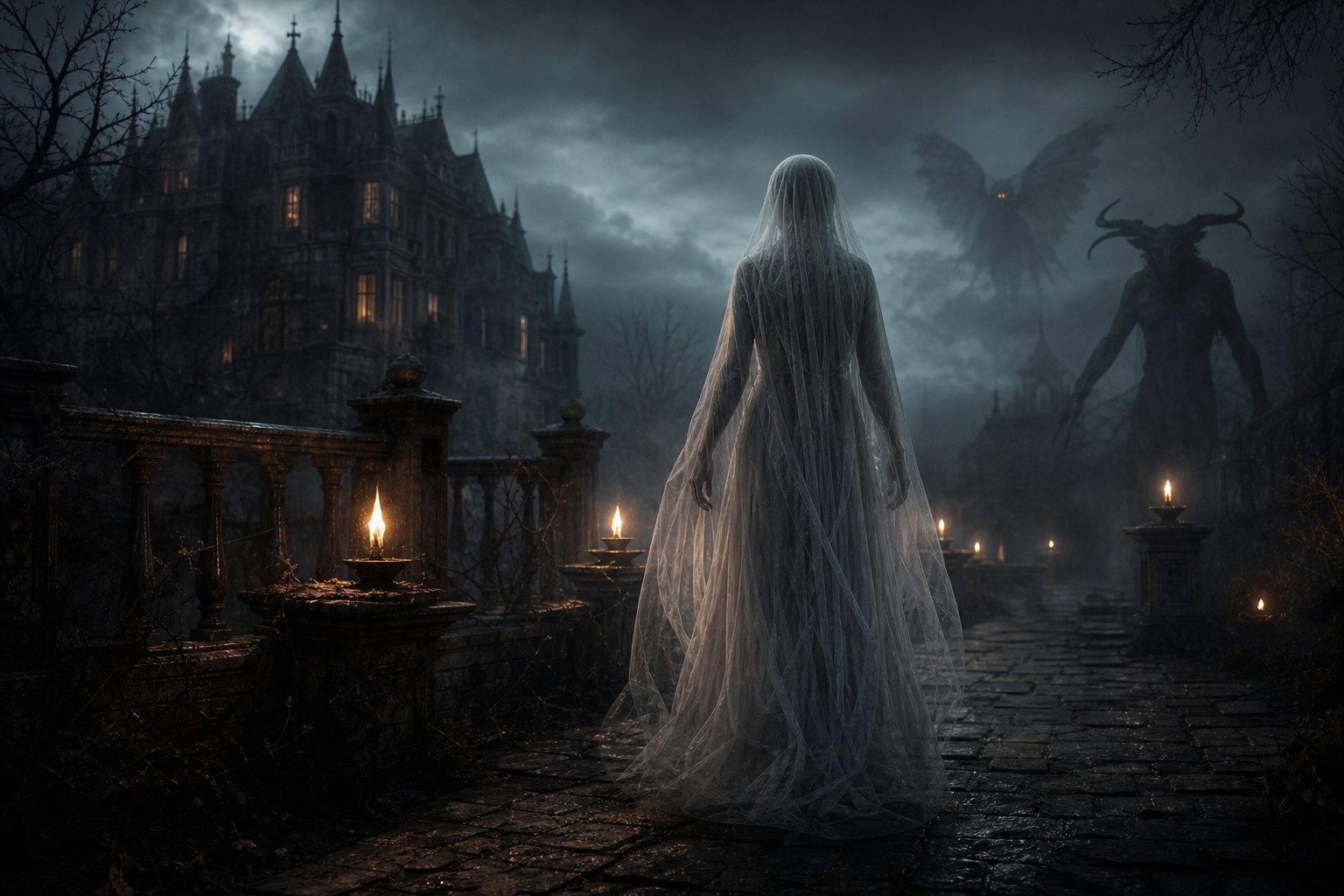
For decades, the line between folklore and reality has been blurred by grainy photographs and whispered eyewitness accounts. Recently, a surge of interest in cryptid concept art has reignited the debate over how these legendary entities would actually appear if caught in the light of day. When artists take on the challenge of visualizing creatures like the Mothman, the Wendigo, and the Minotaur for investigative programs like MythBusters, they aren’t just drawing monsters; they are attempting to reverse-engineer the biology of our deepest fears.
The Mothman: A Harbinger of Doom in Point Pleasant
Perhaps no creature in the annals of American cryptozoology is as haunting as the Mothman. First sighted in Point Pleasant, West Virginia, between November 1966 and December 1967, the entity was described as a man-sized bird with glowing red eyes and a massive wingspan. Witnesses often reported a sense of overwhelming dread in its presence, leading many to believe the creature was a harbinger of the tragic Silver Bridge collapse.
When concept artists approach the Mothman, they must balance the supernatural with the biological. Is it a mutated sandhill crane, as skeptics suggest, or something far more alien? Modern interpretations often emphasize the “insectoid” features, moving away from the avian look to create something that feels truly “other.” By focusing on the bioluminescence of the eyes and the structural integrity of the wings, artists help us understand how such a creature might actually navigate the dark forests of the Ohio River Valley.
The enduring legacy of the Mothman lies in its consistency. Unlike many other urban legends that change over time, the descriptions from the 1960s remain the gold standard for sightings today. This consistency provides a solid foundation for researchers and artists alike who seek to document the paranormal history of West Virginia.
The Wendigo: From Indigenous Lore to Modern Nightmare
Moving from the skies to the frozen forests of the North, we encounter the Wendigo. Rooted in Algonquian folklore, the Wendigo is more than just a physical monster; it is a symbol of greed, starvation, and the loss of humanity. Traditionally, the creature was described as a gaunt, skeletal figure with skin pulled tight over its bones, smelling of decay and possessed by an insatiable hunger for human flesh.
In recent years, pop culture has added a new layer to the Wendigo’s appearance, often depicting it with cervine features, such as antlers or a deer-like skull. While this differs from the original oral traditions, it has become a staple of modern cryptid media. Concept designs for shows like MythBusters often explore the “Wendigo psychosis,” a historical phenomenon where individuals believed they were being possessed by the spirit of the beast.
The challenge in visualizing the Wendigo is capturing its “ever-growing” nature. According to legend, the Wendigo grows in proportion to the person it eats, meaning it can never be full. This metaphysical aspect makes it one of the most difficult cryptids to debunk, as its existence is as much psychological as it is physical.
The Minotaur: Ancient Myth Meets Modern Cryptozoology
While the Minotaur is firmly rooted in Greek mythology, its presence in modern cryptid discussions highlights the bridge between ancient legends and contemporary sightings. The story of the half-man, half-bull trapped in the Labyrinth of Crete has inspired countless tales of “man-beasts” throughout history. Some researchers suggest that ancient myths were actually early attempts to describe real, unidentified creatures.
In the world of paranormal investigation, the Minotaur serves as a precursor to modern sightings of bipedal bovines or goat-men. From the Beast of Bray Road to the Pope Lick Monster, the idea of a powerful, muscular humanoid with animalistic features continues to persist. Concept artists often look to the anatomy of bulls and primates to create a creature that looks capable of the feats described in the myths of King Minos.
By applying modern forensic reconstruction techniques to these ancient descriptions, we can begin to see how a “Minotaur” might actually function. The sheer physical power required to navigate a subterranean maze suggests a creature with immense bone density and specialized sensory organs, turning a myth into a biological possibility.
The Intersection of Art and Investigation
The use of concept art in paranormal research is more than just an aesthetic exercise. When shows like MythBusters or Expedition Unknown utilize these designs, they are providing a framework for scientific inquiry. By visualizing the creature, investigators can determine if its reported movements are aerodynamically possible or if its size matches the footprints left behind at a scene.
This process of “bringing legends to life” allows us to confront our fears in a controlled environment. Whether it is the interdimensional theories surrounding the Mothman or the cannibalistic warnings of the Wendigo, these creatures represent the unknown frontiers of our world. As our technology for capturing images improves, the need for accurate, well-researched concept art only grows.
Ultimately, these designs remind us that the world is still full of mysteries waiting to be solved. Whether these beings are flesh-and-blood animals, spirits of the forest, or figments of our collective imagination, they continue to haunt our culture and challenge our understanding of reality.
Which of these three legendary creatures do you believe has the strongest evidence for its existence in the real world?
Recommended Resources
- 🤖 Viktor AI — The autonomous AI platform we use to run our marketing operations. Hire Viktor to handle blogging, lead research, audits, and more.
- 💳 Greenlight — The money app and debit card for kids and teens. Teach your kids to earn, save, and invest. Earn $30 when you sign up.
- ⛏️ GoMining — Earn Bitcoin through cloud mining without the hardware hassle. A passive way to get into crypto.
- 🏦 Mercury — The business banking account built for startups and small businesses. No fees, powerful tools, and easy to set up.
Leave a Reply