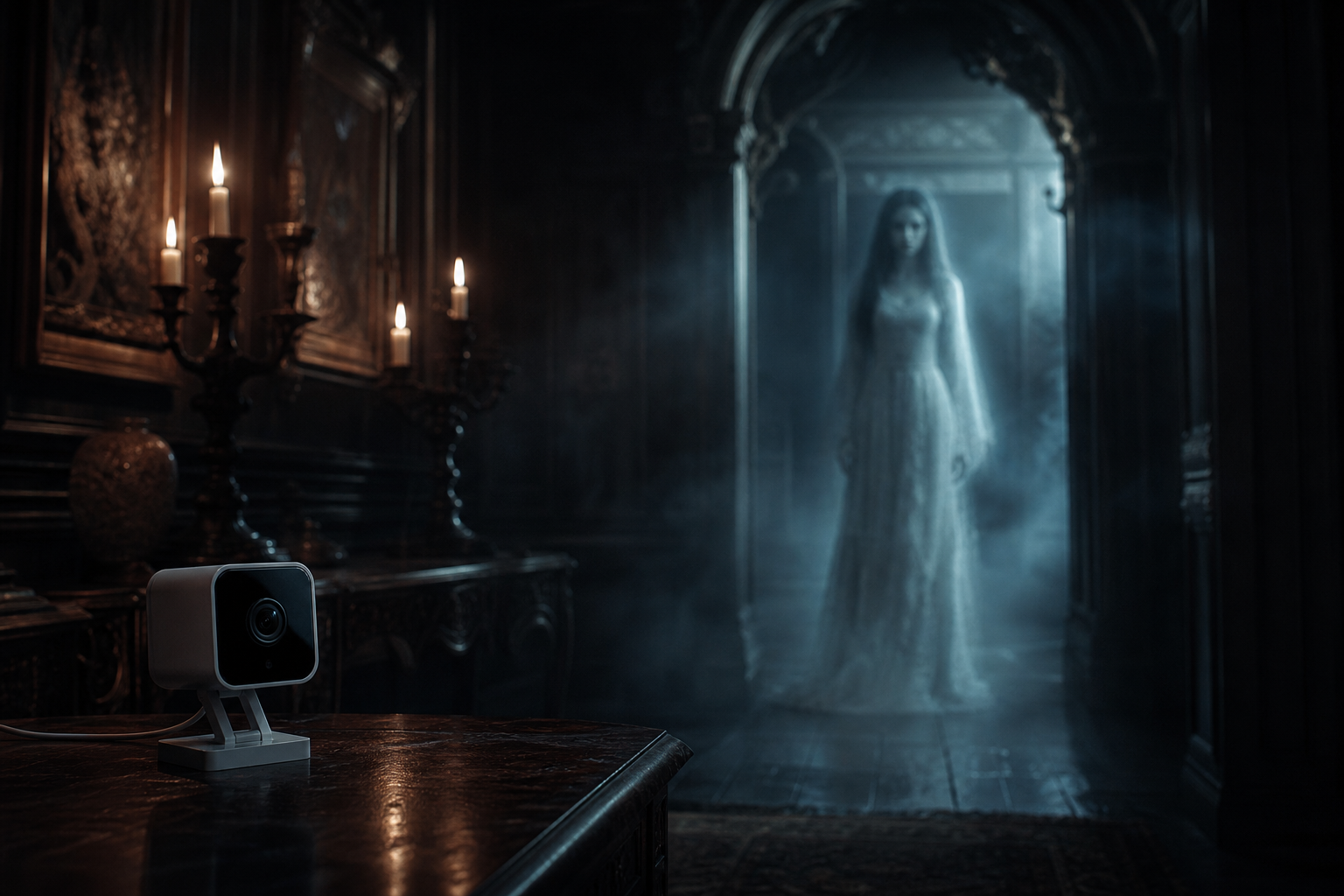
It is the notification every homeowner dreads: a late-night alert from a security camera indicating movement in a room that should be empty. For one family, a routine Wyze Cam alert transformed a quiet evening into a spiritual emergency, highlighting the thin, often blurry line between a genuine haunting and a common household nuisance. What appeared to be a translucent entity drifting through the frame sent a shiver down the spine of a homeowner, sparking immediate plans for a full-scale house cleansing.
The Apparition on the Screen
The incident, which recently gained traction on the r/Ghosts subreddit, serves as a masterclass in how modern technology can inadvertently fuel paranormal anxiety. A user known as MuffDivers2_ shared the story of his wife’s frantic reaction to a motion-activated photo captured by their home security system. To her eyes, the image showed a wispy, ethereal figure manifesting in their living space—a classic sign of a residual haunting or perhaps a visiting spirit.
Driven by her deep spiritual beliefs, the wife’s first instinct was to reach for the White Sage. In many paranormal circles, smudging is a traditional practice used to clear negative energy or “move on” lingering spirits that have made themselves known. She was reportedly moments away from conducting a full séance to communicate with the “entity” before her husband intervened with a dose of cold, hard reality.
While the wife was viewing the static motion alert, the husband happened to be monitoring the live feed from his office. From his perspective, the “ghost” wasn’t a visitor from the beyond, but rather a common housefly walking directly across the camera’s window screen. Because the camera was set to take photos only when it detected movement, the resulting still image captured the insect in a way that distorted its size and shape, creating a convincing optical illusion.
The Science of False Positives
This case is a textbook example of what investigators call a false positive. In the world of paranormal research, technology is a double-edged sword. While high-definition cameras and sensitive sensors allow us to capture more data than ever before, they also introduce a phenomenon known as Pareidolia. This is the human brain’s natural tendency to perceive meaningful images, such as faces or figures, in random patterns or visual noise.
When a small object like a fly, spider, or even a speck of dust passes extremely close to a camera lens, it falls out of the camera’s depth of field. This causes the object to appear translucent and oversized. When illuminated by the camera’s Infrared (IR) LEDs, these objects glow brightly, creating the “orb” or “rod” effect that has been the subject of countless ghost-hunting shows over the last two decades. This technical quirk, often referred to as backscatter, is responsible for a vast majority of reported spirit sightings in digital photography.
A History of High-Tech Hauntings
The “Wyze Cam Fly” is far from the first time a digital glitch has caused a stir. Since the rise of affordable home security systems like Ring and Nest, paranormal forums have been flooded with similar reports. In many cases, “shadow people” caught on doorbell cameras have been debunked as simple compression artifacts—digital “ghosts” created when the camera’s software struggles to render movement in low-light conditions.
Historically, the transition from film to digital photography changed the nature of ghost sightings. In the era of film, “ghosts” were often the result of double exposure or chemical leaks during development. Today, the “ghosts” are more likely to be bugs, lens flares, or software glitches. Despite the debunking, these stories remain vital to the community because they remind us to maintain a healthy level of skepticism while searching for the truly unexplainable.
The Importance of the Critical Eye
The Reddit user noted that had he not been watching the live feed at that exact moment, even he might have been convinced the image was supernatural. This highlights the importance of corroborating evidence in any paranormal investigation. A single photo or a brief audio clip is rarely enough to confirm a haunting; investigators look for patterns, multiple witness accounts, and environmental changes that occur simultaneously.
While the wife in this story was teased for her readiness to start a séance, her reaction speaks to a universal human desire to find meaning in the unknown. Whether it is a fly on a screen or a genuine poltergeist, our first instinct is often to protect our homes and seek understanding. In this instance, the only thing that needed “cleansing” was the window screen.
As we continue to fill our homes with “smart” eyes that never sleep, we are bound to see more things that go bump in the night—or crawl across the lens. The challenge for the modern ghost hunter is discerning the difference between a visitor from the afterlife and a visitor with six legs.
Have you ever caught something on your home security camera that you couldn’t explain, only to find a logical reason later—or are you still searching for answers?
Recommended Resources
- 🤖 Viktor AI — The autonomous AI platform we use to run our marketing operations. Hire Viktor to handle blogging, lead research, audits, and more.
- 💳 Greenlight — The money app and debit card for kids and teens. Teach your kids to earn, save, and invest. Earn $30 when you sign up.
- ⛏️ GoMining — Earn Bitcoin through cloud mining without the hardware hassle. A passive way to get into crypto.
- 🏦 Mercury — The business banking account built for startups and small businesses. No fees, powerful tools, and easy to set up.
Leave a Reply