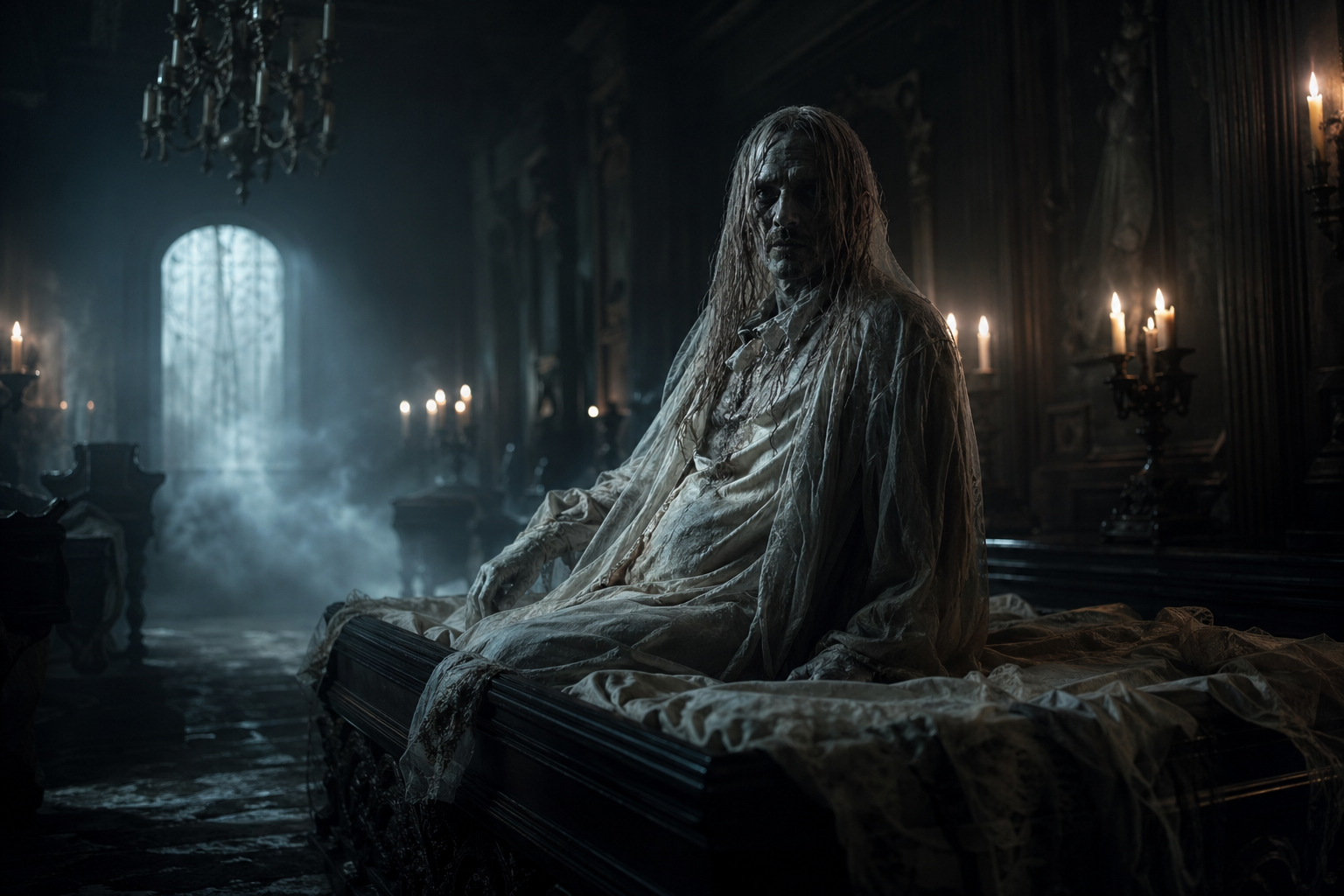
The silence of a funeral home at night is a heavy, physical presence that most people will never have to experience. For those who work behind the scenes in the mortuary sciences, the darkness is often filled with the clinical sounds of preparation and the quiet dignity of the departed. However, one worker’s recent account of a night shift in September 2024 has sent chills through the paranormal community, detailing an encounter that defies the comfort of logic.
A Grim Beginning in the Preparation Room
The incident began with the arrival of a young woman, estimated to be between 19 and 21 years old. Having been deceased for nearly two days before discovery, her body had already begun the natural, albeit harrowing, process of decomposition. The worker noted that her skin had taken on a deep purple hue, a common sign of livor mortis, where blood settles in the lower portions of the body after the heart stops beating.
During the initial transport from her home to the facility, the physical reality of death became visceral. As the staff moved her from a sofa to the transport cot, the fragile state of the remains led to a traumatic rupture. The sound of escaping fluids—described as a steady stream hitting the carpet—and the overwhelming odor of decay created an atmosphere of intense sensory distress. Yet, for a seasoned professional, this was merely a difficult day at the office until the evening hours arrived.
The Grip of the Departed
As night fell, the worker was tasked with the final cosmetic preparations requested by the grieving family. This included a delicate manicure and the placement of a wedding ring on the young woman’s finger. It was during this intimate moment of service that the atmosphere shifted from clinical to terrifying. As the worker slid the band onto her finger, her hand suddenly reacted, her fingers curling tightly around the worker’s hand in a mock-reflex that felt disturbingly intentional.
While rigor mortis—the stiffening of the joints and muscles after death—is a well-documented chemical change, the timing of such movements can be incredibly jarring. In many folklore traditions, a “death grip” was often feared as a sign that the soul was not yet ready to depart the physical vessel. To the worker standing alone in the dim light of the prep room, it felt less like chemistry and more like a desperate reach from the beyond.
When the Dead Sit Up
The situation escalated from unsettling to heart-stopping moments later. Without warning, the deceased woman’s eyes snapped open. While the autonomic nervous system can sometimes trigger muscle spasms post-mortem, the most terrifying event was yet to come. As the worker turned to put away their tools, they caught a movement in their peripheral vision: the corpse was slowly beginning to sit up on the embalming table.
This phenomenon, sometimes referred to in medical circles as the Lazarus sign, is a reflex action that can cause brain-dead or deceased patients to briefly raise their arms or torso. However, seeing it occur in the dead of night while alone is enough to trigger a primal fight-or-flight response. The worker admitted to fleeing the room immediately, the instinct for self-preservation overriding years of professional training.
The Science of Post-Mortem Vocalization
There is often a logical explanation for the “hauntings” found in mortuaries. If a corpse has air trapped in the lungs, any movement of the torso can force that air upward through the larynx. This results in what professionals call “the groan of the dead”—a liquidy, gurgling sound that can mimic a human sigh or a muffled cry. When combined with the physical shifting of muscles, it creates a perfect storm of paranormal activity that is actually rooted in biology.
Despite the scientific explanations, those who work in the “death care” industry often share stories that suggest a thin veil between our world and the next. From phantom footsteps to the feeling of being watched, the energy of a funeral home is undeniable. Whether these movements are merely the final gasps of a biological machine or the lingering echoes of a spirit, they serve as a stark reminder of our own mortality.
Do you believe that post-mortem movements are strictly biological reflexes, or could they be the final attempts of a soul trying to communicate with the living?
Recommended Resources
- 🤖 Viktor AI — The autonomous AI platform we use to run our marketing operations. Hire Viktor to handle blogging, lead research, audits, and more.
- 💳 Greenlight — The money app and debit card for kids and teens. Teach your kids to earn, save, and invest. Earn $30 when you sign up.
- ⛏️ GoMining — Earn Bitcoin through cloud mining without the hardware hassle. A passive way to get into crypto.
- 🏦 Mercury — The business banking account built for startups and small businesses. No fees, powerful tools, and easy to set up.
Leave a Reply