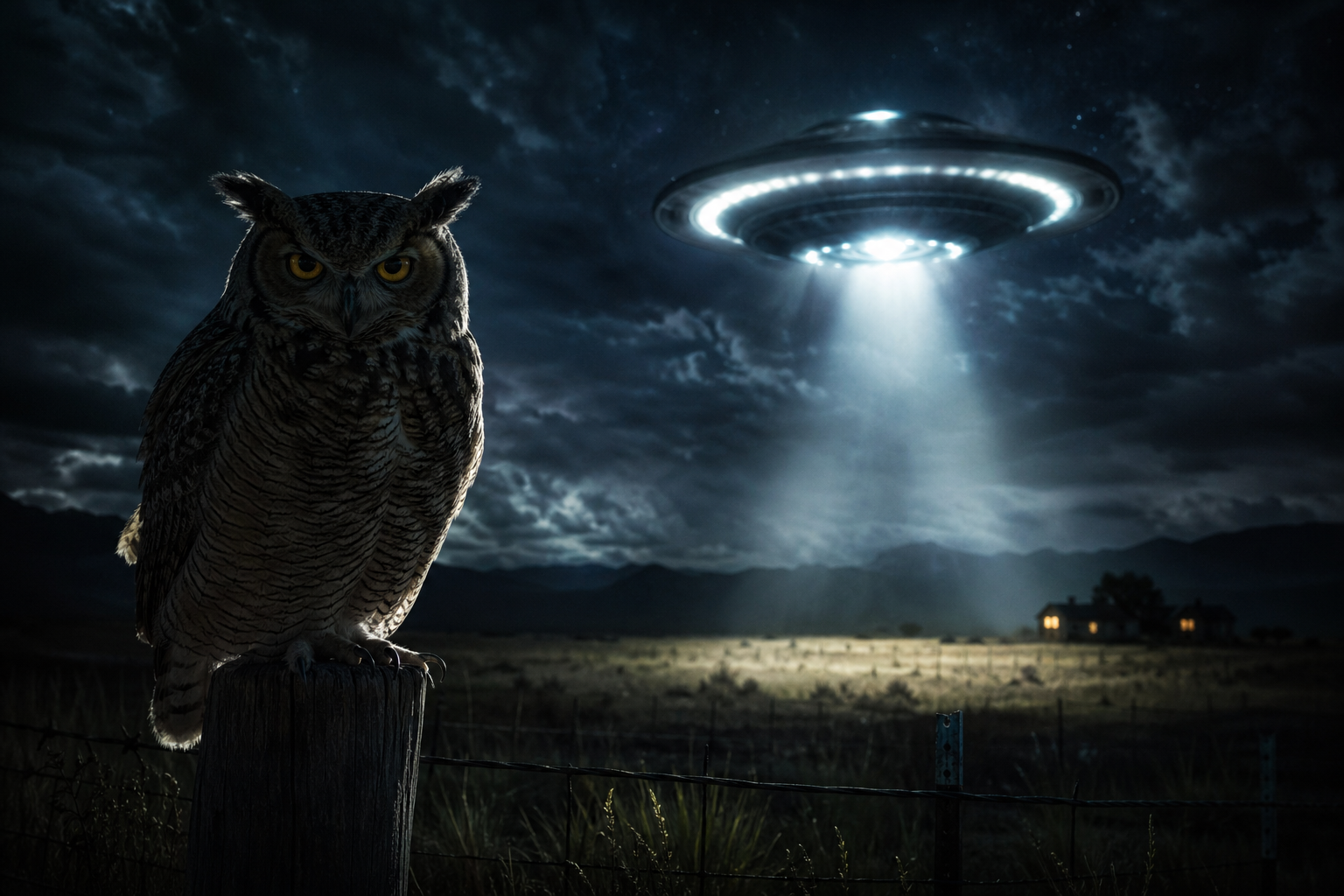
For many enthusiasts of the unexplained, the 2009 film The Fourth Kind remains one of the most unsettling depictions of extraterrestrial contact ever put to screen. Set in the remote, icy landscape of Nome, Alaska, the movie blends dramatized reenactments with “archival footage” to tell a story of mass disappearances and late-night visitations. While the film’s veracity has been widely debated, its psychological impact—specifically its use of a wide-eyed, staring owl—continues to haunt the nightmares of those who watch it.
The Screen Memory: Why the Owl is Not What It Seems
In the lore of Ufology, the concept of a screen memory is a cornerstone of abduction narratives. This phenomenon occurs when the human mind, unable to process the trauma of seeing a non-human entity, replaces the terrifying image with something more familiar. In The Fourth Kind, several patients under hypnosis describe a large, white owl perched outside their bedroom windows, staring at them with unblinking, obsidian eyes. This isn’t just a clever cinematic device; it is a direct reference to real-world reports from alleged abductees.
The “owl” in these stories is often a placeholder for the classic Grey Alien. With their large, almond-shaped eyes and small, slit-like mouths, Greys bear a striking, albeit distorted, resemblance to the facial structure of a Great Horned Owl or a Barn Owl. When a witness looks back at a traumatic encounter, their subconscious mind may “mask” the alien face with the bird’s features to protect their sanity. This psychological shielding makes the owl one of the most chilling symbols in the history of paranormal research.
The Nome Disappearances and the Real-Life Mystery
While The Fourth Kind presents itself as a documentary, the FBI actually did investigate a string of disappearances in Nome, Alaska, during the early 2000s. While the official reports attributed these cases to a combination of harsh weather and excessive alcohol consumption, the local community remained skeptical. The film tapped into this local unease, suggesting that the high rate of missing persons was actually the result of Close Encounters of the Fourth Kind—a term coined by J. Allen Hynek to describe instances of human abduction by extraterrestrials.
The scene in the film where a patient realizes the “owl” he has been seeing is actually something much more malevolent is widely considered one of the scariest moments in modern horror. It plays on the primal fear of being watched while we are most vulnerable. The realization that a common woodland creature could be a disguise for a transdimensional entity creates a sense of paranoia that lingers long after the credits roll. It forces the viewer to question their own memories and the shadows outside their own windows.
Owls in Folklore and Paranormal History
The connection between owls and the supernatural predates modern alien lore by centuries. In many Native American cultures, the owl is seen as a harbinger of death or a messenger from the spirit world. Similarly, in ancient Roman mythology, the hoot of an owl was often an omen of impending doom. This historical weight adds a layer of gravitas to the “owl-as-alien” theory, suggesting that humanity has been interpreting these visitors through various cultural lenses for millennia.
Prominent researchers like Mike Clelland, author of The Messengers, have documented hundreds of cases where owls appear in synchronicity with UFO sightings. Clelland’s work suggests that the owl might not just be a screen memory, but a deliberate archetypal image used by the entities themselves to communicate or manifest in our reality. Whether the owl is a mental filter or a physical disguise, its presence in The Fourth Kind serves as a bridge between ancient folklore and modern extraterrestrial theory.
The Lasting Legacy of the Fourth Kind
Despite the controversy surrounding the film’s marketing tactics, The Fourth Kind succeeded in bringing the terrifying concept of screen memories into the mainstream. It reminded us that the most frightening things aren’t always the monsters we see, but the things our minds refuse to let us remember. The image of the owl remains a potent trigger for those who believe that we are not alone in the universe—and that some visitors may be closer than we think.
The next time you hear a hoot in the dead of night or see a pair of glowing eyes reflected in your window, you might find yourself wondering if it’s just a bird of prey. Or is your mind simply trying to protect you from a truth too terrifying to face? The mystery of the owl continues to be a “hoot” for some, but for others, it is the ultimate sign that the Greys are watching.
Have you ever had a strange encounter with an owl that felt like something more, or do you believe screen memories are just a trick of the imagination? Let us know in the comments below!
Recommended Resources
- 🤖 Viktor AI — The autonomous AI platform we use to run our marketing operations. Hire Viktor to handle blogging, lead research, audits, and more.
- 💳 Greenlight — The money app and debit card for kids and teens. Teach your kids to earn, save, and invest. Earn $30 when you sign up.
- ⛏️ GoMining — Earn Bitcoin through cloud mining without the hardware hassle. A passive way to get into crypto.
- 🏦 Mercury — The business banking account built for startups and small businesses. No fees, powerful tools, and easy to set up.
Leave a Reply