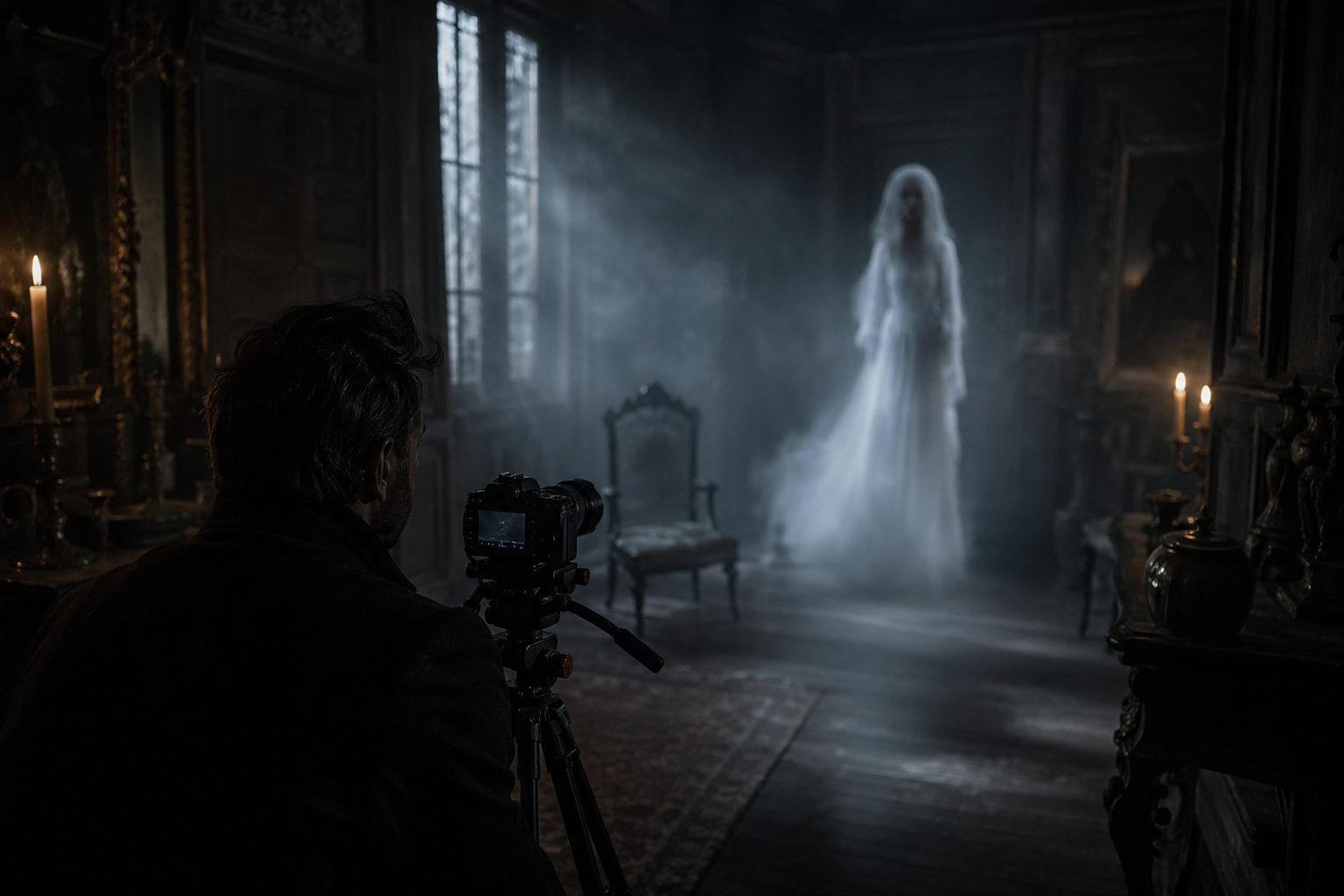
In an era where every person carries a high-definition camera in their pocket, the world expected the mystery of the supernatural to be solved by now. Yet, despite the billions of sensors roaming the planet, the search for irrefutable paranormal evidence remains one of the most contentious and elusive quests in modern history. While the internet is flooded with grainy footage and eerie audio clips, the “smoking gun” that convinces the scientific community continues to dance just out of reach.
The debate recently reached a fever pitch within the r/Paranormal community, where enthusiasts and skeptics alike are grappling with a frustrating paradox. As our technology improves, our standards for what constitutes “credible” proof seem to shift even further. What was once considered a terrifying ghost photo in the 1990s is now dismissed as a clever CGI render or a mobile app filter, leaving many to wonder if we will ever find evidence that stands up to universal scrutiny.
The Subjectivity of the Supernatural Experience
One of the primary hurdles in the study of the unknown is that “evidence” is often in the eye of the beholder. For a seasoned paranormal investigator, a spike on an Electromagnetic Field (EMF) meter coupled with a disembodied voice might be definitive proof of a haunting. However, to a physicist, that same data might be dismissed as interference from old wiring or a localized geomagnetic anomaly.
This divide highlights the heavy reliance on anecdotal evidence within the field. Personal stories are the lifeblood of paranormal lore, yet they rarely hold weight in the court of scientific opinion. We are currently living in a time where the “best evidence” is getting harder to find precisely because our collective skepticism has evolved alongside our technology. When everyone knows how easy it is to fake a UFO sighting or a poltergeist video, the threshold for belief rises to nearly impossible heights.
Historically, this wasn’t always the case. During the rise of Spiritualism in the late 19th century, “spirit photography” was taken as gospel by many, including luminaries like Sir Arthur Conan Doyle. Today, we look back at those double-exposed plates as obvious hoaxes. This historical context suggests that our current “best evidence” may one day be viewed with the same skepticism by future generations, creating a perpetual cycle of moving goalposts.
The Power of Personal Revelation
If digital media fails to bridge the gap between belief and skepticism, what does? For the vast majority of people, the transition from skeptic to believer doesn’t happen because of a YouTube video; it happens because of a personal experience. There is a profound psychological shift that occurs when an individual encounters something that defies their understanding of natural law.
Whether it is a Class A Electronic Voice Phenomenon (EVP) heard with one’s own ears or a physical manifestation that occurs in a controlled environment, these moments create a “subjective certainty.” This is often referred to as the Stone Tape Theory in some circles—the idea that emotional events can be “recorded” into the environment and replayed. While these experiences are life-changing for the witness, they are notoriously difficult to share. A story told second-hand loses the visceral chill of the original moment, returning once again to the realm of unprovable anecdote.
The community at r/Paranormal notes that the most compelling evidence often isn’t found in the latest viral hit, but in the quiet, archived corners of forums where witnesses describe events with no motive for fame. The search for truth requires a willingness to dig through the noise and look for patterns that emerge across thousands of independent reports.
The Digital Dilemma and the Skeptic’s Challenge
We are currently facing a “Digital Dilemma.” As Artificial Intelligence and deepfake technology become more sophisticated, the value of video and photographic evidence is plummeting. We have reached a point where a perfectly clear video of a cryptid or a ghost is actually less believable than a blurry one, as the clarity suggests digital manipulation. This creates a frustrating environment for those trying to document genuine anomalies.
This is why the call for skeptics to share what convinced them is so vital. True skepticism is not the flat denial of the unknown, but the application of critical thinking to unexplained phenomena. When a person who is naturally inclined toward rationalism encounters a piece of evidence—be it a thermal imaging capture or a multi-witness sighting—that they cannot debunk, it carries significant weight. These “skeptic-breaking” cases are the gold standard of the paranormal world.
Famous cases like the Phoenix Lights or the Gimbal UFO video released by the Pentagon serve as benchmarks because they involve multiple sensors and professional witnesses. They provide a framework for what modern evidence needs to look like: data-driven, multi-perspective, and resistant to easy explanation. Without these elements, the paranormal remains a matter of faith rather than a matter of fact.
The quest for the “best evidence” is far from over, but it is changing. It is moving away from the hunt for a single perfect image and toward a more holistic approach that combines data, testimony, and rigorous exclusion of the mundane. Until that definitive proof arrives, the community remains a vibrant, if divided, space of exploration.
Have you ever encountered a piece of evidence online or in person that completely changed your perspective on the paranormal? Let us know in the comments below!
Recommended Resources
- 🤖 Viktor AI — The autonomous AI platform we use to run our marketing operations. Hire Viktor to handle blogging, lead research, audits, and more.
- 💳 Greenlight — The money app and debit card for kids and teens. Teach your kids to earn, save, and invest. Earn $30 when you sign up.
- ⛏️ GoMining — Earn Bitcoin through cloud mining without the hardware hassle. A passive way to get into crypto.
- 🏦 Mercury — The business banking account built for startups and small businesses. No fees, powerful tools, and easy to set up.
Leave a Reply