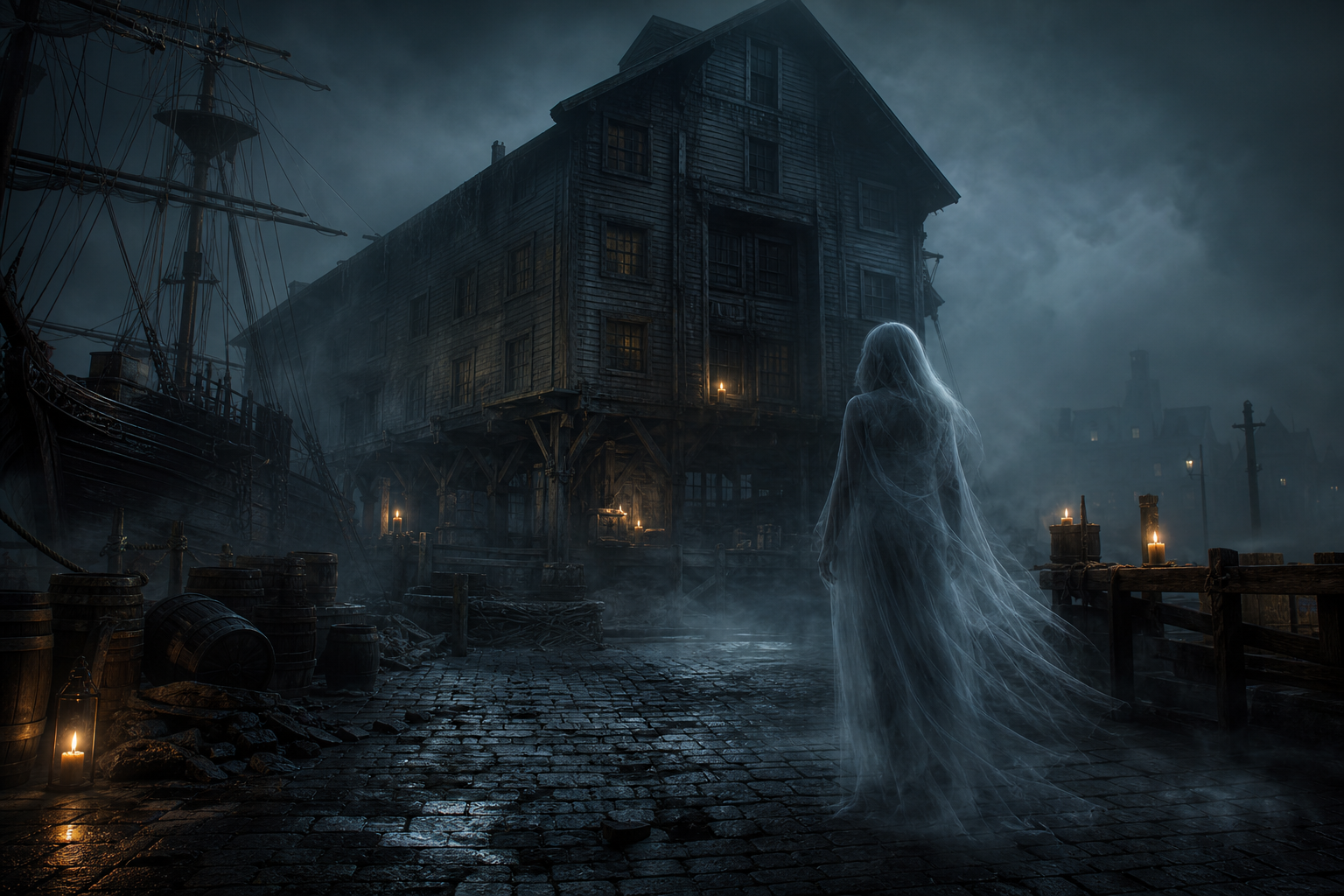
The name Ghost Ship warehouse was intended to evoke a sense of bohemian mystery and artistic freedom, but it eventually became a literal description of a site haunted by one of the deadliest structure fires in modern American history. On the night of December 2, 2016, a converted artist collective in Oakland, California, transformed into a terrifying inferno, claiming the lives of 36 individuals who had gathered for an electronic music performance. Today, the site remains a somber reminder of how quickly a sanctuary can become a tomb, leaving behind a legacy of grief and persistent whispers of paranormal activity.
The Labyrinth of the Ghost Ship Warehouse
To understand the tragedy, one must first visualize the interior of the Ghost Ship warehouse. It was not a standard venue; it was a sprawling, two-story industrial space filled with a chaotic collection of wooden pallets, antique furniture, tapestries, and musical instruments. Investigators later described the layout as a “death trap,” noting that the building lacked a sprinkler system and clearly marked exits. Perhaps most chilling was the discovery of a makeshift stairwell constructed from wooden pallets, which became a bottleneck of desperation as thick smoke filled the air.
Official reports from the Bureau of Alcohol, Tobacco, Firearms and Explosives (ATF) and local fire marshals highlighted a staggering lack of safety infrastructure. There was no evidence of functioning smoke detectors throughout the labyrinthine structure. For those trapped on the second floor, the combination of the flammable art installations and the absence of early warning systems meant that escape was nearly impossible. The physical environment itself seemed designed to confuse and disorient, a characteristic that many urban explorers and paranormal investigators associate with high-energy “liminal spaces.”
Residual Energy and the Echoes of Tragedy
In the years following the fire, the vacant lot where the warehouse once stood has become a focal point for those sensitive to spiritual energy. In the world of the supernatural, events of sudden, mass trauma are often believed to create a residual haunting. This phenomenon occurs when an intense emotional event is “recorded” onto the environment, playing back like a loop of film. Locals and passersby have reported feeling a heavy, oppressive atmosphere near the site, with some claiming to hear the faint, discordant sounds of music or muffled voices echoing in the night.
The concept of the Ghost Ship has taken on a dual meaning for the community. While the legal battles focused on the negligence of the building’s master tenant and the city’s failure to inspect the property, the paranormal community looks at the site as a place where the veil is thin. Many believe that the creative spirits of the artists who lived and worked there remain tied to the location, unable to move on from the suddenness of their departure. This type of metaphysical imprint is common in locations that have hosted significant human suffering, similar to the energy felt at historic battlefields or the sites of famous maritime disasters.
A Pattern of Haunted Infrastructure
The Ghost Ship is not the only “haunted” site born from a failure of safety and oversight. Throughout history, buildings that ignored fire codes have often become the subjects of ghost stories. From the Triangle Shirtwaist Factory in New York to the Station Nightclub in Rhode Island, these locations share a common thread: they were spaces where human life was secondary to profit or convenience. The paranormal evidence often cited at these locations—shadow figures, the smell of smoke when no fire exists, and sudden drops in temperature—serves as a spiritual warning of the consequences of negligence.
In the case of the Oakland fire, the makeshift stairwell serves as a powerful symbol of the fragile bridge between life and death. For paranormal researchers, such structures can act as “anchors” for spirits who were unable to find their way out. The lack of smoke detectors meant that the victims had no time to prepare, a factor that many believe contributes to the “restless” nature of the spirits left behind. When a life is cut short without warning, the soul may continue to seek the exit it could never find in the physical world.
As the city of Oakland continues to heal, the site of the Ghost Ship remains a place of quiet reflection. Whether one views the location through the lens of a tragic fire or as a site of supernatural significance, the weight of the 36 lives lost is undeniable. The “Ghost Ship” is no longer just a name for an art collective; it is a permanent fixture in the landscape of California’s most haunted histories, a place where the past refuses to be silenced.
Do you believe that locations of sudden tragedy like the Ghost Ship warehouse retain the energy of those who were lost, or are these “hauntings” simply a manifestation of our collective grief?
Recommended Resources
- 🤖 Viktor AI — The autonomous AI platform we use to run our marketing operations. Hire Viktor to handle blogging, lead research, audits, and more.
- 💳 Greenlight — The money app and debit card for kids and teens. Teach your kids to earn, save, and invest. Earn $30 when you sign up.
- ⛏️ GoMining — Earn Bitcoin through cloud mining without the hardware hassle. A passive way to get into crypto.
- 🏦 Mercury — The business banking account built for startups and small businesses. No fees, powerful tools, and easy to set up.
Leave a Reply