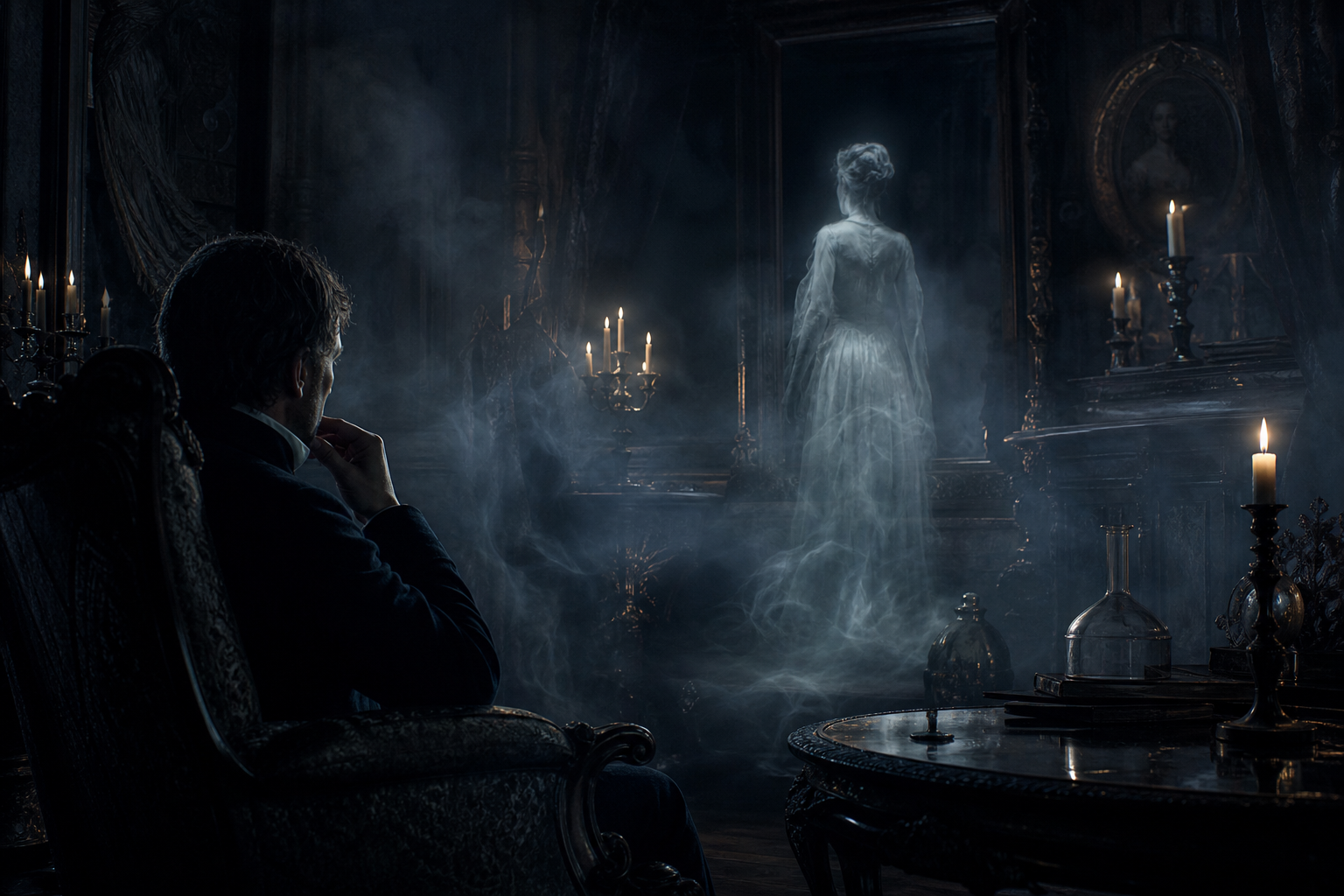
For centuries, humanity has looked into the shadows and wondered if we are truly alone. While science strives to map the physical world, a persistent, spectral question remains: do the spirits of the dead linger among us? A recent surge in digital discourse has reignited the debate, forcing both skeptics and believers to re-examine what it means to encounter a ghost in the 21st century.
The Evolution of the Spectral Encounter
The concept of the paranormal is as old as civilization itself, yet our understanding of it is constantly shifting. In the early days of spiritualism, séances and table-turning were the primary methods of contact. Today, the hunt has moved into the digital realm, where high-definition cameras and Electronic Voice Phenomena (EVP) recorders serve as the modern-day crystal ball. Despite this technological leap, the core of the mystery remains unchanged: why do some people see what others cannot?
Many researchers suggest that ghost sightings are not merely hallucinations but interactions with a reality we don’t yet fully comprehend. The Stone Tape Theory, a popular hypothesis in paranormal circles, suggests that minerals within a building’s structure can “record” intense emotional events. When the right environmental conditions occur, these recordings play back, resulting in what we call a residual haunting. This theory provides a bridge between the supernatural and the geological, suggesting that the past is literally etched into our surroundings.
However, not all encounters are repetitive loops of the past. Many witnesses report intelligent hauntings, where the entity seems aware of the living and capable of interaction. These cases are often the most chilling, as they imply a level of consciousness that survives the physical body. Whether it is a door opening on command or a direct response captured on a spirit box, these moments challenge our fundamental understanding of life and death.
Skepticism in the Age of Digital Manipulation
While the internet has allowed for the rapid sharing of paranormal evidence, it has also birthed a new era of skepticism. With the rise of sophisticated CGI and mobile apps designed to “ghost-bomb” photos, the burden of proof has never been higher. Paranormal investigators now spend as much time debunking hoaxes as they do searching for genuine anomalies. This critical eye is necessary, as it separates the “orbs” caused by dust particles from truly unexplainable light phenomena.
Psychologists often point to pareidolia—the human tendency to see familiar patterns, like faces, in random data—as a primary cause for ghost sightings. When we are in a dark, high-stress environment, our brains are wired to find threats, often turning a coat rack into a shadow person. Yet, even the most hardened skeptics struggle to explain cases involving multiple witnesses who report the exact same apparition simultaneously. These collective experiences suggest that there is more to the story than mere brain chemistry.
Historical context also plays a massive role in how we perceive these entities. In the Victorian era, ghosts were often seen as mournful figures seeking closure. In modern times, they are frequently portrayed as aggressive or poltergeist-like in nature. This shift in perception may say more about our cultural anxieties than the spirits themselves, highlighting how the paranormal acts as a mirror for the living world.
The Science of the Unseen: Infrasound and EMF
To find the truth, some researchers are looking toward the fringes of physics. Infrasound, or sound frequencies below the range of human hearing, has been known to cause feelings of unease, sorrow, and even blurred vision. Some “haunted” locations have been found to have high levels of infrasound caused by wind rushing through tunnels or old machinery. This “fear frequency” can create a physical reaction that feels indistinguishable from a supernatural presence.
Similarly, fluctuations in Electromagnetic Fields (EMF) are a staple of modern ghost hunting. The theory is that spirits require energy to manifest and that their presence disrupts the local magnetic field. While high EMF levels can cause “hallucination-like” symptoms in humans—often called a “sitter” effect—investigators look for spikes that have no clear electrical source. When a K-II meter lights up in the middle of a forest far from power lines, the scientific explanation begins to wear thin.
Ultimately, the study of ghosts is the study of the unknown. Whether they are echoes of the past, visitors from another dimension, or simply tricks of the light, they represent the final frontier of human discovery. As we continue to refine our tools and our theories, we may one day find that the line between the physical and the spiritual is much thinner than we ever imagined.
Do you believe that ghosts are sentient spirits of the deceased, or are they merely energetic imprints left behind by history?
“,excerpt:
Recommended Resources
- 🤖 Viktor AI — The autonomous AI platform we use to run our marketing operations. Hire Viktor to handle blogging, lead research, audits, and more.
- 💳 Greenlight — The money app and debit card for kids and teens. Teach your kids to earn, save, and invest. Earn $30 when you sign up.
- ⛏️ GoMining — Earn Bitcoin through cloud mining without the hardware hassle. A passive way to get into crypto.
- 🏦 Mercury — The business banking account built for startups and small businesses. No fees, powerful tools, and easy to set up.
Leave a Reply