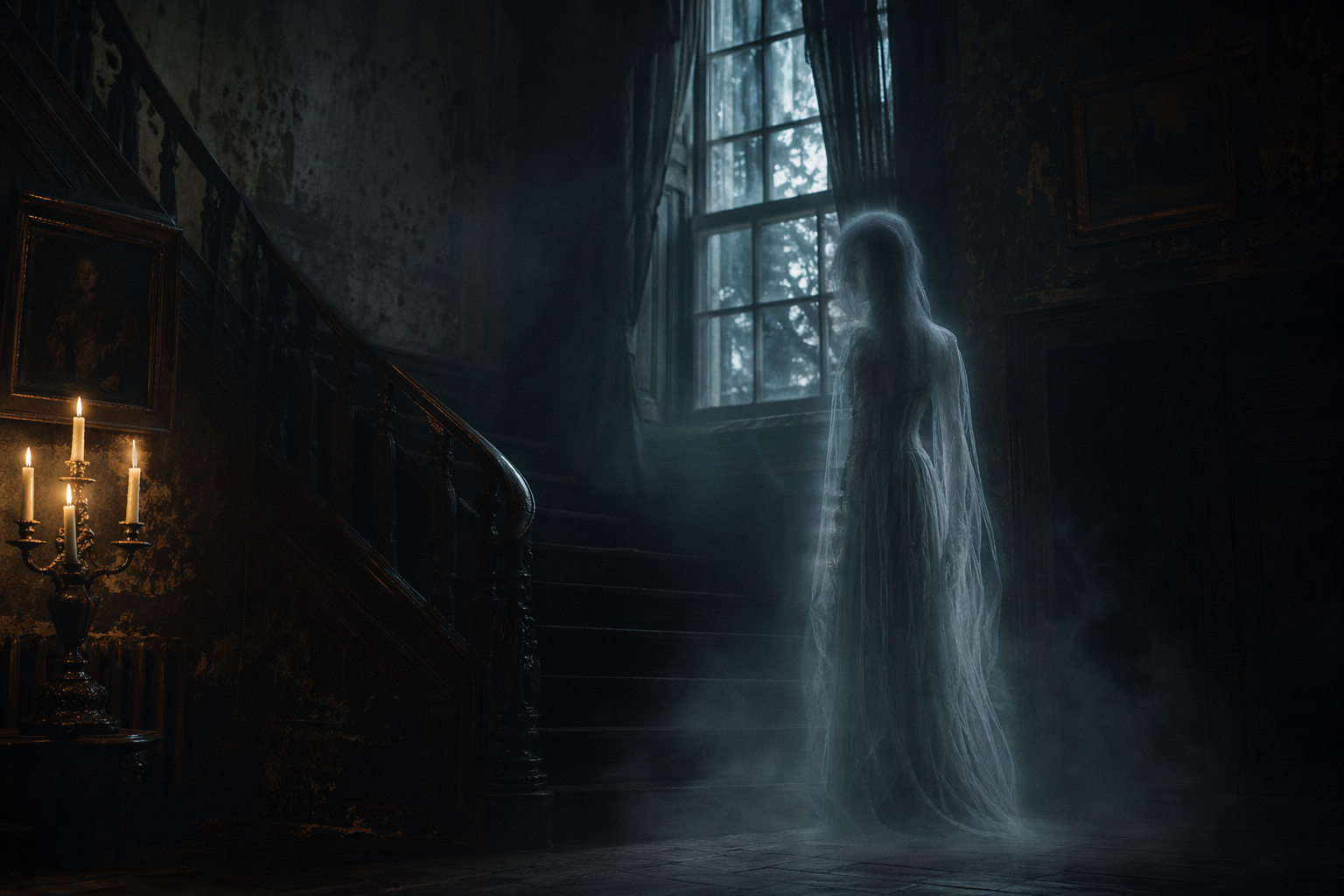
For centuries, the human experience has been punctuated by stories of things that go bump in the night, from flickering shadows in Victorian manors to full-bodied apparitions in modern hospitals. While millions of people worldwide claim to have had a paranormal encounter, the scientific community remains steadfast in its skepticism, offering a different kind of explanation for the supernatural. By peeling back the curtain on these eerie experiences, researchers are discovering that the “ghosts” we see may actually be sophisticated tricks played by our own biology and environment.
The Fear Frequency: Infrasound and Environmental Triggers
One of the most compelling scientific explanations for hauntings involves infrasound, or sound waves that vibrate at a frequency lower than the human ear can consciously detect. These low-frequency vibrations, often around 19Hz, have been shown to cause physical sensations such as hyperventilation, chills, and a profound sense of dread. Interestingly, 19Hz is also the resonant frequency of the human eyeball, meaning these silent sounds can cause our vision to blur or create “peripheral smears” that look remarkably like shadowy figures.
The discovery of this phenomenon is often attributed to researcher Vic Tandy, who noticed a “ghost” in his laboratory that vanished when he turned off a specific extractor fan. Beyond sound, electromagnetic fields (EMFs) are frequently cited by ghost hunters as evidence of spirit activity. However, neuroscientists suggest that high or fluctuating EMFs can actually stimulate the brain’s temporal lobes, inducing hallucinations and the distinct feeling that someone—or something—is watching you from the corner of the room.
Glitches in the Human Machine: Sleep Paralysis and FOP
Many of the most terrifying ghost stories occur in the transition between wakefulness and sleep. This state is often the result of sleep paralysis, a condition where the body remains immobilized while the mind is awake. During these episodes, the brain often projects “intruder” hallucinations, leading victims to report a heavy weight on their chest or a dark figure standing over their bed. Historically, this was known as the “Old Hag” phenomenon, a cross-cultural experience that science now attributes to a temporary desynchronization of REM sleep cycles.
Furthermore, researchers have identified a specific neurological event known as the Feeling of a Presence (FOP). By stimulating the temporoparietal junction—the area of the brain responsible for self-awareness and spatial processing—scientists have been able to induce the sensation of a “shadow person” in laboratory settings. When the brain loses track of where the body ends and the environment begins, it often interprets its own physical presence as a separate, external entity, creating a ghost out of thin air.
The Power of Suggestion and Pareidolia
The human brain is a master of pattern recognition, a survival trait that helped our ancestors spot predators in the brush. This phenomenon, known as pareidolia, causes us to see faces in clouds, burnt toast, or the random grain of a wooden door. In a dimly lit “haunted” house, the brain works overtime to make sense of ambiguous visual data, often turning a coat rack or a smudge on a lens into a spirit manifestation.
This effect is amplified by the power of suggestion. Studies have shown that if a person is told a building is haunted before they enter, they are significantly more likely to report unusual experiences. Our expectations act as a filter for reality; if we are looking for a sign from the afterlife, our subconscious will find a way to provide one, whether it is a sudden drop in temperature or a floorboard creaking under the natural expansion of the house. This psychological priming makes the paranormal feel tangible, even when the physical evidence is absent.
Why the Mystery of the Ghost Endures
Despite these logical explanations, the belief in ghosts remains one of the most persistent human convictions. This may be because science addresses the “how” of a sighting, but it rarely addresses the “why.” For many, the idea of a haunting provides a strange comfort, suggesting that consciousness survives the physical body and that our loved ones are never truly gone. The afterlife is a concept deeply woven into the fabric of human culture, and no amount of data on infrasound or brain chemistry can easily displace the emotional weight of a personal experience.
As we continue to explore the boundaries of the human mind, the line between the explained and the unexplained remains thin. While laboratories can recreate the feeling of a ghost, they cannot fully account for the sheer volume of consistent, worldwide testimony that spans millennia. Whether these encounters are glitches in our biology or glimpses into a dimension we don’t yet understand, the ghost remains a powerful symbol of our search for meaning in the dark.
Do you believe that science has finally debunked the existence of ghosts, or are there some supernatural experiences that logic simply cannot explain?
Recommended Resources
- 🤖 Viktor AI — The autonomous AI platform we use to run our marketing operations. Hire Viktor to handle blogging, lead research, audits, and more.
- 💳 Greenlight — The money app and debit card for kids and teens. Teach your kids to earn, save, and invest. Earn $30 when you sign up.
- ⛏️ GoMining — Earn Bitcoin through cloud mining without the hardware hassle. A passive way to get into crypto.
- 🏦 Mercury — The business banking account built for startups and small businesses. No fees, powerful tools, and easy to set up.
Leave a Reply