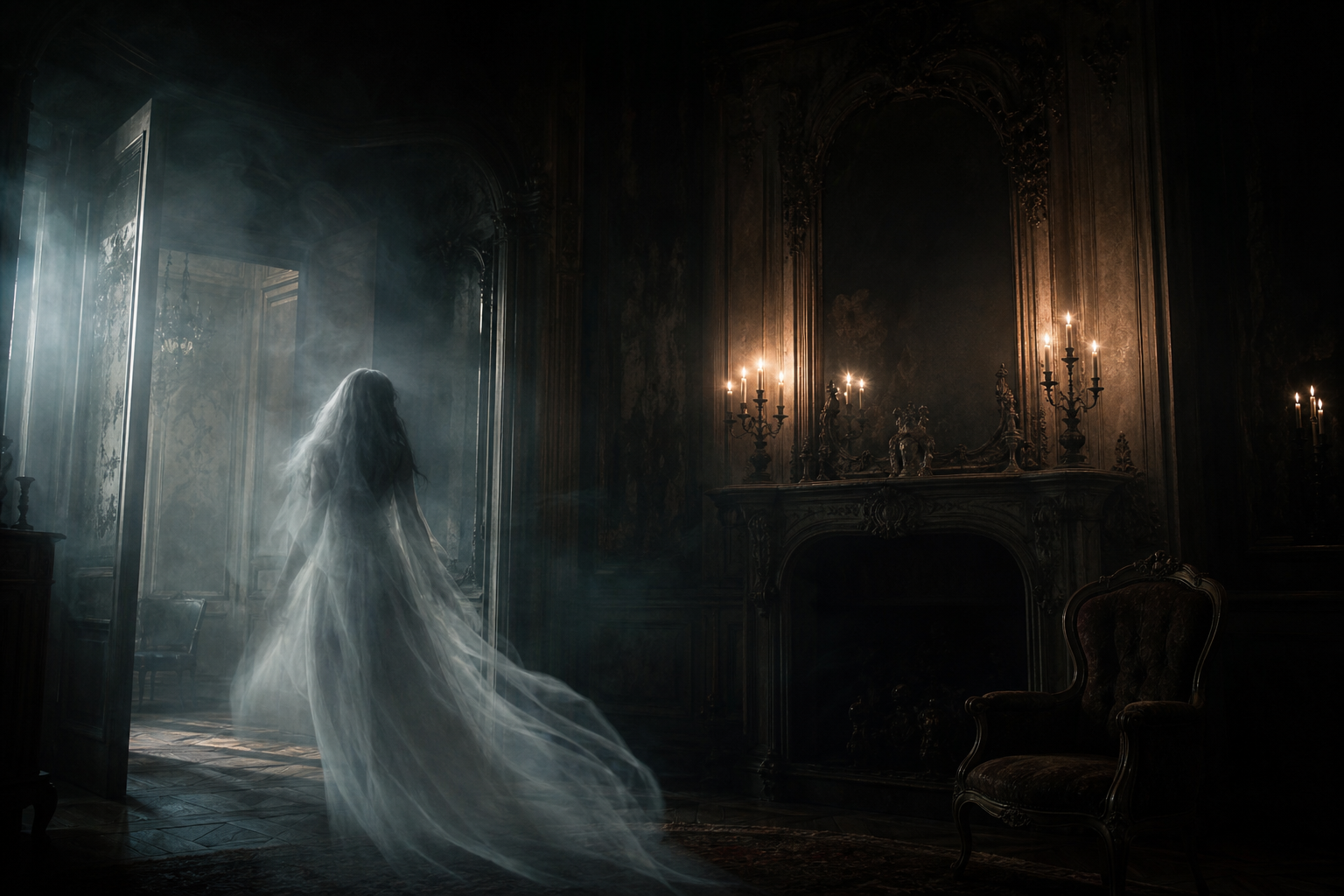
There is a chilling sensation that occurs when you step across the threshold of a building rumored to be inhabited by the dead. Your skin prickles, your heart rate quickens, and despite every instinct telling you to turn back, you find yourself drawn deeper into the shadows. This magnetic pull toward the macabre is a universal human experience, leading thousands of enthusiasts to seek out the world’s most haunted locations every year.
The Biological Rush of the Paranormal
Why do we actively seek out places that terrify us? The answer lies deep within our biology, specifically the way our brains process fear in a controlled environment. When we enter a site known for paranormal activity, our bodies trigger a “fight or flight” response, releasing a potent cocktail of adrenaline, endorphins, and dopamine. This creates a natural high that, for many, becomes addictive.
Psychologists often refer to this phenomenon as “recreational fear.” Much like riding a roller coaster or watching a horror movie, visiting a haunted asylum or a crumbling mansion allows us to experience the physiological symptoms of terror without being in actual physical danger. This “safe” scare provides a sense of accomplishment once we emerge from the darkness, reinforcing our desire to return to the supernatural world again and again.
Furthermore, the environment of a haunted site often plays tricks on our senses. Many researchers point to infrasound—sound frequencies below the range of human hearing—as a reason for the “creepy” feeling in certain buildings. These low-frequency vibrations can cause feelings of unease, sorrow, and even visual distortions, which many witnesses interpret as ghost sightings.
Historical Echoes and the Stone Tape Theory
Beyond the chemical rush, there is a profound historical connection that draws us to haunted places. We are naturally curious about the lives of those who came before us, and a haunted location serves as a living museum of human emotion. Whether it is the site of a tragic accident or a grand estate with a dark secret, these places offer a tangible link to the past that textbooks simply cannot replicate.
One of the most popular explanations for this connection is the Stone Tape Theory. This hypothesis suggests that minerals within the walls of a building can “record” high-energy emotional events, such as a sudden death or a violent struggle. According to this theory, what we perceive as a residual haunting is actually a playback of that recorded energy, triggered by specific atmospheric conditions or the presence of a sensitive individual.
This idea transforms a scary story into a scientific mystery. If the environment can hold onto the past, then visiting a haunted location is a form of time travel. We aren’t just looking for ghosts; we are looking for the echoes of human history that refused to fade away. This is why locations like the Eastern State Penitentiary or the Tower of London remain top destinations for those seeking a brush with the beyond.
The Search for Proof of the Afterlife
At the heart of our obsession with the paranormal is the ultimate human question: what happens after we die? For many, a visit to a haunted location is a quest for validation. If we can capture a Class A EVP (Electronic Voice Phenomena) or witness a shadow figure moving through a hallway, it provides a glimmer of hope that consciousness survives the physical body.
The rise of ghost hunting technology has only fueled this fire. Armed with EMF meters, thermal cameras, and spirit boxes, modern investigators approach haunted sites with a blend of skepticism and wonder. They aren’t just looking for a thrill; they are looking for data. Every anomalous reading or unexplained cold spot is a piece of a puzzle that humanity has been trying to solve for millennia.
This search for meaning often leads people to famous “portal” locations, such as the Waverly Hills Sanatorium in Kentucky. Known for its high concentration of reported spirits, the site attracts thousands who hope to catch a glimpse of the “Creeper” or the “Shadow People.” These experiences, whether they are truly supernatural or products of the mind, offer a sense of wonder in an increasingly secular and explained world.
The Cultural Allure of the Haunted
Our culture is saturated with the lore of the undead. From the gothic novels of the 19th century to the modern explosion of paranormal reality television, we have been conditioned to find beauty and intrigue in the dark. Haunted places provide the perfect stage for these narratives to play out in real life. They allow us to become the protagonists of our own ghost stories, testing our courage against the unknown.
There is also a communal aspect to these visits. Sharing a terrifying experience with friends or fellow investigators creates a unique bond. We huddle together in the dark, whispering about the poltergeist activity we hope to see, and in doing so, we find a sense of belonging. The haunted house is not just a place of fear; it is a place of shared human curiosity and collective imagination.
Ultimately, we can’t resist haunted places because they represent the final frontier of exploration. In a world where almost every corner of the globe has been mapped and digitized, the paranormal remains one of the few true mysteries left to solve. As long as there are shadows in the corner of the room and stories of things that go bump in the night, we will continue to walk through those haunted doors.
Have you ever felt a presence in an old building that you couldn’t explain, or do you believe our obsession with ghosts is all in our heads?
Recommended Resources
- 🤖 Viktor AI — The autonomous AI platform we use to run our marketing operations. Hire Viktor to handle blogging, lead research, audits, and more.
- 💳 Greenlight — The money app and debit card for kids and teens. Teach your kids to earn, save, and invest. Earn $30 when you sign up.
- ⛏️ GoMining — Earn Bitcoin through cloud mining without the hardware hassle. A passive way to get into crypto.
- 🏦 Mercury — The business banking account built for startups and small businesses. No fees, powerful tools, and easy to set up.
Leave a Reply