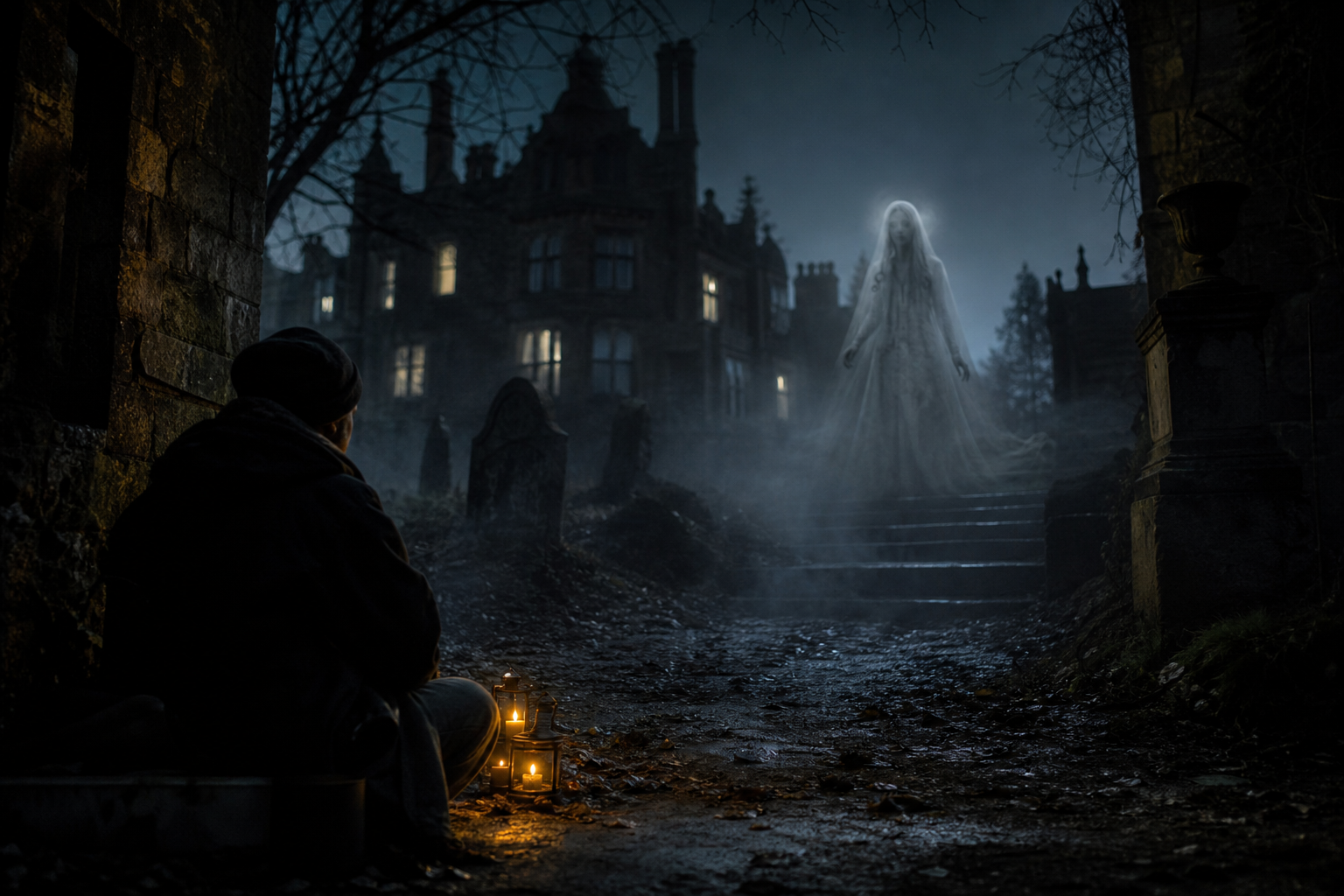
The image is a staple of paranormal television: a group of investigators creeps through a decaying asylum or a rusted factory, their flashlights cutting through the gloom. Suddenly, a dark figure darts across a hallway, and the Electronic Voice Phenomenon (EVP) recorders capture a muffled cry, leading the team to claim they have encountered a Shadow Person. However, a growing movement within the paranormal community is asking a difficult question: are we actually hunting ghosts, or are we inadvertently harassing the living?
The Reality Behind the Shadow People
For years, abandoned structures have been the primary playground for ghost hunters seeking evidence of the afterlife. From the crumbling walls of the Buffalo Central Terminal—famously featured in blockbuster films—to local derelict schools, these sites are often labeled as “hotspots” for supernatural activity. Reports of fleeting silhouettes and mysterious footsteps frequently circulate on local forums, fueling the legend that these places are teeming with residual hauntings.
Yet, a sobering reality often sits just behind the lens of the night-vision camera. Many of these “abandoned” locations serve as the only available shelter for unhoused populations seeking refuge from the elements. When an investigator shouts into the darkness, demanding to know “how did you die?”, they may not be speaking to a spirit from the 1920s. Instead, they might be startling a person experiencing acute misery who is simply trying to find a safe place to sleep for the night.
The “shadow person” captured on a grainy livestream is frequently just a human being trying to avoid detection. In high-crime areas or neighborhoods reminiscent of the gritty landscapes seen in shows like Breaking Bad, the arrival of a group of strangers with bright lights and noisy equipment can be terrifying. For someone living on the margins, a ghost hunter isn’t a seeker of truth; they are a source of unwanted exposure and potential danger.
The Ethical Dilemma of Urban Exploration
The ethics of Urban Exploration (Urbex) and paranormal investigating have long been debated, but the human element adds a layer of complexity that many enthusiasts overlook. Statistics suggest that a significant portion of the homeless population consists of minors. When a team of investigators claims to have seen a “ghost child” in an old train station or factory, there is a heartbreaking possibility that they have actually encountered a child experiencing homelessness.
Imagine the perspective of that child: you are cold, tired, and hiding in a dark corner of a terminal, only to have a stranger shine a high-powered tactical light in your eyes while screaming for a sign from the “other side.” The fear experienced in that moment is very real, but it isn’t supernatural. By treating these spaces as haunted playgrounds, the paranormal community risks dehumanizing those who have nowhere else to go, turning their struggle for survival into a jump scare for an online audience.
Furthermore, the presence of ghost hunters often draws unwanted attention from law enforcement or property owners to these shelters. A viral video of a “haunted” warehouse can lead to a crackdown on trespassing, effectively evicted the vulnerable residents who were using the space for survival. In our quest to document the dead, we may be making life significantly harder for the living.
Shifting the Focus of Paranormal Research
Does this mean ghost hunting should stop entirely? Not necessarily, but it does suggest that the “abandoned building” trope needs a serious overhaul. Many professional paranormal researchers are now advocating for a more responsible approach. This includes focusing on historical sites with permission, private residences where owners have requested help, or locations that are verified to be vacant and secure.
Historical societies and preserved landmarks often provide a much more controlled environment for instrumental trans-communication (ITC) experiments. These locations offer the same potential for discovery without the risk of disturbing someone’s makeshift home. By moving away from active squats and derelict urban centers, investigators can ensure that their findings are not skewed by the presence of living people, thereby increasing the scientific validity of their work.
The goal of any true investigator should be the pursuit of truth. If that truth is obscured by the presence of living humans who are being mistaken for spirits, the data is compromised. More importantly, the integrity of the investigator is compromised. Respecting the privacy and dignity of the living is just as important as respecting the memory of the dead.
As we continue to explore the mysteries of the unexplained, we must remain grounded in empathy. The next time you see a shadow move in the corner of a darkened room, ask yourself if you are looking at a visitor from the beyond, or a neighbor in need of help. Should the paranormal community implement a strict code of ethics regarding abandoned buildings to protect the vulnerable?
Recommended Resources
- 🤖 Viktor AI — The autonomous AI platform we use to run our marketing operations. Hire Viktor to handle blogging, lead research, audits, and more.
- 💳 Greenlight — The money app and debit card for kids and teens. Teach your kids to earn, save, and invest. Earn $30 when you sign up.
- ⛏️ GoMining — Earn Bitcoin through cloud mining without the hardware hassle. A passive way to get into crypto.
- 🏦 Mercury — The business banking account built for startups and small businesses. No fees, powerful tools, and easy to set up.
Leave a Reply