Study of 2,000 Ghost Accounts Finds Faceless Shadows Replacing the Classic Ghost
A comparison of 1,000 early-internet ghost stories with 1,000 recent Reddit posts found reports of shadow figures more than doubled, from 6% to 14%.
Science: research findings and proposed natural explanations
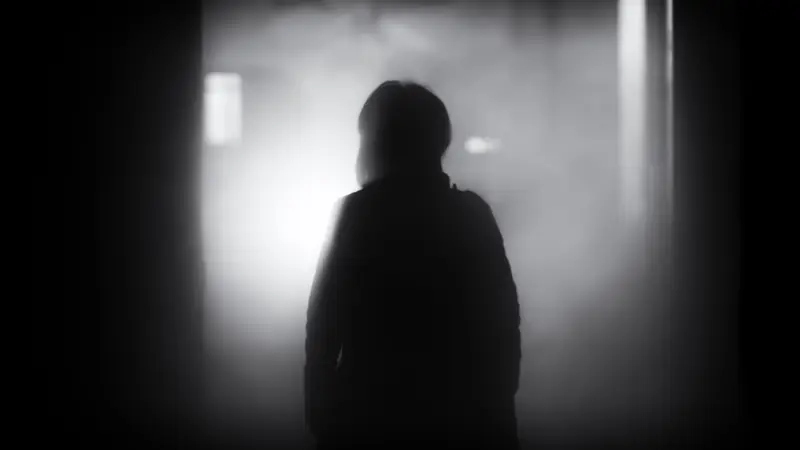
The ghosts people describe have changed shape over the past 30 years, according to a new analysis by York-based author and ghost researcher MJ Wayland (opens in a new tab). He compared 1,000 first-hand ghost encounters written on the early internet, between 1994 and 2012, with 1,000 posted to Reddit between 2024 and 2026. Pale, solid figures, he reports, are giving way to faceless shadows.
The study does not try to settle whether ghosts are real. In the release's words (opens in a new tab), it "measures how people describe their experiences." Brazilian magazine Exame (opens in a new tab), which covered the findings on November 4, likewise noted that the analysis does not prove ghosts exist.
What was compared
According to the release's methodology notes (opens in a new tab), the older accounts came from the True Ghost Stories archive at ghosts.org, which took reader submissions from 1994, and from the Usenet newsgroup alt.folklore.ghost-stories. The modern accounts are public posts from two Reddit communities, r/Ghoststories and r/Thetruthishere. After duplicates, questions, fiction and second-hand stories were removed, a random 1,000 accounts was drawn from each period.
Each account was coded by AI against the same written codebook of 29 measures, covering what was seen and heard, where it happened, who was there and how the witness felt. To check accuracy, Wayland says (opens in a new tab) he and his team reread 40 randomly drawn stories (280 codes), and a separate AI review agreed with 270 of the 280 codes, or 96%.
The shift to shadows
The headline number: shadow figures appeared in 14% of modern accounts (143 of 1,000), against 6% (64 of 1,000) in the early-internet sample (opens in a new tab). The rise showed up separately in both Reddit communities, at 14.3% and 13.4%, and among witnesses in the United States it was 19% against 7%.
The change is starker among accounts that described what a figure looked like (238 then, 324 now), according to the key figures (opens in a new tab):
- A shadowy silhouette with no detail: 29% then, 50% now.
- A solid figure that looked like a living person: 47% then, 35% now.
- White, glowing or see-through: 24% then, 15% now.
Among figures whose face was described, 51% of modern ones were blank, hidden or featureless, up from 31%. Wayland notes that the number of solid figures barely moved, from 112 to 113 (opens in a new tab); they make up a smaller share because so many more modern accounts describe a shadow.
"What people describe now is far more often a shadow with no face," Wayland said (opens in a new tab).
What stayed the same
Fear did not change: 57% of witnesses in both periods said they were afraid (opens in a new tab). Most encounters in both periods happened at home and at night, and around half of indoor encounters took place in a bedroom, usually while the witness was in bed or drifting off to sleep.
Some things did shift. Modern encounters were less often shared, with 23% witnessed by someone else who perceived the same thing at the same moment, compared with 34% before. Visits from dead relatives fell from 9% to 6%.
Isn't this just sleep paralysis?
It's a fair question. In sleep paralysis, a person is briefly unable to move while falling asleep or waking. A 2026 study in the Journal of Sleep Research (opens in a new tab) studied 210 adults from the Italian population and found that one in four had had at least one episode. In the paper, 65.4% of participants reported "intrusive-type hallucinations," and visual hallucinations were "predominantly humanoid figures."
Wayland argues that this doesn't explain his result. The two samples contain a similar number of encounters at the edge of sleep (309 and 293) (opens in a new tab), and among witnesses who were fully awake and active, shadow figures featured in 13% of modern encounters against 5% earlier. "It isn't simply sleep paralysis either, because the rise shows up just as clearly in people who were wide awake," he said.
A change in words?
One detail points to language rather than experience. Modern posters recalling encounters from before 2010 described shadow figures in 19% of cases (opens in a new tab), against 6% in the early-internet accounts, though that group is small (74 accounts). Wayland reads this as a sign that the change is in how experiences are described rather than in when they happened.
Why would descriptions change? Wayland offers a guess, and calls it one: "my answer is a guess rather than a finding," he said (opens in a new tab). He points out that the phrase "shadow people" was already turning up on ghost forums in the late 1990s and has since spread through late-night radio and online horror stories. People, he suggests, describe what they can't explain "with the words and pictures they already have." Exame (opens in a new tab) also stressed that this explanation is presented as a hypothesis, not a conclusion the analysis proves.
Limits worth knowing
The findings were published on Wayland's own website, not in a scientific journal; the release suggests citing it as a study at mjwayland.com (opens in a new tab). It compares two collections of online accounts, not a representative sample of the public, a point Exame (opens in a new tab) also made. The release reports that every difference between the periods is statistically significant (chi-square test, p<0.05), with a shadow-figure gap of 7.9 percentage points and a 95% confidence interval of roughly 5 to 11 points.
The coding was done by AI. A second AI pass agreed with the first on 84% to 100% of answers, which, the release itself says (opens in a new tab), "shows the coding is consistent but does not by itself show it is accurate." The coded dataset and codebook are available to journalists on request, but the original post text is not shared, to protect the privacy of the people who wrote it.
What the data does show is a clear change in the stories people tell. Whether that reflects new experiences, new vocabulary or both, the classic ghost of the early internet more often looked like a person than today's does.
Sources
- 30-year study shows the classic ghost is fading into shadow (press release with methodology and key figures) (opens in a new tab), MJ Wayland (mjwayland.com), published 2026-10-27. Accessed 2026-11-19.
- Qual a aparência dos fantasmas? Estudo com 2 mil relatos revela padrão assustador (opens in a new tab), Exame, published 2026-11-04. Accessed 2026-11-19.
- Prisoners of the Body: The Link Between Interoception and Sleep Paralysis (Forte, Giaccari, Favieri and Casagrande), Journal of Sleep Research, e70393 (open-access full text) (opens in a new tab), PubMed Central, U.S. National Library of Medicine, published 2026-06-12. Accessed 2026-11-19.
This article is an original summary written from the sources above. Quotes are short and attributed. Paranormal claims are reported as claims and have not been independently verified. Spotted an error? See our contact page.
Keep reading
The Bell Witch: Tennessee's Most Famous Haunting, and How Much of It Is True
Around 1817, a spirit is said to have tormented the Bell family of Robertson County, Tennessee. What the record supports, and where the legend may be later fiction.
2 sources · 3 min read
6 in 10 Medical Students in Guinea Report Sleep Paralysis, Study Finds
A survey of 320 future doctors in Conakry found most reported sleep paralysis, and many explained it with both brain science and spirits.
4 sources · 5 min read
Connecticut's New Haunted History Trail Puts Its Witch Trials on the Map
Connecticut's 130-stop Haunted History Trail mixes ghost legends with a real record: the colonies' first witchcraft execution, in Hartford in 1647.
4 sources · 5 min read